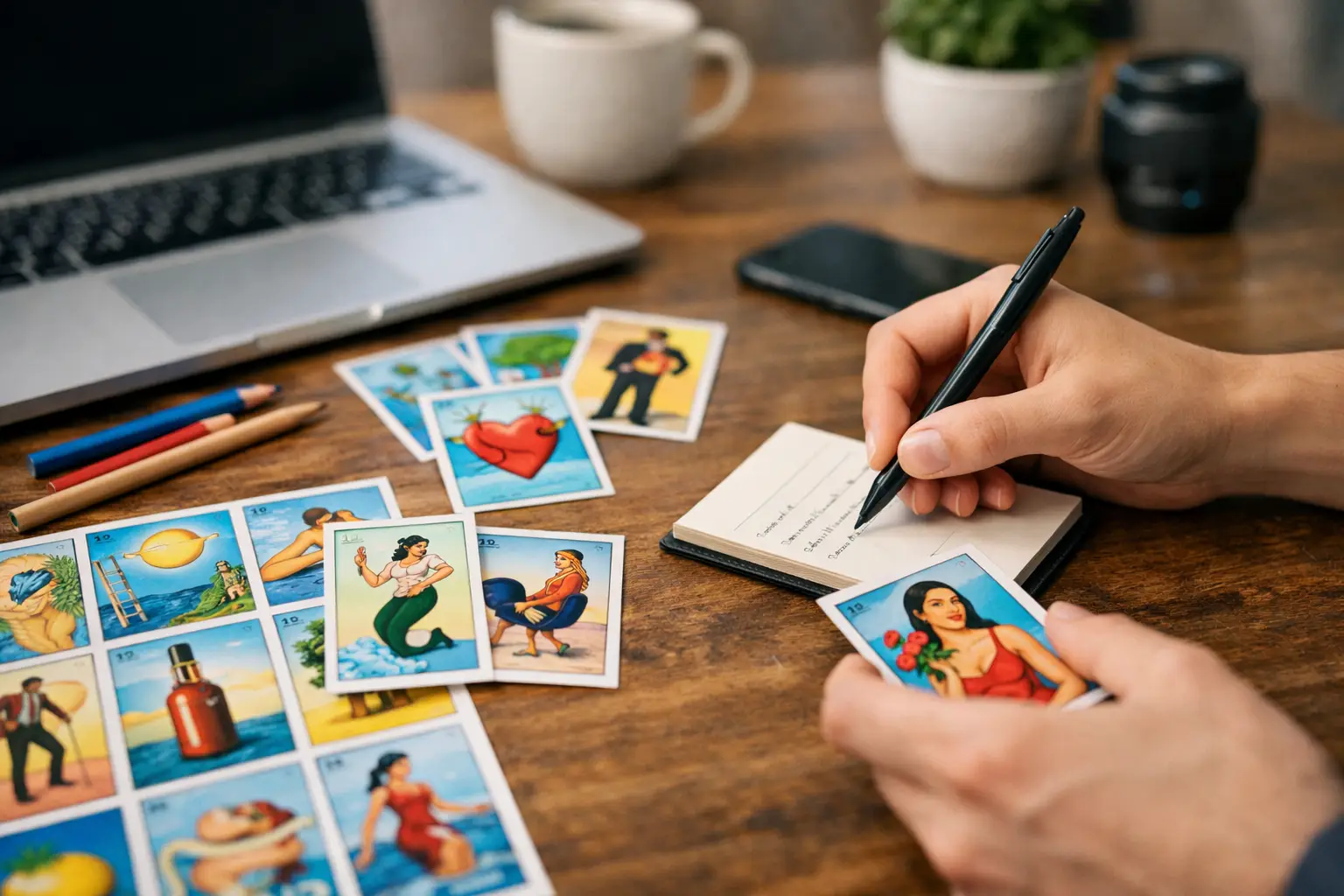
A great custom card can make the whole table laugh before anyone calls out a square. When you write personalized lotería card captions, you are giving each photo a role: the cousin who is always late, the aunt whose salsa disappears first, the couple everyone came to celebrate, or the dog who somehow runs the house.
The best captions feel instantly familiar, look clean beneath the artwork, and are easy to call during play. They do not need to be clever for cleverness’ sake. They need to sound like your people.
Start with the person, memory, or moment
Before you try to write a funny line, decide what the card is really honoring. Look at the photo and ask one simple question: what would everyone at this event recognize immediately?
It could be a personality trait, a recurring family story, a favorite phrase, a job, a food order, or a role in the group. A graduation deck might include “La Ingeniera” for the newly minted engineer. A family reunion card could become “El Primo Perdido” for the cousin who finally made it back. For a wedding, “La Primera Mirada” can turn a quiet photo into a keepsake moment.
Specificity creates the magic. “The Funny Uncle” is fine, but “El Tío del Karaoke” gives guests a picture, a sound, and probably a story before the game even starts.
Keep personalized Lotería card captions short
Traditional-style card names have a strong visual rhythm. They are usually brief, bold, and memorable. Your custom deck does not have to copy every convention exactly, but short captions preserve that crisp, iconic feel.
Aim for two to five words when possible. A caption such as “La Reina del Cafecito” has personality without becoming hard to read. “The Person Who Always Brings Three Different Dips” may be true, but it is better saved for the story told after someone draws the card.
Short captions also work better on printed cards and game boards. They remain readable at a glance, especially when players are seated across a table or when a caller needs to announce a card without stumbling over a long sentence.
If a meaningful phrase is longer, find its strongest noun. “The One Who Never Misses Sunday Dinner” can become “La Dominguera.” “Dad’s Legendary Backyard Grill” can become “El Asador.” The photo and cartoon-style artwork can carry the rest of the context.
Make the caption easy to call out
A playable deck needs captions that sound good aloud. Say each option at normal game-night volume. Does it have a natural beat? Can a grandparent, child, or friend who has not heard the joke before pronounce it comfortably?
Names work beautifully when the deck is made for one close-knit group: “La Nena,” “Uncle Ray,” or “Mami.” For a larger event, add a clue so the card stays clear. “La Nena Bailarina” or “Uncle Ray’s Tacos” may land better for guests meeting the family for the first time.
Choose a language style that fits your table
A personalized Lotería deck can be in Spanish, English, Spanglish, or a mix that reflects the people playing. There is no need to force every card into one language if that is not how your family talks. The goal is recognition, not a textbook exercise.
For some groups, “La Comadre” and “The Group Chat” belong naturally in the same deck. For others, keeping every title in Spanish creates a more traditional visual rhythm. A bilingual celebration may call for paired wording, such as “El Campeón / The Champ,” though this works best when the text remains large enough to read.
Be thoughtful with regional terms, nicknames, and slang. Use the words your community actually uses, especially when they carry affection or cultural meaning. If a phrase might confuse most players, pair it with a more familiar image or choose a clearer caption. The inside joke should invite people in, not leave them guessing.
Build a deck with a mix of caption types
If every card is a person’s name, the deck can feel more like a seating chart than a game. A stronger deck mixes people with the places, rituals, objects, and moments that make your group feel like itself.
For a birthday celebration, you might include the guest of honor, their signature dessert, their best friend, their favorite vacation spot, and the family phrase everyone knows. For a school fundraiser, cards could feature teachers, the mascot, the cafeteria favorite, the library, and the annual talent show.
Try building around these four kinds of cards:
- People: “La Abuela,” “Coach D,” “The Best Man,” or “La Quinceañera”
- Traditions: “Sunday Dinner,” “La Posada,” “Game Night,” or “The Family Toast”
- Signature things: “El Cafecito,” “The Red Truck,” “La Salsa Verde,” or “The Bingo Bag”
- Shared memories: “That One Road Trip,” “The First Dance,” “La Graduación,” or “The Big Win”
This variety gives the deck pacing. It also gives guests multiple ways to connect, whether they know the people in every photo or simply recognize the stories behind them.
Let the artwork and caption do different jobs
Do not make the text explain every detail in the image. If the photo clearly shows your brother holding a fishing pole, “El Pescador” may be all you need. If the image is a close-up portrait, the caption can add the missing story: “The One with the Boat.”
Think of the artwork as the visual hook and the caption as the emotional punchline. When the two repeat the exact same information, the card can feel flat. When they add to each other, the card becomes more memorable.
This is especially useful when you upload photos and cartoonify them. A bold, expressive image already has plenty of personality. Keep the caption focused, then let the illustration bring the energy, color, and recognizable details to the table.
Balance humor with affection
The funniest personalized cards are usually rooted in love. Gentle teasing about a friend’s famous lateness, a sibling’s iced-coffee habit, or Grandpa’s fierce dominoes strategy can make a deck feel wonderfully personal. But a card is different from a private joke. It gets passed around, called aloud, photographed, and kept.
Avoid captions that reveal something someone would not want announced at a party. Skip jokes about appearance, money, relationship stress, health, immigration status, or anything that could put a guest on the spot. If you are unsure, ask yourself whether that person would be delighted to take the card home.
For weddings, work events, classrooms, and community gatherings, choose humor with a wider welcome. “La Jefa del Dance Floor” is playful. “The Boss Who Never Stops Emailing” may create a very different mood.
Create a consistent naming pattern
A deck feels polished when the captions follow a recognizable system. You might use Spanish articles throughout, such as “El,” “La,” and “Los.” You might use English titles for every card. Or you might reserve Spanish for family roles and food traditions while using English for modern references.
Consistency does not mean sameness. It means the deck looks intentional. If one card is “La Reina,” another is “Kevin Being Kevin,” and a third is “My Mom’s Favorite Thing Ever,” the tone can feel scattered even if every caption is meaningful.
Pick a pattern early, then review your full set together. Check capitalization, punctuation, language choices, and length. If most cards are two or three words, revise the one ten-word caption until it belongs.
Give each card a quick real-world test
Before generating your final print-ready cards and game boards, read your captions as a group. You can do this in five minutes: show the photo, say the caption aloud, and notice the reaction.
A good caption earns immediate recognition. A great one creates a grin, a story, or a chorus of “That is so them.” If people need an explanation, the caption may be too vague, too niche, or simply missing the best detail.
Modern Lotería Studio makes it easy to adjust card text as you build, so use that flexibility. Upload your photos, cartoonify them, test the names, and refine the wording before you create the finished deck. A tiny edit can turn “The Dog” into “El Jefe de la Casa,” which is the kind of card everyone remembers.
Your captions do not need to sound like they came from a copywriter. They should sound like your family laughing in the kitchen, your friends telling the same story again, or your community recognizing itself across the table. Give each card that feeling, and the deck will be more than a game - it will become part of the celebration.