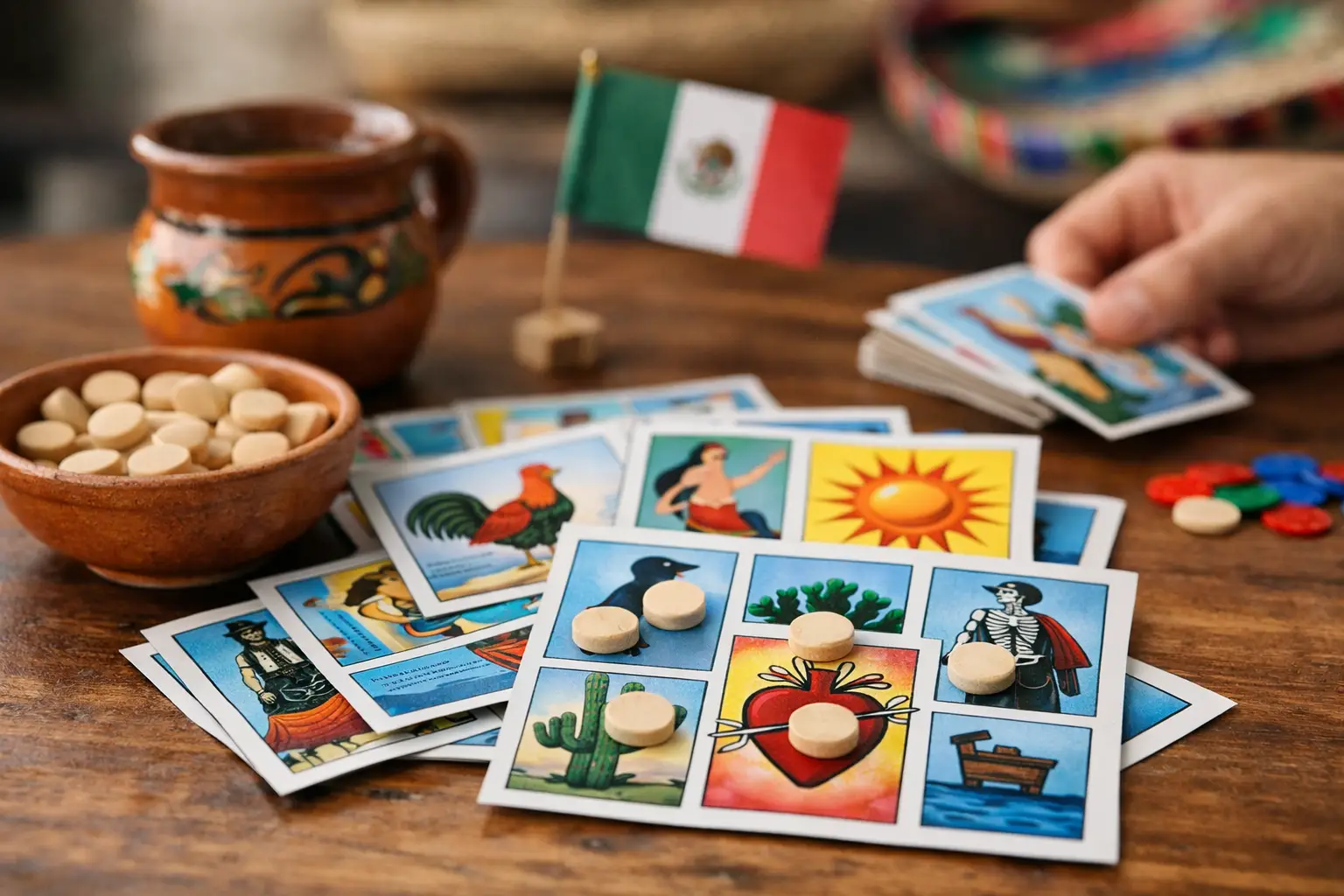
A caller lifts a card, says its name, and suddenly the room changes. Someone recognizes the image before it is announced. A grandparent laughs at a familiar saying. Kids race to cover their boards. That shared spark is at the heart of what makes lotería culturally meaningful: it turns recognizable symbols, language, and friendly competition into a living gathering.
For many Mexican and Mexican American families, lotería is not simply a game pulled out after dinner. It can hold the feeling of a birthday party, a holiday table, a school fundraiser, a reunion, or an afternoon with relatives who tell stories between rounds. Its meaning comes from the fact that people bring their own memories to it. The deck creates the prompt. The people in the room create the tradition.
What Makes Lotería Culturally Meaningful?
Lotería carries a visual language that is instantly recognizable. Cards such as El Gallo, La Sirena, El Árbol, and La Rosa are more than spaces on a board. Their bright, direct imagery has become part of the cultural memory surrounding the game. Even people who have not played recently may remember a favorite card, a relative's calling style, or the feeling of waiting for the one image that would complete a winning pattern.
That recognition matters. A deck lets players communicate across ages without needing a long explanation. A child can point to an image. An older relative can remember a phrase attached to it. Friends who grew up with different traditions can still join the round quickly. The format is simple, but the associations around it are layered.
Lotería also has a history of adaptation. The game developed in Mexico from earlier European lottery-style games and became distinctly Mexican through its imagery, printing traditions, regional play, and the communities that embraced it. There is no single experience that speaks for every Mexican or Latinx family. Some households play with traditional calls, some make up jokes, and some know the cards mainly through art, parties, or popular culture. That variety is part of its strength.
A Game Built for Storytelling
Traditional lotería is often called with more than the card name. A caller may add a rhyme, a clue, a joke, or a dramatic pause. The delivery can be tender, theatrical, silly, or competitive. It gives the person calling the cards room to perform, and it gives everyone else something to react to.
This is why the game feels so social. The cards are visual, but the experience is spoken and shared. One person may use a saying their mother always used. Another may invent a clue that only cousins understand. A familiar card can become funny again because the story around it changes with the people at the table.
The game format makes room for Spanish, English, Spanglish, and family-specific language. For bilingual families, that can be especially meaningful. Players do not have to choose between identities to participate. They can hear a Spanish card name, explain it in English, and add an inside joke that belongs to their household alone.
Iconic Images Create a Shared Visual Vocabulary
Lotería imagery is bold for a reason. Each card needs to be easy to spot, easy to remember, and distinct from the rest of the deck. Over time, those illustrations have also become cultural touchstones. Their colors, characters, and straightforward labels carry a sense of familiarity that people recognize at a glance.
The images can connect people to everyday life, nature, faith, humor, work, animals, and folklore. They do not all mean the same thing to every player, and that is worth respecting. A card that feels nostalgic to one person may have a different emotional or religious association for another. Keeping that nuance in mind makes the game more welcoming.
The best custom decks understand the difference between inspiration and replacement. A personalized deck can honor lotería's recognizable structure while giving a wedding party, classroom, neighborhood, or family reunion its own cast of characters. It does not need to claim that every new image is traditional. Instead, it can say: this is our version, created for this moment and these people.
Personalization Makes the Tradition Present-Tense
A deck becomes especially powerful when players see themselves in it. A beloved aunt can become the card everyone hopes to draw. The family dog can take the place of a classic animal card. A graduation cap, favorite snack, dance move, or local landmark can turn a game board into a time capsule.
That is not just novelty. Personalization gives people a way to document who matters in a particular season of life. A birthday deck can preserve the friends who showed up. A reunion deck can include family nicknames and old photos. A community event deck can celebrate local volunteers, businesses, and places that residents care about.
It also makes the game easier to share across generations. Young adults may be drawn in by photos, modern illustrations, and references that feel like their real lives. Older relatives may enjoy the familiar game structure and the chance to tell the stories behind each person or image. Everyone has a reason to lean in.
Modern Lotería Studio makes that process approachable: upload photos, cartoonify them, customize the card text, and create coordinated, print-ready cards and game boards. The technology supports the gathering, but the meaning still comes from the choices you make - who appears, what names you use, and what stories the deck invites people to tell.
How to Create a Meaningful Custom Lotería Deck
Start with an occasion, but do not stop there. Ask what you want players to remember once the game is over. For a wedding, that might be the people and traditions that brought two families together. For a classroom, it might be student achievements, vocabulary, or community values. For a holiday party, it might be the jokes, recipes, and faces that make the season feel like yours.
Choose photos and references with care. Clear, expressive images work well, but emotional relevance matters more than perfect posing. A candid image of someone laughing may bring more energy to a card than a formal portrait. Mix people with objects, places, foods, and phrases so the deck has visual variety and gives callers more to play with.
Then write labels people will recognize immediately. A good custom card name can be affectionate, clever, or direct, as long as it is readable at game speed. If you use an inside joke, consider whether guests outside the immediate family will understand enough to enjoy it. The goal is not to explain every joke. It is to make the room feel included.
Finally, think about the caller. Build in a few cards that practically demand a story or playful clue. A deck is more memorable when it gives someone the confidence to be dramatic, tease their best friend, or honor a relative with warmth. Print quality and polished layout help the materials feel special, but the voice in the room is what brings them to life.
Respect Keeps Creativity Connected
Customizing lotería works best when it is rooted in appreciation rather than costume-like borrowing. If the game is part of your family's heritage, personalization can be a joyful way to keep it active. If you are introducing it to a broader group, offer a little context, use the format thoughtfully, and avoid reducing Mexican culture to a handful of stereotypes.
That does not mean every deck must look identical or follow one set of rules. Lotería has always had room for local flavor and personal calling styles. It means being intentional about what you change and why. Humor can be generous. References can be specific. The people represented should feel celebrated, not turned into props.
A meaningful deck does not need to preserve every traditional image exactly as it was. It needs to preserve the spirit of gathering: the anticipation before a card is called, the shout when someone wins, and the stories that keep going after the boards are cleared. Create a deck that gives your people a reason to recognize one another, laugh together, and make one more memory worth calling out.