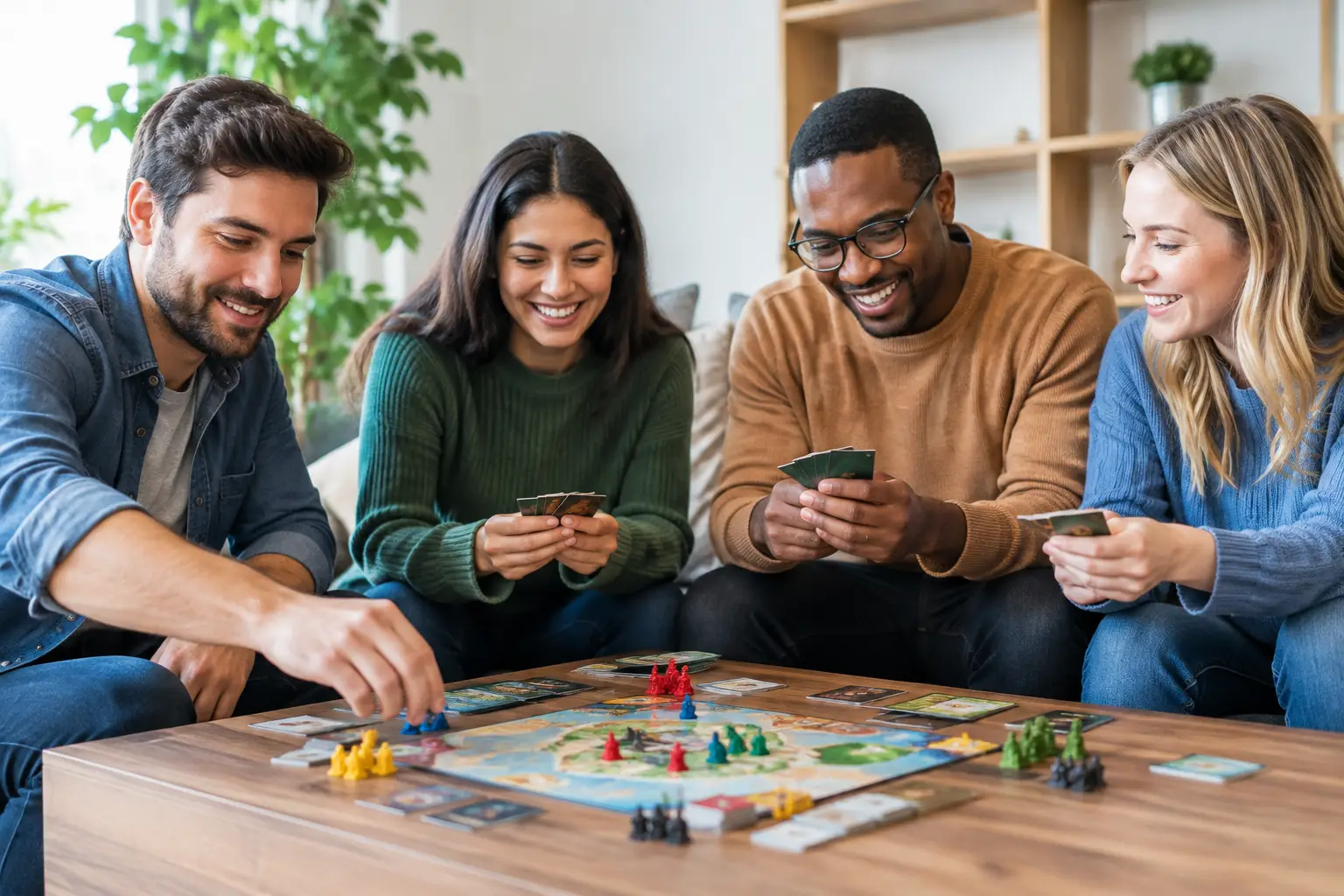
The best top themed games adults enjoy have one thing in common: they give people a reason to laugh, tell stories, and get a little competitive without making anyone feel put on the spot. A theme does more than decorate the table. It gives guests a shared world to step into, whether that means reliving family memories, solving a glamorous crime, or cheering when their cousin’s face appears on a game card.
For birthdays, weddings, family reunions, holiday parties, and community events, choose a game that fits the people in the room - not just the aesthetic on the invitation. Here are 10 ideas that bring a theme to life and keep the energy moving.
10 top themed games adults can make their own
1. Personalized Lotería
A custom Lotería deck turns the people, places, inside jokes, and traditions your group already loves into the game. Replace familiar card images with cartoon-style portraits of family members, wedding party photos, favorite foods, hometown landmarks, or team personalities. Then customize the names: La Tía, El Best Man, The Karaoke Queen, La Salsa Verde.
It is especially strong for multigenerational gatherings because the rules are easy to follow, while the cards create conversation across the table. With Modern Lotería Studio, guests can upload photos, cartoonify them, customize card text, and generate print-ready cards and game boards without having to illustrate or lay out a full deck themselves.
The key is to build with affection. A funny card should feel like an invitation to laugh together, not a joke at someone’s expense. For a larger event, use people most guests recognize and mix them with shared symbols such as a signature cocktail, the family dog, or the dance floor.
2. Murder Mystery Dinner
A murder mystery works when the theme is clear before the first clue appears. Pick a setting with built-in character ideas: a 1920s jazz club, a sun-soaked resort, an old Hollywood awards show, or a suspiciously dramatic family reunion. Guests receive roles, motives, and secrets, then spend the evening questioning one another.
This is a better fit for a smaller group that enjoys performing, dressing up, and lingering over dinner. It can feel slow for guests who want fast rounds and casual conversation, so keep the script light and make participation optional. A few confident players can carry the story while everyone else becomes an enthusiastic detective.
3. Trivia With a Personal Twist
Generic trivia can split a room between people who know every fact and people who quietly stop trying. Personal trivia changes the stakes. Build rounds around the guest of honor, the couple getting married, childhood memories, family sayings, favorite movies, or the city where everyone grew up.
Mix easy questions with story-based ones. Ask which uncle once drove three hours for a taco, what song always gets your friend to the dance floor, or where the couple had their first date. Let teams collaborate so knowledge becomes a conversation instead of a test.
4. Casino Night at Home
Casino-themed games add polish to a cocktail party without requiring real gambling. Set up simple blackjack, poker, roulette, or dice tables with play money, then let guests exchange their winnings for raffle entries, dessert picks, or playful awards.
This theme works best when the host explains the basics and keeps the prizes low-pressure. Some players know poker strategy; others just want to wear something sparkly and place a dramatic bet. Use dealers who are patient, offer a beginner table, and make the room feel social rather than serious.
5. Game Show Showdown
Bring the energy of a studio audience to a birthday or team event with a game-show format. Build quick rounds inspired by survey questions, guessing games, music intros, price challenges, or rapid-fire categories. Add a host, a bell or buzzer, and scorecards people can see.
The theme lands because it creates short moments of excitement. Nobody has to commit to a two-hour strategy game, and teams give quieter guests room to contribute. Keep each round under 10 minutes, rotate captains, and include prompts that connect to the group’s shared history.
6. Retro Arcade Tournament
For a nostalgic party, set up an arcade bracket around classic video games, tabletop games, or simple skill challenges. Think racing games, pinball, dance games, air hockey, and a high-score leaderboard that stays visible all night.
This format is flexible because guests can jump in between conversations. It also works with mixed experience levels when you offer more than one type of challenge. Pair a competitive game with a silly one, such as a costume-photo contest or a retro snack taste test, so the theme is not only about who has the quickest reflexes.
7. Travel-Themed Passport Challenge
Turn a dinner party or community event into a series of mini destinations. Give each guest a paper passport and create stations inspired by cities, countries, or meaningful trips: a food sample, a music clue, a postcard prompt, or a quick cultural fact challenge.
This idea shines for reunion groups and friend circles with lots of travel stories. Be thoughtful about the details. A travel theme should celebrate real places and people rather than reduce cultures to costumes or stereotypes. Ask guests to contribute a favorite destination, recipe, photo, or memory for a more personal experience.
8. Cozy Mystery Scavenger Hunt
A scavenger hunt does not need to send adults running through a neighborhood at midnight. Create a themed trail around a home, venue, or backyard with clues that lead to stories, photos, treats, or small prizes. A missing recipe card, a stolen wedding ring prop, or a vanished birthday cake can give the hunt a playful plot.
Make the clues solvable by teams with different strengths. One clue might be visual, another musical, and another based on a memory shared by the group. The best finish is not just a prize - it is a reveal that brings everyone back together for a toast, dessert, or final photo.
9. Paint, Sip, and Story Night
A creative theme is ideal for groups that prefer conversation over competition. Give everyone a simple prompt tied to the occasion: paint your favorite family meal, create a postcard from an imagined vacation, illustrate a future dream, or redesign a classic game card with a personal symbol.
Keep materials approachable and the direction loose. The point is not producing gallery work. It is seeing how differently people interpret the same prompt, then taking home something made during a good night with people they care about.
10. Awards Night and Superlatives
An awards theme turns a milestone celebration into a playful ceremony. Create categories that honor real strengths and memorable habits, such as Best Road Trip DJ, Most Likely to Bring Snacks, Family Historian, or Group Chat MVP. Guests can nominate, vote, and accept a small trophy or printed certificate.
Keep the humor warm and the categories generous. Avoid awards that spotlight insecurity, relationship status, appearance, or anything a guest might not want announced. When done well, this game becomes a room full of tiny love letters disguised as acceptance speeches.
How to choose a theme that fits your crowd
Start with the event’s emotional center. A wedding shower may call for personal stories and keepsakes, while a holiday party might need quick games guests can join between catching up. If the group includes several generations, choose rules that can be learned in a minute and make the theme carry the personality.
Next, decide whether you want everyone playing at once or guests circulating freely. Personalized Lotería, trivia, and game shows work well when you want a shared focal point. Arcade tournaments, casino tables, and creative stations are better when arrivals are staggered or people want more freedom to mingle.
Finally, match the prep to your actual schedule. A detailed mystery night can be memorable, but it needs role assignments, clues, and a host who can guide the plot. A custom card game takes planning too, yet it can become a lasting keepsake for the guest of honor or a tradition you bring out year after year.
Make the theme visible without overdoing it
You do not need matching everything. Pick two or three visual details that make the game feel intentional: a color palette, a welcome sign, themed scorecards, a playlist, or a snack that nods to the occasion. Put the biggest effort into the part guests will touch and remember - the cards, clues, boards, prompts, or prizes.
Give people a quick explanation before play begins, then let them learn by doing. Adults have more fun when they understand the goal, know how long a round will last, and can opt in without feeling behind. A great themed game should create a little structure, then leave plenty of room for the unscripted stories that make a gathering worth remembering.
Choose the theme that sounds most like your people. When the cards feature familiar faces, the clues point to real memories, or the prize sparks a running joke, the game stops being party entertainment and becomes part of the celebration itself.