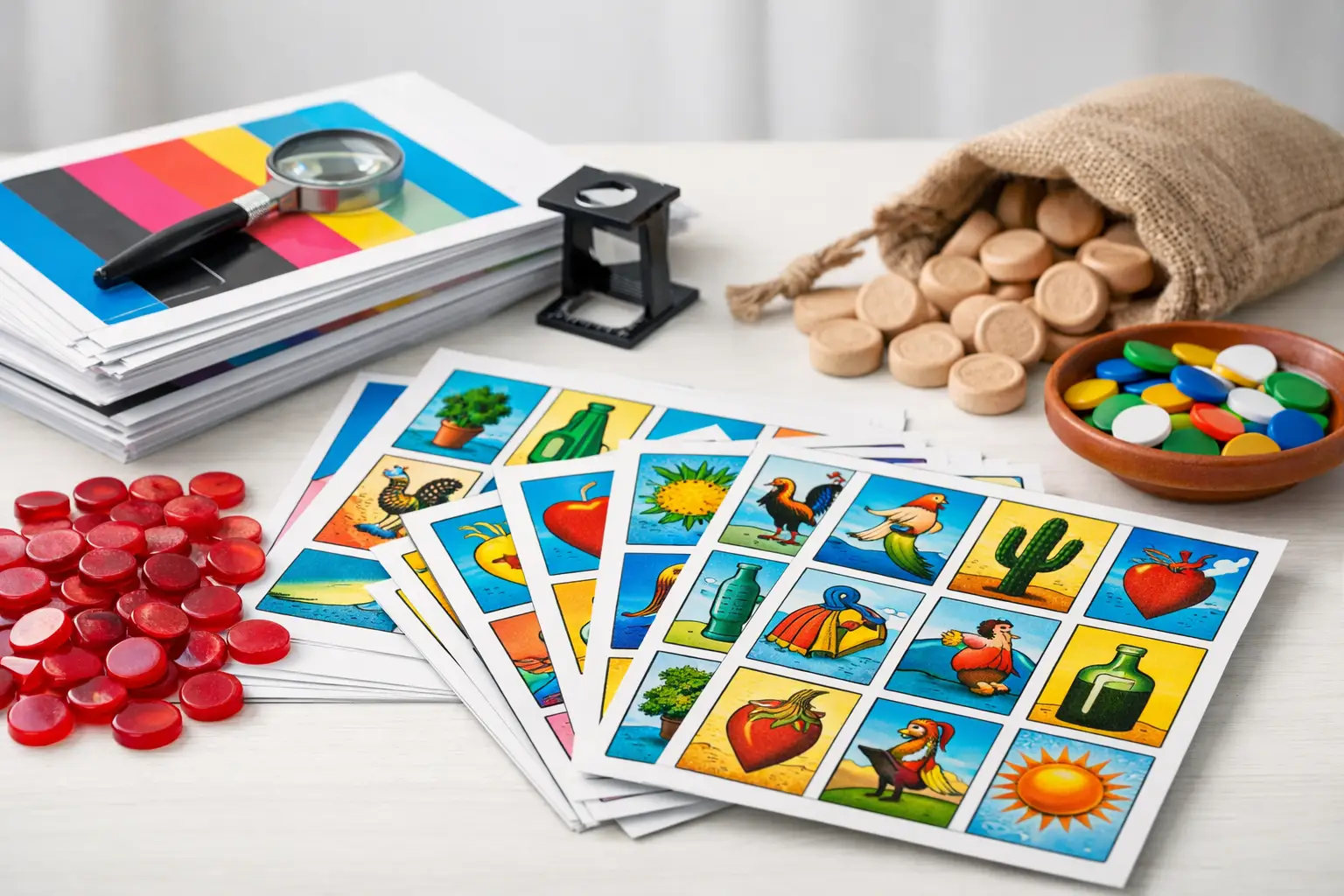
A game becomes a keepsake when the card called at the table is your abuela, your wedding party, the family dog, or that friend everyone recognizes from one photo. This print ready game materials guide helps you turn that idea into custom Lotería cards and game boards that look intentional on screen and feel great in players’ hands.
The goal is not to become a print-production expert. It is to make choices early - photos, names, deck structure, board count, and print format - so your finished game is easy to play, easy to share, and ready for a professional-looking print run.
Start with the moment you want players to remember
Custom Lotería works best when every card belongs to a clear story. For a birthday, that story may be the guest of honor’s favorite people, snacks, sayings, and inside jokes. For a wedding, it might be the couple’s timeline, their pets, loved ones, and memorable places. A reunion deck can celebrate family personalities across generations.
Choose a theme before uploading anything. It gives your deck visual direction and helps you decide what earns a card. You do not need every card to be sentimental, either. The strongest decks usually balance heartfelt moments with a few playful surprises.
Think about the setting, too. A deck for a lively adult party can lean into jokes that need no explanation. A classroom or community event should use images and language that are welcoming to every player. If children will play, keep labels easy to read and make sure the visual clues are clear enough to recognize from across a table.
Choose photos that cartoonify clearly
Personal photos are what make a custom deck feel unmistakably yours. They also have a practical job: they need to transform into artwork that stays recognizable at card size.
Start with images that show one main person, pet, object, or moment. A well-lit photo with a visible face and a simple background tends to create the cleanest cartoon-style result. Group shots can work when the group itself is the point, such as a bridal party or family band, but crowded images may lose detail once printed small.
Variety makes the deck more fun. Mix close-up portraits with a few meaningful objects, foods, places, or family symbols. If every card is a selfie, the deck may feel repetitive even when the art looks great. A card for a favorite pan dulce, a backyard grill, a graduation cap, or a beloved car can bring the story to life.
Before finalizing, check each image at a smaller size. Can you tell who or what it is right away? If not, crop closer, use a simpler photo, or choose a more distinct image. The best custom cards are instantly recognizable and still rewarding when players look closer.
Build a deck that is actually easy to play
The iconic Lotería format is flexible, but playability still matters. Your caller needs a deck with clear, distinct cards, while each player needs a board with a varied arrangement of those same cards. Repeating similar images or labels can slow the game down, especially for guests who are new to the theme.
Give every card a short, confident name. Labels are part of the joke and part of the gameplay. “The Cousin,” “The Chismosa,” or “The Dance Floor” can work beautifully when everyone understands the reference. For broader groups, names such as “The Photographer,” “The Birthday Cake,” or “The Soccer Coach” may land more quickly.
Keep text large enough to read without passing cards around. Long captions can be charming in a memory book, but a game card benefits from quick recognition. If you have a funny story to tell, let the image and title carry it rather than squeezing a paragraph into the layout.
Also decide how many boards you need before preparing files. A small family game may only need a handful. A wedding shower, fundraiser, or school event may need enough unique boards for every table. More boards create a more inclusive game experience, but they also require more paper, more cutting, and more planning if you are printing at home.
Print ready game materials guide: set up the essentials
“Print ready” means more than saving a file and hoping it looks right. Your cards, boards, and calling materials should be sized, arranged, and exported for the way they will be produced.
Begin by deciding whether you are printing at home, using a local print shop, or ordering through a professional service. Home printing is useful for a quick game night or a small test run. It gives you control, but trimming a full deck takes time and home printers may show color differences from one page to the next. Professional printing costs more, yet it is often worth it for weddings, gifts, retail projects, or any event where durability matters.
For cards, choose a finished size that players can shuffle comfortably. Standard playing-card proportions feel familiar, while larger cards can be easier for kids, classrooms, and multigenerational groups. For boards, leave enough room for each image to be visible when beans, coins, or markers are placed on top.
A proper print file needs a safe area and bleed. The safe area keeps faces, labels, and important art away from the edge where trimming happens. Bleed extends background color or artwork beyond the final cut line so you do not end up with thin white edges. If these terms sound technical, use a deck-building workflow that prepares them for you rather than trying to guess measurements in a generic design app.
Resolution matters as well. A beautiful image on a phone can still print poorly if it is enlarged too far. Use the original photo whenever possible, avoid screenshots, and review any warning that an image may be too low-resolution for the selected card size.
Make the set feel polished, not pieced together
Consistency turns separate photos into one deck. Pick a theme, color direction, and text style that support your occasion. A bright fiesta-inspired palette can feel right for a birthday, while a softer palette may fit a baby shower or anniversary. The point is not to make every image identical. It is to make the full set look like it belongs together.
Keep the card back consistent across the deck. This prevents players from identifying a card before it is called and gives the finished set a professional touch. Your game boards should follow the same visual language, but do not crowd them with extra decoration. Players need to locate images quickly.
Modern Lotería Studio keeps this process focused: upload your photos, cartoonify them, customize the card text, and generate coordinated cards and game boards without building every layout from scratch. That structure is especially helpful when the creative part is personal but the deadline is real.
Proof before you print the full set
A proof is your best defense against small mistakes becoming expensive ones. Print one page at actual size, even if you plan to use a professional printer later. Hold it at arm’s length, then look at it the way a player would.
Check that faces are not too dark, labels are readable, and no important details sit near a cut line. Make sure each card title matches the correct image. Review spelling carefully, especially names, nicknames, and Spanish-language words. Ask one person who did not help create the deck to identify several cards. If they hesitate, that card may need a clearer crop or title.
Play a quick mini-round with the proof. You may discover that two cards are too similar, a board has an awkward cluster, or the calling order needs more variety. Fixing those details before the final run protects both your budget and the fun of the event.
Finish for the way your game will be used
Paper choice changes the experience. Lightweight paper is fine for a one-time classroom activity or casual test game. Cardstock feels more substantial for party favors and family gatherings. For a deck that will be shuffled often, a print shop can offer heavier stock, coating, or rounded corners that help cards last longer.
Think beyond the cards. Include a calling deck, enough boards for the group, and a simple way to mark matches. Beans are classic, but buttons, candy, coins, and small stickers can fit the occasion. Keep the finished set together in an envelope, box, or labeled bag so it arrives at the table ready to play.
Your best material is the one that brings people into the game without making them work to understand it. Give each card a clear personality, proof the details, and make the first call something your guests will immediately smile at.