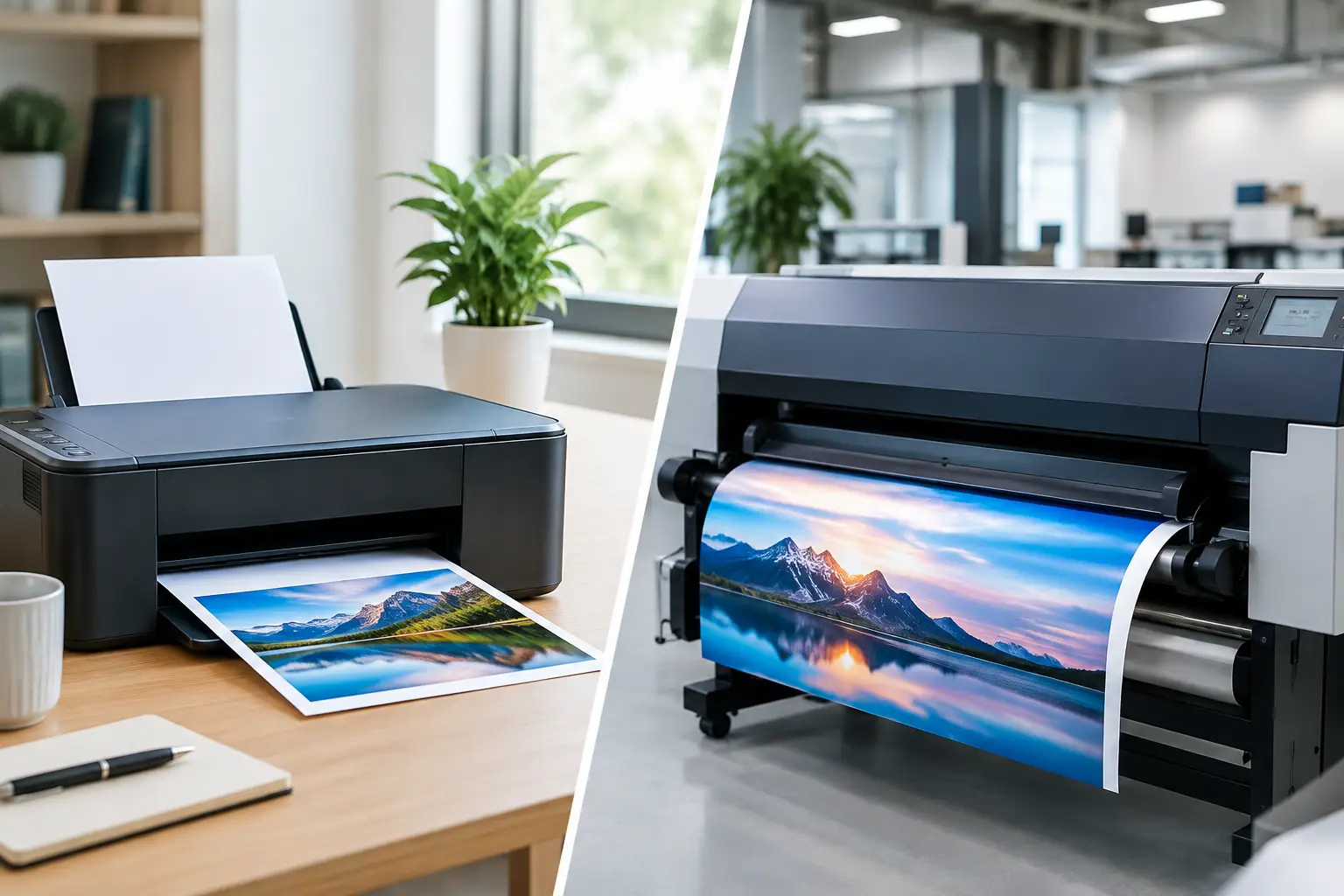
A custom Lotería deck can start as a joyful idea - your cousin as El Primo, your dog as El Perrito, the birthday guest of honor as La Reina - and quickly become the activity everyone reaches for. But once you have personalized cards and game boards ready, one practical choice shapes how the finished game feels in people’s hands: print at home versus professional printing.
There is no single right answer. A few game boards for a casual family night have different needs than 30 complete card sets for a wedding welcome party or a community fundraiser. The best choice comes down to your guest count, timeline, budget, and how often you want the game to be played after the celebration.
Print at Home Versus Professional Printing: The Real Difference
Home printing is about speed and flexibility. You can generate your files, print what you need, make a last-minute text change, and have a playable game on the table the same day. It works especially well for a small gathering, a classroom activity, or a test run before producing a larger batch.
Professional printing is about finish, consistency, and durability. A print shop can produce clean edges, stronger color, heavier card stock, and a more polished result across dozens of copies. When your deck is part of the décor, a keepsake, a client gift, or a product you plan to sell, those details are not small. They are part of the experience.
Think of it this way: printing at home helps you move fast. Professional printing helps your personalized Lotería feel built to last.
When Printing at Home Makes Sense
Printing at home is a smart choice when the project is small, informal, or still evolving. Maybe you are making six game boards for a family reunion. Maybe you want to see how the cartoonified portraits look at card size before committing to a full run. Maybe the party is this weekend, and waiting for a print order is not an option.
It also gives you control over quantity. You do not have to estimate exactly how many pieces you will need weeks ahead of time. Print another game board if unexpected guests arrive. Replace one card if it gets splashed with salsa. Update a nickname when someone reminds you that Tía Rosa absolutely does not go by Rosita.
The cost can be lower upfront, especially if you already own a reliable color printer and have paper on hand. For a limited number of sheets, that convenience can outweigh the premium finish of a print shop.
Still, home printing is not automatically the cheapest path. Ink costs add up fast, particularly when your deck includes colorful illustrations, backgrounds, and full-page game boards. A project that looks inexpensive at first can become costly after multiple test prints, premium paper, replacement ink cartridges, trimming supplies, and laminating pouches.
A home-print setup that feels intentional
If you choose to print at home, give your game a little production care. Use heavier matte paper or card stock rather than basic copy paper. Matte stock is often easier to read under indoor lighting and tends to make illustrated details feel richer without glare.
Print one test page before running the full set. Check that faces are clear, text is readable, colors are not too dark, and important details are not sitting too close to an edge. Your screen is bright and backlit. Paper is not. A vibrant orange or deep purple may print differently than it appears on a laptop.
For cards, use a paper cutter instead of scissors whenever possible. Straight, consistent cuts make even a simple home-printed deck feel more finished. If you expect lots of enthusiastic play, laminating the game boards is a practical upgrade. You can also place cards in sleeves, although that will change their texture and thickness.
When Professional Printing Is Worth It
Professional printing earns its place when the deck needs to look polished from the first card to the last. This is often the better route for weddings, milestone birthdays, corporate events, retail products, branded activations, and community programs where multiple groups will play at once.
The biggest advantage is consistency. A professional printer can reproduce the same colors across a full batch, cut every card to the same size, and use stock designed to hold up to shuffling, passing, stacking, and repeated use. That matters when your game includes personal photos transformed into artwork. You want every familiar face, funny expression, and carefully chosen label to look crisp and recognizable.
Professional options also open the door to details that are difficult to recreate at home: rounded corners, thicker card stock, double-sided cards, coating choices, and precise trimming. These features can make a custom deck feel closer to a retail game than a party printable.
For a larger event, professional printing may also save time you would otherwise spend feeding sheets into a printer, monitoring ink levels, trimming hundreds of cards, and sorting sets. Your time has value, especially during the final stretch before a celebration.
Ask the printer the right questions
You do not need to be a print-production expert to place a strong order. Start with your intended use. Tell the printer whether you need game boards, individual calling cards, player cards, or complete deck sets. Mention how many guests will be playing and whether the pieces are disposable, keepsake-quality, or meant for repeat use.
Ask about stock weight, finish, cutting, turnaround time, and proofing. A proof is your opportunity to catch a misspelled name, unexpected color shift, or trim issue before the full batch is produced. It is particularly helpful when your design uses a border, since uneven trimming can make a border look off-center.
Also confirm the final size before ordering. A beautiful card is less useful if it is too large for guests to hold comfortably or too small for older players to read. Your deck should feel as playable as it is personal.
Compare the Costs Beyond the Price Per Page
The home-versus-professional decision often starts with budget, but the real comparison is broader than the number on a receipt.
At home, you pay for paper, ink, wear on your printer, and finishing supplies. You also take on the labor. For 10 cards, that may be easy. For 500 cards, it can turn into a long evening of cutting and collating.
With professional printing, the upfront total may be higher, especially for a small order. But the per-piece cost often improves as quantity grows, and finishing is usually included in the production workflow. If the project requires many identical sets, professional printing can become the more practical investment.
Consider the role the deck will play. If it is a one-time icebreaker at a casual picnic, home printing may be perfect. If it is a wedding favor guests will take home, a holiday gift for the whole family, or a product for your small business, professional quality supports the value you have created.
Start With Files Designed for Print
Whether you print yourself or send files to a shop, the design stage makes a major difference. Build with clear text, strong contrast, and enough breathing room around every photo and illustration. Avoid tiny labels and overly delicate details that may get lost once ink hits paper.
Modern Lotería Studio helps turn the creative part into a focused workflow: upload your photos, cartoonify them, customize your card text, and generate print-ready cards and game boards. That gives you files created for a complete game system rather than a collection of unrelated images.
Before printing, review every card as a player would. Can guests quickly identify each character? Are names spelled the way your family or community uses them? Does the board feel balanced and easy to scan? A few minutes of review can prevent a full batch of cards with a tiny but unforgettable mistake.
A Simple Way to Choose
Choose home printing when you need a small quantity quickly, want to keep the project flexible, or are making a casual game for a limited group. It is also ideal for testing your deck before a larger run.
Choose professional printing when you need many sets, want durable cards, care about precise trimming and consistent color, or are creating a game that should feel like a special keepsake. It is the stronger choice when your Lotería deck represents your event, organization, or business.
You can also combine both options. Print a sample deck at home to check scale, readability, and color direction. Then send the final version to a professional printer once every face, phrase, and family inside joke is exactly where it belongs.
The best printed Lotería is not defined by where it came off the press. It is defined by the moment someone spots themselves on a card, laughs, calls out the name, and realizes this familiar game was made for their people.