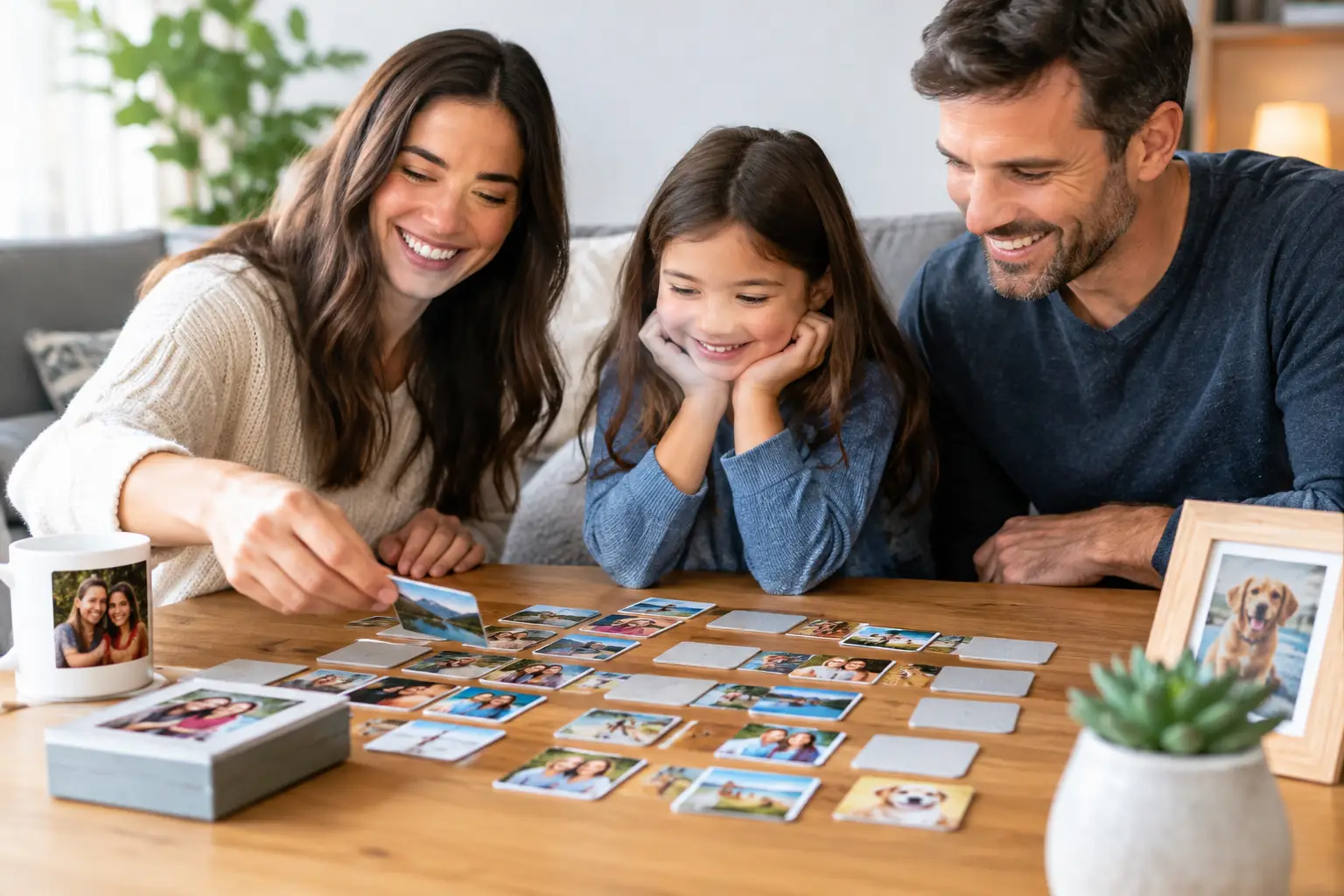
A framed family photo can be lovely. But photo gifts become unforgettable when the people in the picture get to do something: make everyone laugh, spark a story, and bring the whole room into the moment. A custom Lotería deck turns your favorite faces, pets, places, and punchlines into a playable celebration that does not sit on a shelf.
That is what makes it such a natural fit for birthdays, weddings, reunions, holidays, classroom celebrations, and community events. Instead of trying to find one object that captures a relationship, you can create a game full of the people and memories that already make it special.
Why photo gifts work better when people can play
The best personalized gifts feel specific. They say, “This could only belong to us.” A custom game deck takes that feeling further because every card gives guests another reason to recognize someone, remember a trip, or repeat the joke that never gets old.
Picture a family reunion game board filled with cousins, grandparents, beloved dogs, and the backyard grill master. Or imagine a wedding deck where each card introduces a member of the wedding party, a favorite restaurant, the proposal spot, and the couple’s signature dance move. The deck is personal before the first card is called, then becomes a shared activity once everyone sits down to play.
There is also a practical advantage. Some customized presents are meaningful but hard to use in a group. A personalized Lotería deck gives people a reason to gather around the same table. It works for the person who loves sentimental keepsakes and for the guest who just wants to win a round.
Start with the moment you want to celebrate
A great deck does not need a hundred perfect photos. It needs a clear point of view. Before you upload anything, decide what the deck is honoring: one person, one event, one family, or one community. That choice helps you select images and write card names that feel connected rather than random.
For a milestone birthday, build around the guest of honor’s people and personality. Include their childhood photo, their favorite snack, their karaoke anthem, their weekend hobby, and the friend who has known them since middle school. For a baby shower, consider the parents-to-be, grandparents, nursery details, family nicknames, and a few future-adventure cards.
A reunion deck can be broader. Each branch of the family might get a few cards, along with familiar places, recipes, sayings, and traditions. If the group includes relatives who have not seen each other in years, the game becomes an easy conversation starter without forcing anyone into an awkward icebreaker.
For a business, classroom, or organization, think beyond headshots. Create cards for team rituals, local landmarks, programs, values, mascots, and the people who make the group recognizable. The result can be part welcome activity, part branded keepsake, and part proof that your community has its own visual language.
Choose photos that read clearly on a card
Not every favorite photo needs to become a card. Lotería cards are viewed quickly, often from across a table, so clarity matters more than a complicated background or an elaborate pose.
Choose images with one obvious subject. A close-up of your aunt smiling, a clear shot of your dog in a bandana, or a recognizable photo of the family taco stand will usually translate better than a crowded group selfie. If you do use group photos, make sure the person or moment you want to feature is easy to spot.
Good lighting helps, but the image does not have to look professionally staged. A slightly imperfect photo can carry the most personality. What matters is that the expression, object, or scene is recognizable enough to shine after it is transformed into artwork.
Try to mix people, objects, places, and playful details. If every card is a portrait, the deck can start to feel visually repetitive. A card for “La Cafetera,” “El Primo,” “The Group Chat,” and “La Abuela’s Salsa” gives the deck rhythm while keeping its world personal.
Give each card a name worth calling
Card text is where your deck picks up its voice. You can keep names simple, use a mix of English and Spanish, lean into family nicknames, or write titles that sound like your group. There is no single right formula. The best wording is the wording your people immediately understand.
Short names are easiest to call during a game. “La Tía,” “The DJ,” “El Chismoso,” and “The Road Trip” are quick, clear, and full of character. Longer phrases can work when the joke is worth it, but consider whether players will enjoy hearing it repeated several times.
If you are creating a deck for a multicultural family or mixed-age group, clarity can be more valuable than trying to make every name bilingual. You might use Spanish for the terms everyone already uses at home and English for the references that fit better that way. The goal is not to perform a language choice. It is to make the deck sound like your gathering.
Turn photos into a cohesive visual set
A deck feels polished when its cards belong together, even when the images come from different years, phones, and lighting conditions. This is where a consistent cartoon-style transformation makes a real difference. It gives each photo a shared visual energy while keeping the person, pet, or object recognizable.
With Modern Lotería Studio, you can upload your photos, cartoonify them, customize the card text, and build a complete set without illustrating every card from scratch. That means less time trying to match colors, crop images, or arrange layouts, and more time deciding which inside joke deserves its own card.
Consistency does not mean every card should look identical. A strong deck can include a formal wedding portrait next to a goofy vacation snapshot and a drawing-worthy image of a favorite meal. The shared art treatment and card structure make the variety feel intentional.
Theme choices can help set the mood, too. A bright, playful look suits a kid’s birthday or a lively family holiday. A cleaner palette may fit a wedding, a professional event, or a brand activation. Choose the style based on where and how the deck will be used, not just what looks good on a screen.
Build for the way your group will actually play
A beautiful deck is better when it is easy to use. Think through the size of your group, the age range, and whether the game is a main event or a casual activity happening alongside food, music, and conversation.
For a large party, make sure the most important cards are easy to recognize and the names can be called without extra explanation. For a smaller gift, you can make the details more specific. A deck for two best friends can feature deep-cut references that would confuse a room full of wedding guests, and that is exactly why it works.
Game boards deserve the same attention as cards. They should be easy to scan and varied enough that players are not all waiting for the same few cards. Before finalizing, review the full set as a collection. Are certain people featured too often? Is one side of the family missing? Do the cards balance heartfelt memories with funny ones?
It also helps to consider print early. A print-ready layout saves you from last-minute resizing, blurry screenshots, or cards that do not line up correctly once they leave the screen. If you are making the deck for an event, give yourself enough time to review names, check image selections, and get the finished materials ready before the celebration.
Keep the cultural connection personal and thoughtful
Lotería has a recognizable visual language and a deep cultural place in many Mexican and Mexican American households. A custom deck can honor that familiarity by treating the game as a living format for your own stories, rather than a generic party theme.
That can mean preserving the joyful anticipation of calling cards, using the names and references your family actually shares, and making space for new traditions alongside old ones. It can also mean being thoughtful when creating a deck for a mixed group. Personal details are what make the game feel genuine, not copying stereotypes or relying on surface-level imagery.
Your version does not need to replace anyone’s classic deck. It can sit beside it: one for the traditional symbols everyone knows, and one for the people at this year’s table.
A memorable gift does not have to be serious to matter. Pick the photos that make your people light up, name the cards the way your group talks, and leave room for a few ridiculous entries. When the first card is called and someone says, “That is so us,” you have made more than a present. You have made a reason to play together.