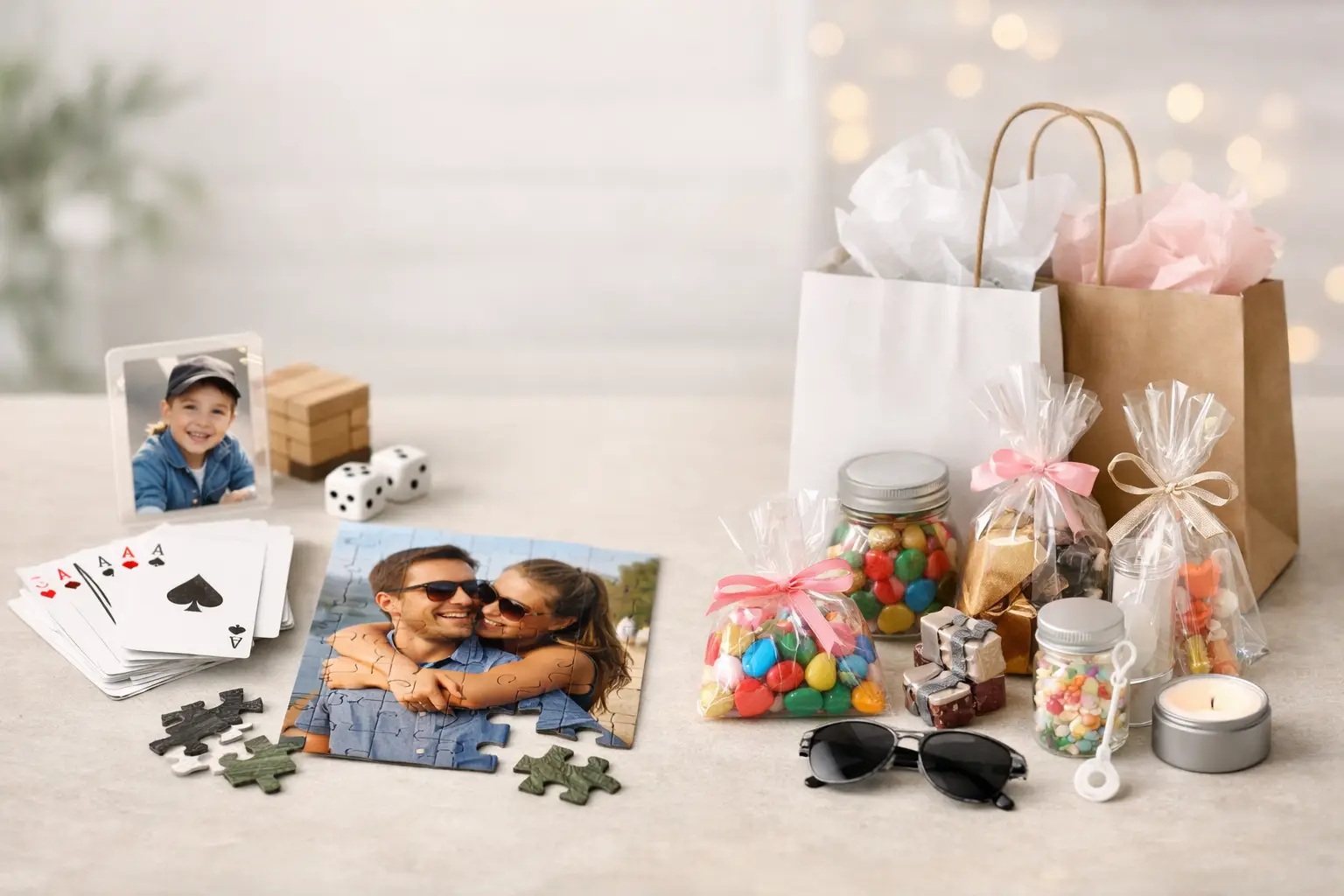
A favor table can look beautiful and still be forgotten by the time guests get home. That is the real difference in personalized games versus party favors: one gives people a small item to take, while the other gives them a reason to laugh, compete, remember, and connect while they are together.
For a birthday, wedding, family reunion, holiday party, or community event, neither choice is automatically better. A party favor can be exactly right for a quick thank-you or a large guest list. But when the goal is to make the celebration feel personal from the first round to the final goodbye, a custom game can carry more of the moment.
What Party Favors Do Well
Party favors are simple by design. They greet guests at their seats, fill gift bags, and create a visual moment that fits the event theme. A candle with a custom label, a bag of sweets, a mini bottle of hot sauce, or a small keepsake can be a warm gesture without asking guests to do anything beyond accepting it.
They work especially well when your event has a packed schedule. At a wedding with a short cocktail hour, a school celebration with multiple activities, or a corporate event with guests coming and going, a favor does not need instructions, setup time, or a shared table. It is easy to distribute, easy to photograph, and easy to scale.
The trade-off is that most favors are passive. Even a thoughtful item can blend into the pile of things guests collect over a busy weekend. Personalization helps, but a name, date, or monogram alone may not create a memory people talk about later.
A favor is usually strongest when it reflects something genuinely specific: your grandmother's pan dulce recipe, a local artist's illustration, a meaningful family saying, or a treat guests can enjoy on the spot. If the item could appear at almost any celebration, it may look polished without feeling especially personal.
Why Personalized Games Change the Room
A game creates participation. Instead of giving every guest the same object and hoping it lands, you invite them into a shared experience built around the people and stories that brought everyone together.
Custom Lotería is a natural fit because the format is familiar, visual, and easy to join at different comfort levels. Guests do not need to be expert players to recognize the excitement of hearing a card called, checking their board, and realizing their cousin, wedding party, favorite teacher, or family dog has become part of the deck.
When you upload photos, cartoonify them, customize the card text, and generate print-ready cards and game boards, ordinary event details become the game itself. The bride's signature dance move can be a card. Your tia's famous chile relleno can be a card. The neighborhood landmark, the group chat joke, the toddler who runs every family gathering, and the friend who always arrives with dessert can all have a place.
That kind of personalization does more than decorate the event. It gives guests instant conversation starters. People point out their card, tell the story behind it, and notice details they might not have known about each other. For multicultural families and Mexican American households, a modern Lotería deck can also honor a beloved game structure while making room for the specific people, humor, and traditions in the room.
Personalized Games Versus Party Favors: Compare the Real Value
The most useful comparison is not cost per item alone. Think about what each option needs to accomplish for your guests.
A party favor is an individual takeaway. It is often inexpensive per guest, particularly when ordered in quantity, and it requires very little event time. Its value comes from presentation, usefulness, and sentiment. If you want everyone to leave with a small token, it does that job well.
A personalized game is both entertainment and a keepsake. It asks for more planning up front because you need photos, names, inside jokes, and enough time to create and print the materials. In return, it can replace or reduce the need for a separate icebreaker, table activity, or post-dinner entertainment. A single deck can give a group an experience before it becomes something they take home or play again.
There is also a difference in visibility. Favors may sit quietly on a table until the end of the event. A game brings people into the center of the celebration. It can fill a lull between courses, get relatives talking at a reunion, give kids and adults a shared activity, or create a welcoming entry point for guests who do not know many people yet.
That does not mean a game must replace favors every time. A smaller celebration may benefit from both: play custom Lotería during the party, then let each household take home a game board, a mini set of cards, or a printed card as a meaningful memento. For large events, you might use the game as the main interactive feature and reserve favors for VIP guests, wedding party members, or volunteers.
Choose Based on Your Event, Not a Trend
Start with the question: what do you want guests to remember? If the answer is a beautiful detail, a favor may be enough. If the answer is the way everyone laughed when a familiar face was called, a personalized game is the better investment.
Choose party favors when simplicity matters most
Favors make sense when guests will be moving quickly, when there is little room for seated play, or when your event already has a full program. They are also practical for celebrations where the host wants a consistent, easy-to-carry thank-you for every attendee.
They can be the right choice for a shower with a short schedule, a grand opening with drop-in traffic, or a large fundraiser where hundreds of guests are expected. In those settings, forcing an activity can feel less welcoming than offering a thoughtful item people can enjoy on their own time.
Choose a personalized game when connection is the goal
A custom game shines when your guest list includes people with stories worth sharing. Family reunions, milestone birthdays, engagement parties, weddings, holidays, classroom celebrations, and community gatherings all benefit from a moment that gives people permission to interact.
It is especially useful when different generations, friend groups, or languages will be in the same room. Visual cards help guests follow along, and familiar photos make the game feel accessible even before anyone learns the rules. You can tailor the text to your family, event tone, or brand voice, from heartfelt to delightfully chaotic.
For organizations and small businesses, a personalized Lotería deck can do double duty. Use it at an event to invite participation, then keep the deck as a branded resource for future pop-ups, workshops, team gatherings, or customer appreciation moments.
Make the Game Feel Polished, Not Complicated
The best custom game is specific without becoming confusing. Choose photos guests can recognize quickly, and write card names that are short enough to call aloud. Mix obvious favorites with a few surprise cards so players have quick wins and new details to discover.
Aim for a balanced deck. Include the people at the center of the occasion, but also add the places, foods, sayings, pets, hobbies, and memories that make the group feel like itself. If every card is a close-up of one person, guests may enjoy the novelty but miss the larger story.
Give yourself room for production. Gather photos early, confirm spellings and nicknames, and test a few card names with someone who knows the group well. Modern Lotería Studio helps turn those ingredients into cartoon-style artwork, editable cards, and print-ready game boards, so you can focus on the fun details rather than building a deck layout from scratch.
At the event, place boards where people can see them, appoint an energetic caller, and keep a few small prizes nearby if competition fits the mood. The prize does not need to be elaborate. A first pick at dessert, a tiny trophy, or bragging rights can be enough.
A great celebration does not need more stuff. It needs moments that feel unmistakably yours. Whether you choose a favor, a game, or a combination of both, let your guests leave with a story they can replay long after the last card is called.