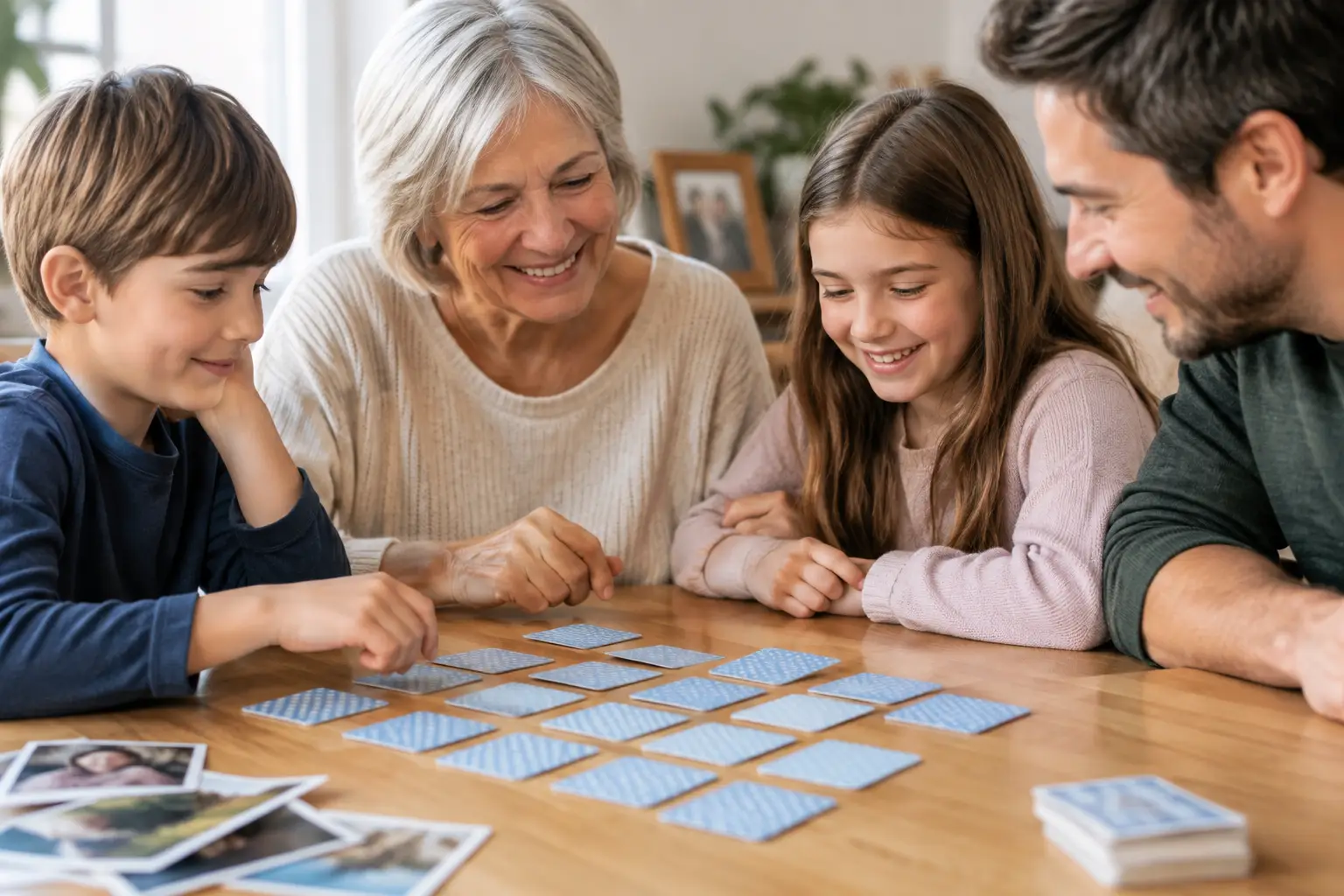
A favorite photograph can hold more than a face. It can bring back the road trip where everyone got lost, a grandmother’s perfect tamales, a friend’s unmistakable laugh, or the phrase a loved one said so often that the whole family can still hear it. Memorial games give those memories a place to be shared together, rather than held quietly by one person.
For families planning a celebration of life, anniversary gathering, reunion, or intimate remembrance, a game can offer a gentle way to tell stories. It is not about making grief performative or asking people to be cheerful on command. It is about creating room for the full picture: the tenderness, the humor, the little details, and the people who are still part of the family story.
What Makes Memorial Games Meaningful?
The best memorial games feel personal because they are built around real relationships. A generic trivia sheet may fill a few minutes, but a game that includes familiar photos, nicknames, recipes, favorite places, and family sayings invites guests to recognize something true.
That recognition matters at gatherings where generations, friend groups, and branches of a family may not all know one another well. A cousin can learn about the uncle who taught everyone to fish. A child can hear why their great-grandmother was called La Jefa. Old friends can swap stories that the immediate family has never heard. The activity becomes a shared prompt, not a test of who knew the person best.
There is also value in play. Grief does not erase joy, and joy does not lessen love or loss. A thoughtful game gives people permission to smile when they remember a funny habit or a classic family moment. For many households, that balance feels more honest than a gathering that leaves no space for laughter.
Memorial Lotería Creates a Shared Memory Table
Lotería is especially suited to memorial games because its familiar format is built around images, names, and calling cards. Instead of using traditional characters alone, a personalized deck can feature the people, places, objects, and inside jokes that made someone’s life distinct.
Imagine a card for El Cafecito with a photo of the mug your dad carried everywhere. Or La Jardinera for an aunt whose backyard was always full of flowers. A card titled El Domino might honor the family member who never missed game night. The goal is not to reduce a person to a collection of symbols. It is to choose details that open a door to a story.
A custom Lotería game can work beautifully at a memorial reception or as a keepsake to play later at home. Guests can mark their tablas while a caller reads each card name, then pause naturally when a memory surfaces. If the room is small, one person can call. If it is a larger celebration, invite different relatives to call cards and share one quick story before the next draw.
Modern Lotería Studio makes that creative process approachable: upload personal photos, cartoonify them, customize the card text, and generate print-ready cards and game boards. The result can look polished and cohesive without requiring anyone to illustrate a full deck or manage a complicated layout.
Choose the Right Tone Before You Design
Not every memorial gathering needs the same kind of game. The right approach depends on the person being honored, the timing of the event, and the comfort level of the people attending.
A lively, humorous deck may be perfect for someone known for hosting loud family parties, telling jokes, or bringing everyone together around food. For a recent loss or a more formal service, a quieter game with family photos, meaningful objects, and simple card names may feel better. You can also design a deck that leans warm rather than funny, using favorite flowers, hometown landmarks, music, pets, and traditions.
Talk with close family members before choosing images and language. Some photos may feel too private. Some nicknames may be affectionate within one circle but confusing or uncomfortable for another. If you are creating the game as a gift, ask one or two trusted people to review the cards before printing. That small step can protect the spirit of the project.
How to Build a Memorial Game People Will Want to Keep
Start by gathering a manageable set of memories rather than trying to capture an entire life at once. A focused deck is often more moving than one packed with every available photo. Look through shared albums, ask relatives to send a few favorites, and write down the everyday details people mention most often.
Then shape those memories into a clear game experience.
- Pick a theme that feels like them. A food-loving family might build cards around recipes, restaurants, and kitchen memories. A music-centered tribute could include instruments, songs, concerts, and dance-floor moments. A broader family deck can mix portraits with places and beloved traditions.
- Use photos with a strong story behind them. A technically perfect portrait is not always the best choice. A slightly imperfect photo of someone laughing, cooking, fishing, holding a grandchild, or wearing their signature outfit can say much more.
- Write card names that sound familiar. Keep the language natural to your family. Spanish, English, Spanglish, regional phrases, and affectionate nicknames can all belong in the same deck when they reflect the people playing it. Short names are easiest to call aloud and easiest for guests to recognize.
- Make the boards playable, not just pretty. Repeat key images across different tablas, check that each board has a fair mix of cards, and use readable text. A beautiful deck should still work when guests are holding it across a table, chatting, eating, and helping children play.
If there are many contributors, give everyone a simple assignment. Ask siblings for childhood photos, cousins for funny stories, friends for favorite sayings, and grandchildren for drawings or captions. You do not need to use every submission, but collecting them turns the creation process into part of the remembrance.
Make Space for Every Kind of Guest
Memorial games work best when participation is an invitation, not an expectation. Some guests will be ready to play immediately. Others may prefer to watch, look through the cards, or join later. Set up the game at a side table or include it during a relaxed portion of the gathering so nobody feels put on the spot.
A brief introduction helps. You might say that the deck was made from memories of the person you love, that guests are welcome to play or simply browse, and that every card has a story. This sets a warm tone without turning the activity into a formal presentation.
For children, the game can be especially helpful. Young family members may not know how to participate in a memorial event, but they understand pictures, stories, and the excitement of matching a card. Let adults explain who appears on the deck and why a certain object matters. It is a simple way to carry family history forward.
Accessibility matters, too. Choose clear, high-contrast images and legible type. If older guests will play, make the cards and boards large enough to handle comfortably. Consider having a printed reference sheet with the card names for anyone who would appreciate it.
Beyond the Day of the Gathering
The strongest memorial games do not have to stay in a box after the event. Send extra boards home with relatives, bring the deck out during holidays, or keep it with family photos and recipe cards. Over time, the same card may spark new stories as younger generations grow into the memories behind it.
That is the quiet power of a personalized game. It turns remembrance into something people can touch, play, revisit, and pass across the table. Start with one image, one phrase, or one tradition that still makes your family say, “That was so them,” and let the stories gather from there.