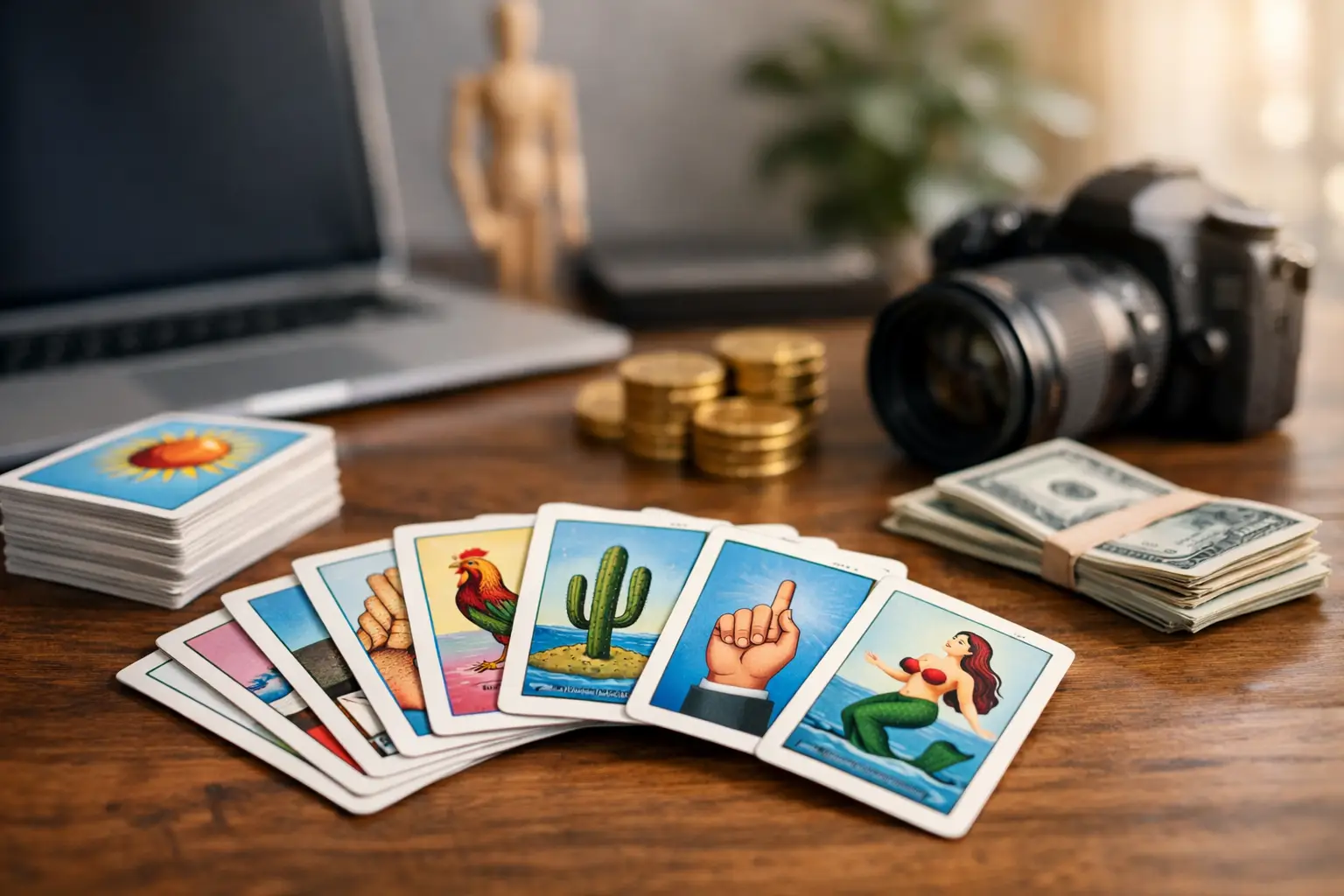
A custom deck can start as a birthday surprise and quickly become the hit of every pop-up, classroom, or community event. If you plan to sell it, use it in a client project, or include it in a paid experience, a loteria deck commercial license is the detail that helps turn your creative idea into a business-ready product.
The good news: you do not need to be a copyright expert to make thoughtful choices. You do need to understand what you are creating, who owns the images and words in it, and how the finished deck will be used. That clarity protects your work while giving you room to share it proudly.
What a Loteria Deck Commercial License Is
A commercial license gives permission to use a finished design or licensed platform output in a revenue-generating context. In plain terms, it addresses the question: can you make money with this deck, game board, or game material?
Commercial use can include selling physical decks at markets, creating branded games for clients, charging admission to an event that uses the game, or including custom Lotería materials in a paid workshop. It may also apply when a business gives decks away as part of a promotion, even if the deck itself is not sold.
A personal-use project is different. Making cards for your cousin’s wedding, a family reunion, or a classroom celebration is generally personal when no one is buying the materials or using them to promote a business. The moment the project becomes part of a sale, paid service, brand campaign, or resale product, review commercial permissions before you print.
The exact scope always depends on the license terms offered by the platform, artist, printer, or asset provider involved. A commercial license is not one universal document with identical rules everywhere. Read the specific policy for the tools and artwork you use.
When You Likely Need Commercial Permission
The simplest test is to look at the purpose of your deck, not only whether cash changes hands at checkout. If the deck supports a business, client, organization, or paid activity, commercial permission may be needed.
For example, an event planner may create a Lotería game featuring the wedding party and charge for a complete event package. A neighborhood café may order a deck with its menu items and logo for a customer appreciation campaign. An educator may develop a culturally responsive game resource to sell to other teachers. A maker may bring beautifully packaged custom decks to a market booth.
Those projects have different audiences, but they share one thing: the deck is connected to professional or promotional value. Commercial rights help establish whether that intended use is allowed.
There are gray areas. A nonprofit fundraiser, a school program, or a free community celebration may not feel like a traditional business project, yet it can still involve fundraising, sponsorships, public distribution, or organizational branding. When in doubt, treat it as a commercial-use question and confirm the terms before production.
What Commercial Use May Cover
A loteria deck commercial license may allow you to sell or distribute physical products made from your authorized deck files. Depending on its terms, it can also permit use in marketing materials, branded activations, client deliverables, or paid events.
That does not automatically mean unlimited use. Licenses often set boundaries around the number of copies, whether you can sell editable files, whether you can transfer the design to a client, and whether you may use the platform’s artwork outside the deck-building workflow.
For a small business, those boundaries are useful. They help you price accurately and choose a production plan that matches your goals. If you are testing a deck at one local market, you may need a different level of permission than a creator preparing a large retail run or a brand launching a national campaign.
Think through these practical questions before you order:
- Will you sell printed decks, digital files, or both?
- Is this your own product, or a project you are delivering to a client?
- How many copies do you expect to make in the first run?
- Will the deck include logos, sponsor names, or promotional offers?
- Do you need one-time event use or ongoing retail rights?
Your answers make it easier to match the license to the project instead of discovering a limitation after packaging, printing, and promotion are underway.
Your Photos, Names, and Brand Details Still Matter
Commercial permission for a design platform does not replace permission from the people, organizations, or photographers represented in your deck. If you upload personal photos, make sure you have the right to use them for the way you plan to share or sell the final product.
For a deck built around your own family photos, this may be as simple as asking relatives before placing their likeness on products for sale. For a school, workplace, sports team, or community group, get written approval from the organization and anyone prominently featured. Be especially careful with children’s photos, customer images, and private event pictures.
The same care applies to names, logos, mascots, and trademarks. A deck celebrating a local business can be a joyful branded piece, but use the business name and visual identity only with permission. Do not assume that being a fan of a brand gives you the right to put its logo on cards you plan to sell.
Originality is one of the best parts of custom Lotería. Make the deck unmistakably yours with your own people, inside jokes, products, neighborhood landmarks, and event language. That approach creates stronger cards and reduces the risk of relying on someone else’s protected artwork or brand assets.
Keep the Cultural Connection Respectful and Personal
Lotería has a beloved visual vocabulary and a deep cultural place in many Mexican and Mexican American households. A modern custom deck can celebrate that familiarity while making space for new stories: the auntie who runs every gathering, the family dog in a tiny bow tie, the friend who always brings pan dulce, or the neighborhood gardener everyone knows.
Commercial projects deserve the same care. Avoid treating cultural references as decoration without context, especially when the deck is made for audiences outside the traditions that inspire it. Work from real connection, collaboration, and specificity. If a client wants a deck rooted in a particular community, invite that community’s voice into the card choices, language, humor, and imagery.
This is not about making every deck overly formal. Lotería is playful, lively, and built for shared recognition. It is about ensuring the fun comes from genuine personality rather than a borrowed stereotype.
Build a Deck That Is Ready to Sell or Share
A commercially minded deck needs more than great card ideas. It needs consistency. Choose a clear audience first, then build the visuals, text, and game boards around a single experience. A wedding deck might feel romantic and mischievous. A restaurant deck can spotlight signature dishes and regulars. A community fundraiser can feature local heroes and familiar places.
Start with strong source photos. Use clear, well-lit images where the person or subject is easy to recognize. Then cartoonify them, customize the card text, and keep each label short enough to read during a fast game. Your cards should feel connected even when every image is personal.
Modern Lotería Studio helps creators move from uploaded photos to customized, print-ready cards and game boards without needing to illustrate or lay out every piece by hand. That matters when you are producing for clients or customers: you can spend more energy on the story of the deck and less on technical file setup.
Before finalizing, run a real game test with a few people who match your intended audience. Watch for cards that are confusing, repeated concepts, text that is too small, or images that are difficult to identify quickly. A deck is not only a collection of beautiful cards. It is a game, and it should be easy to play.
A Smart Pre-Launch Check
Before you announce a sale or send files to print, confirm your commercial permissions, photo releases, logo approvals, and production quantity. Save copies of approvals in one project folder. If a client is involved, put the agreed deliverables and usage rights in writing so everyone understands whether the deck is for one event, a limited campaign, or ongoing sales.
Also consider how you will present the finished product. A short description can explain what makes the deck special, who it was made for, and how it is meant to be played. Clear packaging and polished print materials make a custom deck feel like a complete product rather than a last-minute party favor.
Your deck can hold a whole community in 54 cards: familiar faces, favorite foods, shared laughter, and stories people want to tell again. Give the creative work the same care as the licensing, and you will be ready to put something meaningful into people’s hands.