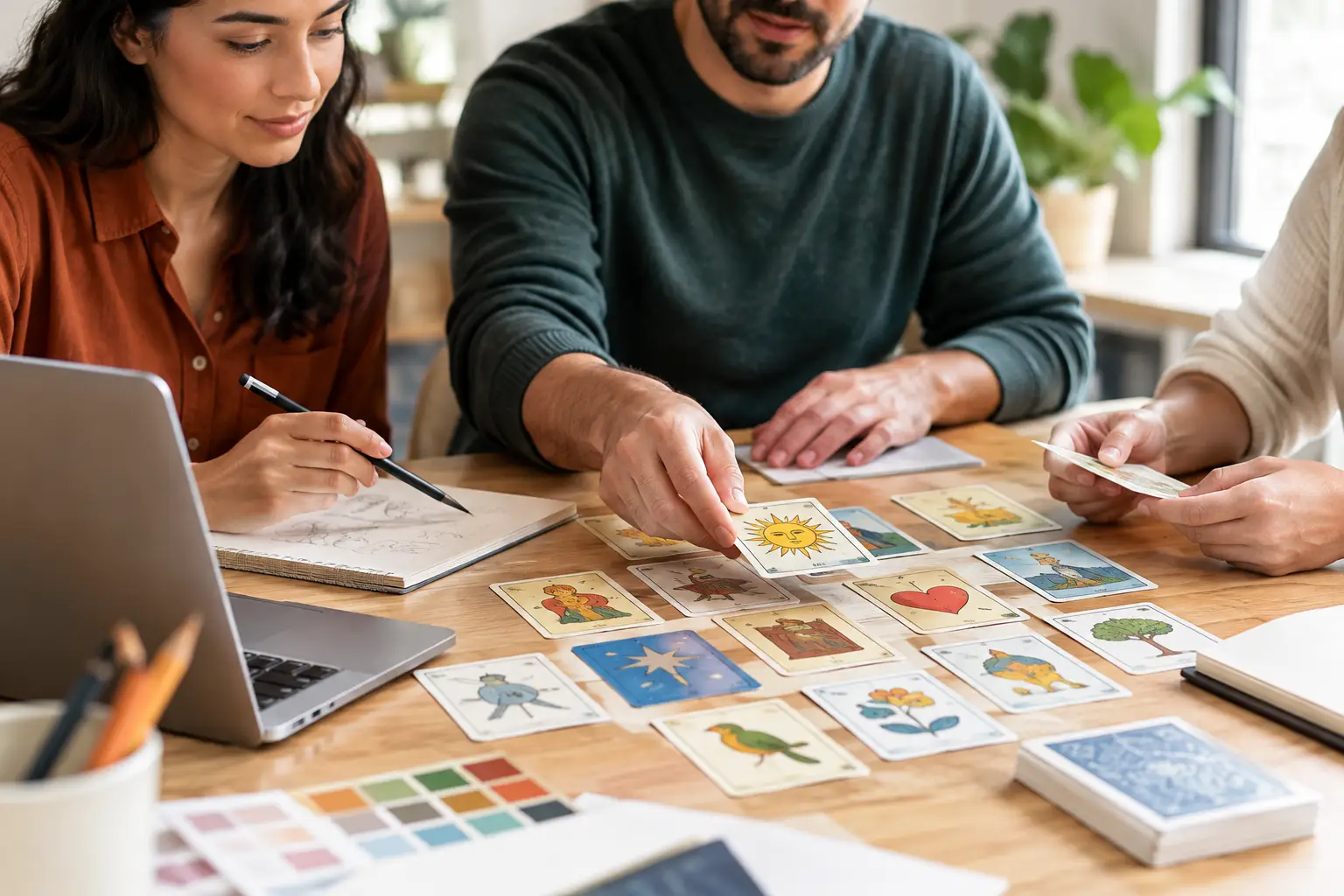
A custom deck gets more meaningful when the people in it help shape it. A thoughtful Lotería deck collaboration workflow keeps family photos, inside jokes, event details, and creative opinions moving toward one finished game instead of getting lost in group texts.
Whether you are planning a wedding welcome party, a family reunion, a classroom activity, or a branded community event, collaboration should make the deck richer, not harder to finish. The key is giving everyone a clear way to contribute while one person protects the visual direction, card count, and production timeline.
Start With One Clear Deck Purpose
Before anyone uploads a photo or suggests a card name, decide what the deck is celebrating. A deck for a milestone birthday may center on the guest of honor's favorite people, foods, catchphrases, and memories. A wedding deck might introduce both families, honor shared traditions, and include details guests will recognize from the couple's story.
Write one or two sentences that define the project. For example: "This 36-card deck celebrates our grandparents' 50th anniversary through family members, beloved recipes, and memories from their home." That small statement helps the group make better decisions later. If a suggested card is funny but has no connection to the deck's purpose, it may be better saved for another project.
Next, choose your deck size and deadline. A smaller deck is easier to coordinate and can feel more focused for a single event. A larger deck gives more contributors a chance to appear, but it requires more photos, more naming decisions, and more review time. Build in extra time if relatives are sending images from different cities or if several organizers need to approve the final set.
Give Each Contributor a Simple Role
Collaboration works best when everybody knows what kind of help is needed. You do not need a committee for every card. You need a few clear roles and a final decision-maker.
The project lead keeps the deck moving. They set the deadline, decide the card count, organize feedback, and make final calls when opinions differ. This role is especially helpful for weddings, reunions, and business projects where the deck must be ready by a firm date.
Photo contributors provide the raw material. Ask them for a small, specific set rather than an open-ended photo dump. For instance, invite each family branch to submit two to four clear photos, plus the name they want shown on the card. If old family photos are part of the concept, assign someone to scan and label them early.
Idea contributors can suggest card names, recurring jokes, meaningful places, and local details. They are often the people who make a personalized deck feel alive. Still, give their ideas a boundary: ask for suggestions by a certain date, then move into selection mode.
A reviewer checks accuracy. This person catches misspelled names, incorrect nicknames, missing accents, and details that may land differently with different generations. For commercial or community decks, they can also verify that people, logos, and images are approved for use.
Collect Photos Without Creating a Mess
The fastest way to slow a custom deck is receiving 87 unnamed photos with messages like, "Maybe use one of these?" Set photo requirements before you request anything.
Ask contributors to send clear, well-lit images where the subject is easy to see. A close-up or waist-up photo usually translates better than a distant group shot. If the card celebrates a pet, a favorite meal, a hometown landmark, or a business product, the same rule applies: choose an image with one obvious focal point.
Create a naming pattern that everyone can follow. Something as simple as FirstName_CardIdea is enough. "TiaRosa_LaReina" is far more useful than "IMG_4829." If multiple people share similar names, add a family name or event label.
It also helps to collect a short caption with each photo. Ask: What should this card be called? Is there a story or detail we should know? Does this person have a preferred name? Those answers prevent the project lead from guessing later.
If the deck includes children, living relatives, clients, or members of a community group, be direct about permission. A playful game card is still a published image. Confirm that each participant is comfortable being included, especially if the deck will be sold, shared publicly, or used by an organization.
Build the Card List Before You Design Everything
A card list is the bridge between everyone's ideas and a deck that actually plays well. Start by gathering the possibilities, then narrow them into a balanced set. You want a mix of people, objects, places, foods, traditions, and playful references so the game does not become a row of nearly identical portraits.
For a family deck, you might pair relatives with signature dishes, vacation spots, family sayings, and meaningful objects. For a business or nonprofit deck, balance staff members with services, values, neighborhood references, and event moments. The goal is not to include every idea. It is to create a deck with variety, rhythm, and recognition.
Watch for overlap. If three cousins all want a card called "La Fiesta," choose one version or find more specific names that give each card its own personality. The same applies to repeated visual themes. Five cards featuring people holding drinks may be true to the event, but they can look repetitive on the table.
Once the list is approved, lock it before the full artwork review begins. Changes are still possible, but they should be treated as swaps, not additions. If a new card comes in, ask which existing card it replaces. This keeps the scope from quietly growing beyond the plan.
Use a Shared Review Process, Not a Group Debate
The artwork stage is where collaboration becomes exciting. Upload the selected photos, cartoonify them, customize the card text, and use one shared viewing point for feedback. Modern Lotería Studio makes it easier to turn those personal images into a cohesive deck without asking every contributor to become an illustrator or print designer.
Set a review window with a defined goal. The first review should focus on correctness: Is this the right person? Is the card name accurate? Is the selected photo flattering and recognizable? The second review can focus on polish: Does the text feel right? Does the set have a good mix of colors, poses, and themes?
Avoid asking, "What does everyone think?" That question invites broad, conflicting feedback. Ask for decisions instead: "Approve this card name or suggest one replacement by Friday." Or, "Choose Photo A or Photo B for this card." Specific prompts make it easier for people to respond and easier for the project lead to act.
Not every comment needs to become a change. A personalized deck should feel personal, but it also needs consistency. If one contributor requests a completely different art style, text treatment, or layout, consider whether that choice supports the deck as a whole. The best custom decks let individual cards shine while still looking like they belong together.
Protect the Print-Ready Finish
A deck can be full of heart and still need production discipline. Before generating final cards and game boards, run a last check for names, accents, punctuation, duplicated cards, and image quality. Read every card aloud if the deck will be played by guests who are unfamiliar with certain names or family references. If the caller cannot comfortably say it, consider whether a small adjustment would help.
Keep a final approval list with the project lead's name beside it. This is useful when a late message arrives after the file is already ready for print. You can decide whether the request is a true correction or simply a new preference that belongs in a future edition.
Also confirm the practical pieces of the game. Make sure the game boards use the final card set, the number of boards fits your guest count, and the calling order is complete. For an event, it is smart to prepare a little extra material rather than discovering that two tables do not have boards.
A Collaboration Workflow That Leaves Room for Joy
The best workflow is not the one with the most rules. It is the one that gives people a meaningful way to contribute, then turns those contributions into a finished deck on time. Clear roles, photo guidelines, a locked card list, and focused review rounds protect the project from last-minute confusion.
Leave room for the unexpected favorite, too. Sometimes the card that gets the biggest laugh is a treasured old photo, a family dog, a plate of tamales, or a phrase only your group understands. When the process is organized, you can make space for those details - and still hand guests a polished game they will want to play again.