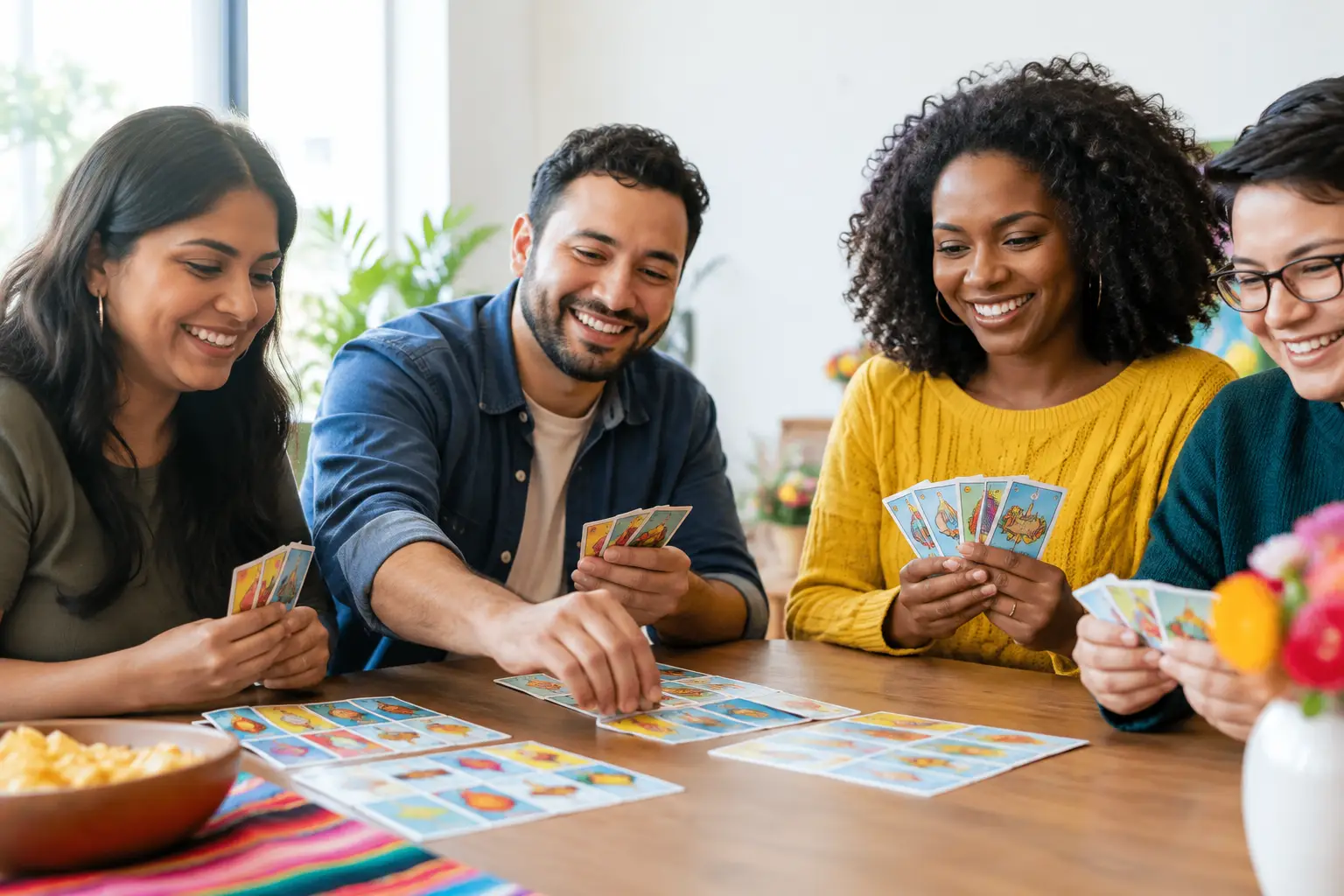
A great Lotería table has room for the loud auntie who calls out every card, the shy cousin who needs a quick rules refresher, the child who wants to help, and the friend attending their first family celebration. That is the heart of inclusive Lotería event planning: creating a game that feels personal, easy to enter, and genuinely fun for everyone in the room.
Lotería already brings people together through familiar images, quick recognition, and a little friendly competition. A custom deck gives you the chance to make that connection even stronger. When guests see their own faces, family jokes, local landmarks, favorite foods, or meaningful traditions on the cards, the game becomes part icebreaker, part memory book, and part celebration.
Start With the People in the Room
Before choosing photos or writing card names, think about who will play. A wedding deck may bring together relatives from different cultures and generations. A school or community event may include people with different language backgrounds, reading levels, mobility needs, and comfort with games. A birthday party might have a mix of longtime friends and newer guests who do not know the inside jokes yet.
That does not mean every card has to explain everything to everyone. It means the deck should offer multiple ways in. Balance highly personal cards with images that are immediately recognizable, such as a shared meal, a family pet, a neighborhood mural, a dance floor, or a favorite holiday tradition. Guests who are new to the group can still play confidently, while those closest to the occasion get the extra delight of spotting the details.
When using people’s photos, ask for permission before including them, especially if you plan to print a large run or share the deck beyond the event. For children, get approval from a parent or guardian. This small step protects privacy and tells your guests that their image is being included with care.
Build a Deck That Invites Participation
The strongest custom decks do not treat personalization as a private joke club. They use it to tell a story that more people can enjoy. Start by gathering photos that represent the occasion from different angles: people, places, objects, traditions, and moments.
For a reunion, that might include the family cook, the old house, the road-trip van, the annual group photo, a beloved recipe, and the cousin known for arriving late. For a workplace event, it could include team rituals, shared tools, office pets, company values in plain language, and the neighborhood around the business. For a multicultural wedding, include details from both families and create cards that honor each side without reducing either tradition to decoration.
Modern Lotería Studio makes this process approachable: upload your photos, cartoonify them, customize the card text, and create cohesive game materials without needing to illustrate a full deck yourself. The polished visual style helps even a wide mix of photos feel like they belong together.
Choose card names with care
Card names shape the mood of the game. Keep them short enough to call clearly, but make them welcoming rather than confusing. “La Tía Rosa” works beautifully when Rosa is present or well known. If many guests will not know her, consider “La Tía Rosa, La Cocinera” or pair her with a visual detail that gives everyone a clue.
Avoid labels that make people the punchline. A playful deck can absolutely be funny, but humor lands best when it is affectionate, consensual, and understandable beyond one small circle. If a nickname could embarrass someone, skip it. There are plenty of better ways to celebrate personality.
Language choice depends on your guests. Spanish-only names may feel right for a Spanish-speaking family gathering. English may work best for a school event. Bilingual text can be a thoughtful choice for mixed-language groups, provided the card stays readable. You can also let the caller announce each card in both languages when that supports the room.
Make the Game Easy to Follow
Even guests who know traditional Lotería may be unfamiliar with your custom version. A simple welcome at the start removes that uncertainty. Explain how players mark their boards, what pattern wins, whether there will be more than one round, and how to ask for help.
Keep instructions visible near the playing area or print a small instruction card. Use large, high-contrast text for any rules, labels, or signage. If boards include text-heavy details, make sure the images remain distinct enough to recognize at a glance. Clear visuals help young players, older guests, and anyone who is still learning the language used at the event.
The calling style also matters. Traditional verses can be lively and meaningful, but they are not required for every group. You might call the card name first, then add a short clue or story: “La Tamalera - the one who feeds everybody before they ask.” This gives players time to find the image and invites laughter without making the pace too fast.
Consider offering a practice round. It takes only a few minutes and gives first-time players permission to ask questions before prizes or bragging rights are on the line. For large events, appoint a friendly helper at each table who can explain the rules without interrupting the caller.
Plan for Access, Space, and Pace
Inclusive Lotería event planning is not only about what appears on the cards. It is also about the experience around the table. Make sure there is enough table space for game boards, markers, drinks, and mobility devices. Leave clear paths between chairs, and avoid placing the caller where guests cannot see or hear them.
Markers should be easy to handle. Small beans may be traditional, but they are not always practical for young children, guests with limited dexterity, or venues where food is being served. Larger tokens, reusable chips, or simple paper markers can work better. The best choice depends on the venue and the age range of your group.
Think about sensory needs, too. A packed party with amplified music may need a quieter Lotería corner or a microphone for the caller. A smaller gathering may be more comfortable with a relaxed pace and fewer rounds. If the event includes children, build in a clear time limit so the game stays exciting rather than overwhelming.
Offer more than one way to win
A full-board win can take time, and some guests will enjoy a quicker round. Mix up the patterns: four corners, a line, an X, a picture frame, or a themed shape that suits the celebration. Announce the pattern before each round and show it visually when possible.
Multiple winners can be especially useful at community events or large family parties. It keeps the energy generous and reduces the feeling that only the fastest player gets to participate. Prizes do not need to be expensive. A small treat, a printed photo, first pick at dessert, or simple applause can make winning feel festive.
Print for a Smooth Event Day
Your deck should look special, but it also has to work under real party conditions. Print enough game boards for every expected player, plus extras for late arrivals, spills, and enthusiastic guests who want another round. If you are hosting several tables, organize boards in labeled bundles before the event.
Use sturdy cards and boards when possible. Flimsy paper can be fine for a quick classroom activity, while a wedding, reunion, or annual holiday tradition may call for more durable materials. Print-ready files make it easier to choose the paper, finish, and quantity that match your budget and timeline.
Do a full test before the event. Shuffle the cards, check that every board has a valid mix of images, and ask one person who did not help create the deck to play a round. If they cannot quickly tell one card from another or understand the rules, adjust before you print the final set.
Let the Deck Carry the Memory Forward
The best custom Lotería games do not end when someone shouts “¡Lotería!” Guests often keep talking about the card that looked exactly like Grandpa, the running joke that finally made it onto a board, or the image that captured the whole spirit of the day.
Save a few extra decks or boards for hosts, family members, and contributors. A personalized deck can become a meaningful party favor, a classroom keepsake, or the beginning of a yearly tradition. Give your guests a game where they can recognize themselves, learn something about each other, and leave with one more reason to remember the celebration.