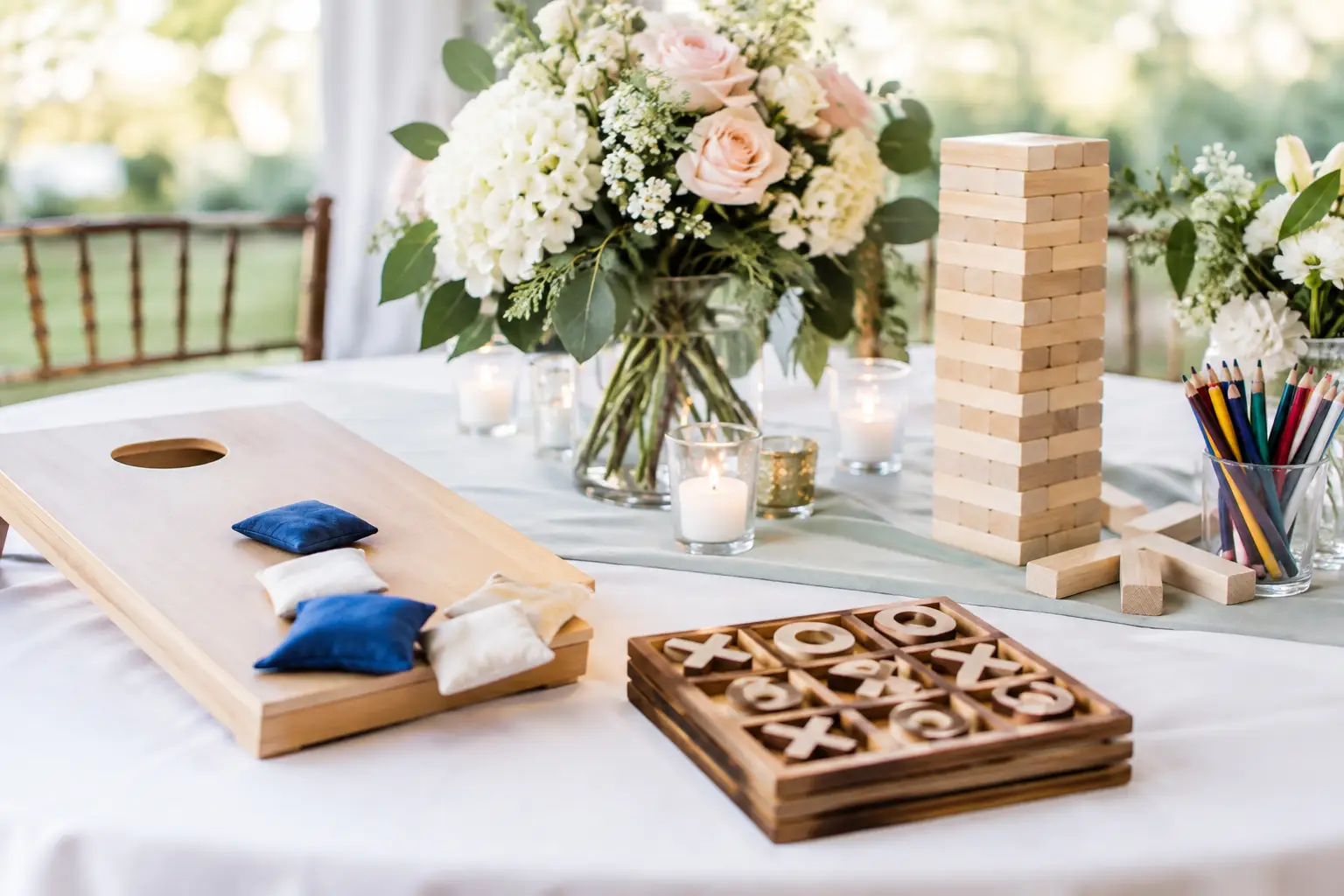
A beautiful place setting gets noticed. A table game that makes guests laugh, recognize the couple’s favorite people, and start swapping stories gets remembered. If you’re wondering how to create wedding table games that feel personal instead of like a restaurant kids’ menu, begin with the moments only your guests would understand: the first-date spot, the dog with a fan club, the family catchphrase, or the friend who is never on time.
The best wedding games are easy to pick up between cocktails, dinner courses, and speeches. They give guests something to do without asking them to stop celebrating. A personalized Lotería-style game is especially suited to that rhythm because it is visual, social, and instantly inviting - even for guests who have never played before.
Start With One Clear Table Moment
Before choosing card designs or writing prompts, decide when the game will be played. This one decision keeps the game useful rather than decorative.
For cocktail hour, choose something guests can play standing up or in short bursts, such as a wedding-themed bingo card or a conversation card. During dinner, use a game that works at each table with minimal instructions. A custom Lotería game, trivia sheet, or “find someone who” card can keep the energy warm while guests wait for the next course. After dessert, a more competitive game can work if you plan to have an emcee or a lively group ready to lead it.
For most receptions, the sweet spot is a game that takes five to 15 minutes. It should be understandable from the card itself, with one short instruction line. Guests should not need an app, a login, or a long explanation from the couple.
Choose a Game That Matches Your Guest List
Wedding table games work best when they reflect the people in the room. A 200-person reception with several generations needs a different format than an intimate backyard dinner with 30 close friends.
A personalized Lotería game is a strong choice for multicultural celebrations, Mexican American families, and anyone who wants a familiar game structure with a fresh, personal look. Replace traditional images with cartoon-style portraits of the couple, wedding party, pets, favorite foods, meaningful places, and inside jokes. A card titled “La Tía” or “The Late Friend” can make a table light up in recognition, provided the joke is affectionate and easy for the right audience to understand.
Wedding bingo is ideal when you want guests to observe the day itself. Squares might include “someone cries during vows,” “a guest takes a selfie,” or “the DJ plays a throwback.” Trivia works well for guests who know the couple from different chapters of life, but keep it welcoming. Include a mix of easy questions and surprising facts so newer friends do not feel left out.
Conversation cards are the quietest option. They are useful for tables where not everyone knows each other, with prompts such as “What is your best advice for a long partnership?” or “What song always gets you on the dance floor?” They create connection without putting anyone on the spot.
Build the Content Around Shared Memories
Personalization is what turns a printable activity into a keepsake. Aim for a mix of people, places, and small details that tell the story of your relationship.
For a custom deck, collect clear photos of the couple, immediate family, wedding party, pets, and any people you know will enjoy being featured. Then add images or ideas connected to your shared life. A favorite taco stand, a record player, a long-distance flight, a rainy proposal, or your signature cocktail can all become cards.
Keep the mix balanced. Too many private references can leave half the room confused, while a deck made entirely of generic wedding symbols can feel interchangeable. Include enough universally recognizable cards - the ring, the cake, the dance floor, the bouquet - to welcome every guest, then layer in the details that make the game unmistakably yours.
When writing card labels, choose language that fits your celebration. You might use Spanish, English, or both. A bilingual deck can feel especially thoughtful at a wedding where families bring different languages and traditions to the table. Keep labels short, readable, and consistent in style. A warm nickname is better than a paragraph-long explanation.
Create Wedding Table Games With a Simple Workflow
You do not need illustration skills or a complicated design program to make the game look polished. Start by organizing your photos in one folder and deciding how many unique images you need. For a Lotería-style game, your deck size depends on the number of cards and boards you plan to use, but you do not have to feature every guest to make it feel personal.
Modern Lotería Studio makes this process approachable: upload your photos, cartoonify them, customize the text, and generate coordinated cards and game boards designed for print. The result can look cohesive even when your original photos come from different years, lighting conditions, and phone cameras.
As you design, use a clear visual system. Choose one color palette that complements your wedding stationery, but do not make every element too pale. Table games need enough contrast to be readable in dim reception lighting. Large type, high-contrast labels, and distinct illustrations matter more than tiny decorative details.
Make sure each board varies. If every table receives the same layout, multiple winners may call out at once, which can be fun but less satisfying if you want a single prize. Different board combinations make the game feel fair and keep guests engaged. For casual play, it is perfectly fine to let several tables win.
Make the Rules Effortless
A game should never become another item on your wedding-day coordination list. Print the instructions directly on the board or on a small matching card. For Lotería, explain how to mark a called image and which pattern wins: a row, four corners, or a full board.
Decide who will call the cards. A member of the wedding party can take this role, but you can also invite each table to play independently by placing a mini deck at the table. Independent play is relaxed and flexible, especially when dinner service timing is unpredictable. A hosted round creates more shared energy but requires a microphone, a caller, and a clear moment on the schedule.
Choose markers that suit your setting. Small tokens, wooden chips, or candy pieces are festive. Avoid anything that rolls easily, stains linens, or creates a choking risk around young children. If you use edible markers, place them in small bowls so the table still looks intentional.
Print for Real Reception Conditions
A game that looks great on a screen can be hard to use at a crowded table. Print game boards at a size guests can comfortably read without moving their centerpieces. Letter-size boards are practical for one or two players, while larger boards work better for shared table play.
Use sturdier paper or cardstock for calling cards and reusable boards. If your game is likely to encounter spilled champagne, sauce, or enthusiastic toddlers, consider a protective finish or reprintable extras. Print more than you think you need. A few spare boards, cards, and marker sets solve small mishaps before they become a planning problem.
Proof every label before sending files to print. Check names, accents, nicknames, and bilingual wording with someone who knows both families well. This is not just a production step. Getting the details right is part of making guests feel seen.
Give Guests a Reason to Join In
Prizes help, but they do not have to be expensive. A small bottle of sparkling wine, a late-night snack token, a framed photo from the photo booth, or first access to the dessert table can be enough. For an intimate wedding, the prize can simply be bragging rights and a photo with the newlyweds.
The invitation matters more than the prize. Place the game where people will naturally see it, and let your emcee, wedding party, or a printed sign give it a friendly nudge. Try language like: “Find your board, grab a marker, and play when your table is ready.” It feels optional, easy, and welcoming.
The most successful wedding table game does not compete with your celebration. It gives guests a playful way into it. When they spot themselves, their family, and your shared story in the cards, the game becomes more than an icebreaker - it becomes a little piece of the wedding they can take home.