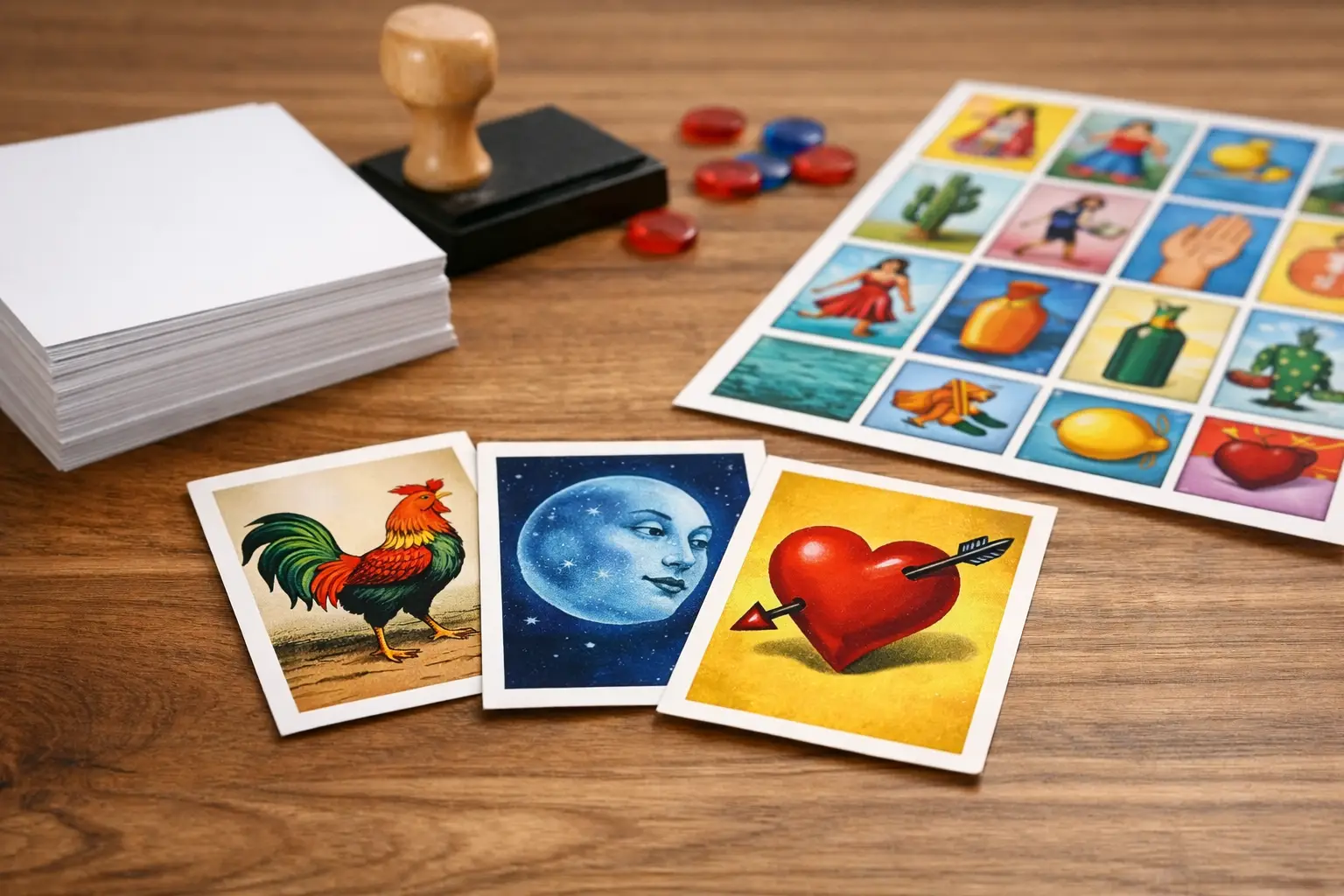
A custom Lotería deck gets passed from hand to hand, tucked into a purse, dealt across a crowded table, and sometimes claimed by a very enthusiastic cousin. That is why game card paper is more than a final print setting. The stock you choose affects how your cards feel, how your photos and cartoon artwork look, and whether your deck still feels special after a dozen joyful rounds.
For a birthday, wedding, family reunion, classroom activity, or branded event, the best paper is the one that fits how the deck will actually be used. A keepsake deck may call for a more polished finish. A large community game may need a practical, budget-aware option. Start with the experience you want people to have when they pick up the first card.
What Game Card Paper Should Feel Like
Traditional playing cards have a distinct snap: they are firm enough to deal, flexible enough to shuffle, and smooth enough that the artwork stays front and center. Custom Lotería cards do not have to copy every feature of casino-grade cards, but they should avoid two common problems: feeling flimsy or feeling so stiff that they behave like postcards.
For most personalized decks, a medium-to-heavy cardstock is the sweet spot. It gives each card enough body to feel intentional while keeping the deck easy to hold. Printers may describe this stock by weight, thickness, or point value. Those labels are useful, but they are not interchangeable from one paper maker to another. A 100 lb cover stock from one supplier can feel different from another 100 lb cover stock.
When comparing options, ask for the paper thickness, often called caliper, and whether it is coated or uncoated. If possible, hold a printed sample rather than selecting by a number alone. The best test is simple: deal a few cards, stack them, bend one gently, and look closely at the printed color.
Cardstock versus standard copy paper
Standard office paper is fine for a quick test deck, a one-time classroom handout, or a prototype you plan to revise. It is not ideal for cards that will be shuffled and reused. It can curl, show through from the other side, and wear quickly around the edges.
Cardstock is a better choice for a deck meant to be played. It provides opacity, so the back design is less likely to show through the front. It also supports richer color and makes photo-based artwork look more finished. If you have uploaded family photos and transformed them into playful illustrated portraits, cardstock helps those faces remain crisp and celebratory rather than looking like ordinary printouts.
Coated or Uncoated Game Card Paper?
The finish changes both the look and the job of your cards. There is no single winner. It depends on whether your priority is vivid artwork, writeability, durability, or an understated handmade feel.
A coated stock has a surface layer that keeps ink closer to the top of the sheet. Colors often appear brighter, dark backgrounds look deeper, and detailed cartoon-style images can look especially clean. Gloss coating brings the most shine, while silk or satin finishes offer a softer sheen with less glare. For photo-forward decks, a satin finish is often a comfortable middle ground: polished enough for a gift, but easier to read under party lights than a high-gloss card.
Uncoated stock has a more natural, tactile surface. It can make a deck feel warm, artisanal, and easy to personalize by hand. If guests will write names, add notes, or mark cards for an activity, uncoated paper is usually the better fit. The trade-off is that colors may appear slightly softer, and the surface can pick up marks more easily during frequent play.
For most event decks, choose coated cardstock when the cards are the main attraction and uncoated cardstock when interaction on the card itself matters. If you want the best of both worlds, ask a printer whether a low-glare coated option is available.
Match the Paper to the Way You Will Play
A deck for a small family gathering has different needs than materials for 150 wedding guests. Thinking through the setting early can save you from paying for a premium finish where it will not be noticed, or choosing a lightweight option that cannot survive the event.
For a keepsake deck, prioritize weight and finish. A sturdy coated cardstock with clean trimming makes personalized cards feel gift-worthy. Add a protective box, sleeve, or band if the deck will travel home with guests.
For a wedding reception or milestone birthday, readability matters just as much as durability. Choose a finish with low glare, especially if guests will be playing beneath string lights, in a bright outdoor space, or while looking at cards from several seats away. Use high contrast between your custom illustration, card name, and background color.
For classrooms, fundraisers, and community events, focus on practical handling. A durable uncoated or satin cardstock can work well, particularly when you need many sets. Consider printing a smaller deck size if little hands will be playing, or use larger cards when the game is being called for a room.
For commercial projects, samples are essential. Your card stock becomes part of the customer experience, so test the deck in its packaging, check how the corners hold up, and make sure every card back is opaque enough to keep the game fair.
Do Not Forget the Game Boards
Lotería cards and tablas do different work, so they do not always need the same paper. Cards need to be dealt, picked up, and shuffled. Game boards need to lie flat, stay readable, and handle beans, tokens, or small markers placed on top.
A game board printed on the same cardstock as the cards can work nicely for a simple set, especially if you are making a small number of boards. For a more substantial presentation, use a heavier cover stock or mount the board to a backing material. A folded board is convenient for packaging, but it introduces a crease that may interrupt the artwork or make tokens slide. A flat board feels more premium, though it requires more storage space.
If you are creating boards for a large group, consider the viewing distance. Small squares can look elegant on screen but become frustrating across a banquet table. Leave enough room for markers and make the personalized images easy to recognize at a glance.
Print Choices That Protect Your Artwork
Paper and printing method work together. Digital printing is often ideal for custom Lotería because it handles short runs, variable names, and decks with lots of personalized photos. It is also practical when every family, event, or client needs a different set.
Offset printing may make sense for larger quantities, but it usually requires more setup and is less flexible for one-of-a-kind decks. Either way, ask for a printed proof when color matters. Screens are bright and backlit; paper is not. A vivid pink, deep blue, or warm skin tone can shift once ink meets a particular stock.
Build a little safety into the layout, too. Keep important text and faces away from trim edges, and include bleed so background colors reach the edge after cutting. Rounded corners reduce wear and feel familiar in the hand. A protective coating can help with spills and scuffs, though very glossy protection may create glare.
Modern Lotería Studio makes the creative part easier by helping you upload photos, cartoonify them, customize card text, and generate print-ready game materials. Before sending any finished file to print, still confirm the printer's preferred dimensions, bleed, color settings, and stock recommendations. A print-ready file is strongest when it is paired with a printer who understands the intended result.
Order a Sample Before the Full Run
A sample is not a delay. It is the fastest way to catch the details that matter once the game is in real hands. Print a small set with a few light images, a few dark images, tiny text, large text, and the card back. Then use it the way your guests will.
Check whether the cards stick together, whether the text is easy to read, and whether the back can be seen through the front under bright light. Put a few cards in a bag, shuffle them repeatedly, and let someone unfamiliar with the deck call a round. Their first reaction will tell you more than a screen preview ever can.
The right game card paper lets your inside jokes, beloved faces, family traditions, and bold new artwork take center stage. Choose a stock that supports the way people will gather around it, then let the cards do what great Lotería has always done: spark recognition, laughter, and one more round.