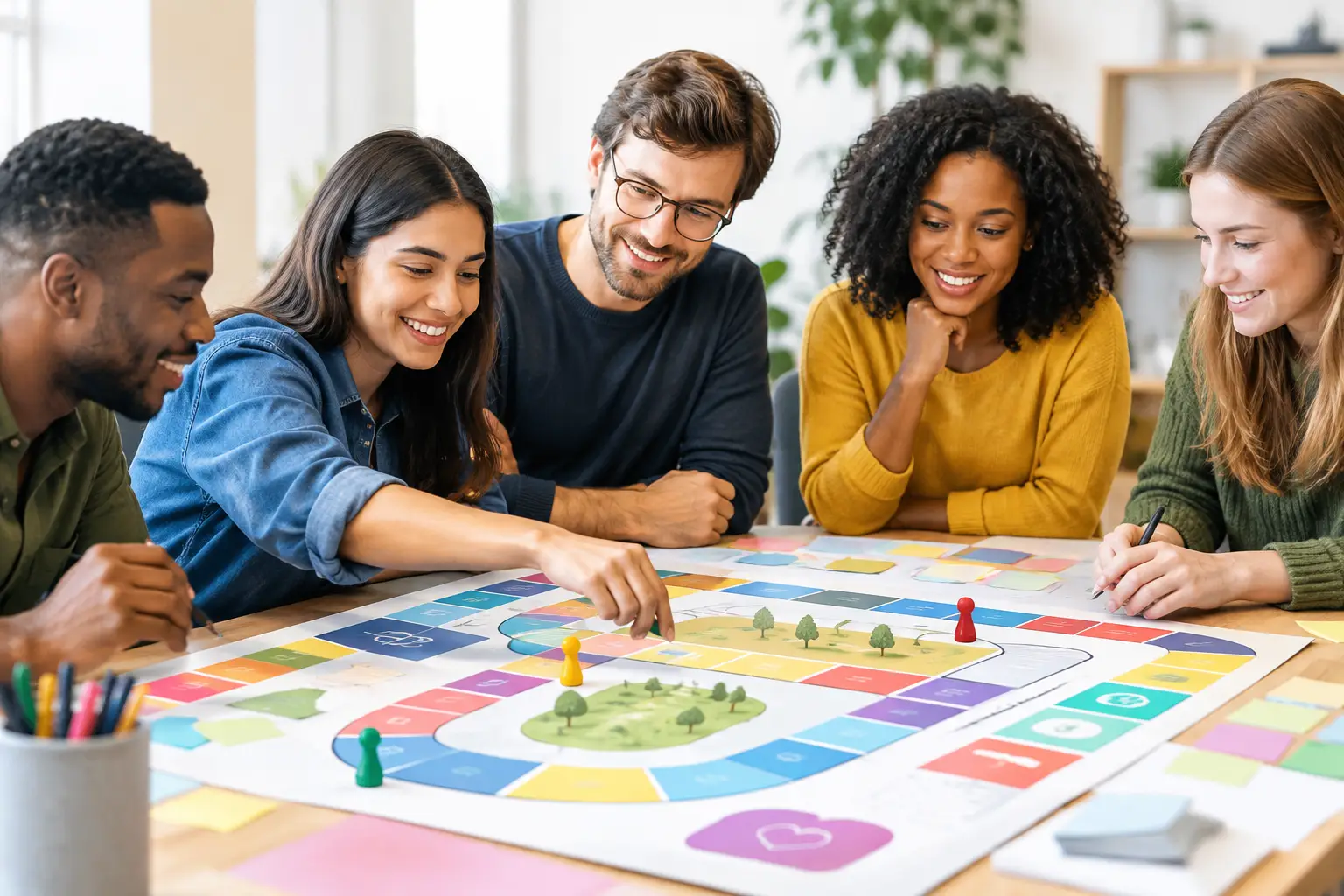
A great community gameboard does more than fill time between announcements. It gets people talking, laughing, recognizing familiar faces, and feeling like the event was made with them in mind. When you design community event gameboards around real people, local traditions, and shared memories, a simple round of Lotería can become one of the most photographed moments in the room.
The goal is not to fit every fact about a neighborhood, school, organization, or celebration onto a board. The goal is to create quick visual moments of recognition. A player sees a card, calls out a name, remembers a story, and suddenly the game belongs to everyone at the table.
Start With the Community Story
Before choosing colors or uploading photos, decide what the game is celebrating. A neighborhood block party may center on local landmarks, favorite vendors, and longtime residents. A school fundraiser may feature teachers, mascots, student traditions, and clubs. A cultural festival might spotlight foods, music, family sayings, and the people who keep those traditions moving forward.
Choose one clear theme that can carry the full deck. “Our community” is a starting point, but it is usually too broad on its own. A sharper idea, such as “25 years of our community garden” or “the people and places of our annual family reunion,” gives every card a job to do.
Think about the mix of players, too. If children, grandparents, newcomers, and longtime locals will play together, include references with different levels of familiarity. A beloved local bakery can sit beside a friendly illustration of the event DJ. That balance helps the board feel welcoming rather than like an inside-joke test.
Build Cards People Recognize at a Glance
Lotería works because each image is clear, memorable, and easy to call. Keep that principle at the center of your custom gameboard. A card should be recognizable in a second or two, even from across a table.
Photos are often the best place to begin. Invite community members to submit pictures of themselves, a meaningful object, a pet, a team jersey, or a favorite gathering place. Then cartoonify the images to create a consistent illustrated look. This is especially helpful when source photos vary in lighting, quality, and background.
Pair each image with short, readable text. A name like “La Coach Rivera” or “El Pan Dulce” tells players exactly what they are seeing while preserving the playful rhythm that makes Lotería so easy to join. Avoid long captions, job titles, or references that need explanation. If a card needs a paragraph of context to land, it may be better suited for a display sign than a game card.
Get permission before using people’s photos
Personalization feels joyful when it is invited. Ask before featuring recognizable people, especially children, volunteers, customers, or community members outside the planning group. Be clear about where the gameboards will appear, whether they will be printed or shared digitally, and whether the deck could be sold to raise funds.
For public events, it helps to offer a simple opt-in process. You will get better photos, fewer surprises, and a stronger sense of shared ownership. If someone would rather not be pictured, use an object or symbol connected to their contribution instead.
Design Community Event Gameboards for Play, Not Just Display
A board can look beautiful on a screen and still be hard to play. The practical details matter. Each square needs enough visual contrast that players can quickly find a called card, then mark it without covering the image completely.
Use a consistent card structure across the deck: image placement, type size, border treatment, and label position should stay predictable. You can still make the artwork colorful and expressive, but consistency reduces confusion during a lively game. A board with too many competing colors, tiny labels, or busy backgrounds asks players to work harder than they should.
Consider the setting before finalizing your layout. A game played at round tables in a bright community center has different needs than one played outdoors at a festival or projected on a large screen. For outdoor events, larger text and bolder shapes usually win. For a seated fundraiser, a more detailed board may work well, provided the printed size supports it.
The number of boards also matters. If you are expecting 80 guests, do not print only a handful of designs and assume people will happily share. Create enough unique gameboards to keep the room engaged and reduce duplicate winners. For smaller gatherings, a modest set can be plenty. It depends on the pace of the event, the number of rounds, and whether guests will be playing in teams.
Make the Calling Experience Part of the Fun
The caller sets the energy. Traditional Lotería calls can be poetic, funny, and full of personality, but your event does not need to copy a format that does not fit the crowd. You might call each card by its name, add a short clue, or invite the person pictured to stand up when their card appears.
Write calls that are warm, brief, and easy to understand over a microphone. A clever line is great, but not if it leaves half the room wondering which square to mark. Test a few calls aloud before the event. If they are difficult to say quickly or depend on a joke only organizers understand, simplify them.
This is also a good moment to decide how cultural references will be handled. Lotería has deep cultural roots, and a personalized deck should treat that heritage with care. Keep its iconic game structure recognizable while letting your own community’s stories shape the imagery. If your event includes multiple cultural traditions, make room for them thoughtfully instead of reducing them to decorative symbols.
Keep Production Simple and Print-Ready
Community organizers already have enough to coordinate. The design process should move from idea to playable materials without requiring illustration software or print-production knowledge.
With Modern Lotería Studio, you can upload personal photos, cartoonify them into a cohesive visual style, customize card text, and generate print-ready cards and gameboards in one workflow. That means less time adjusting layouts and more time choosing the people, memories, and details that make the deck feel like yours.
Before ordering or printing, review the full deck as a player would. Check that every gameboard uses valid cards, labels are spelled correctly, repeated images are intentional, and no card is too similar to another at a quick glance. Print one test board at its final size if possible. A small test can reveal text that feels too tiny, colors that print darker than expected, or images that need stronger contrast.
Plan the table materials, too. Players need markers that are easy to handle and safe for the venue. Beans are classic, but branded tokens, stickers, or small paper markers may better fit your setup. Have a few extras ready for late arrivals, spills, and enthusiastic players who want another round.
Give the Game a Life Beyond the Event
The best custom gameboards become keepsakes. They can be displayed at a check-in table, included in welcome bags, sold as a fundraiser, or sent home with volunteers and families. A personalized Lotería deck carries the story of the gathering long after the last prize is claimed.
If the event happens every year, save the core deck and refresh a portion of the cards for each new edition. Returning guests will enjoy spotting what changed, while new participants get a fast, colorful introduction to the community. Over time, the game becomes its own tradition.
Make the first board about recognition, not perfection. Choose the faces and moments your people will be happiest to see, put them in a clear playable format, and let the room do the rest.