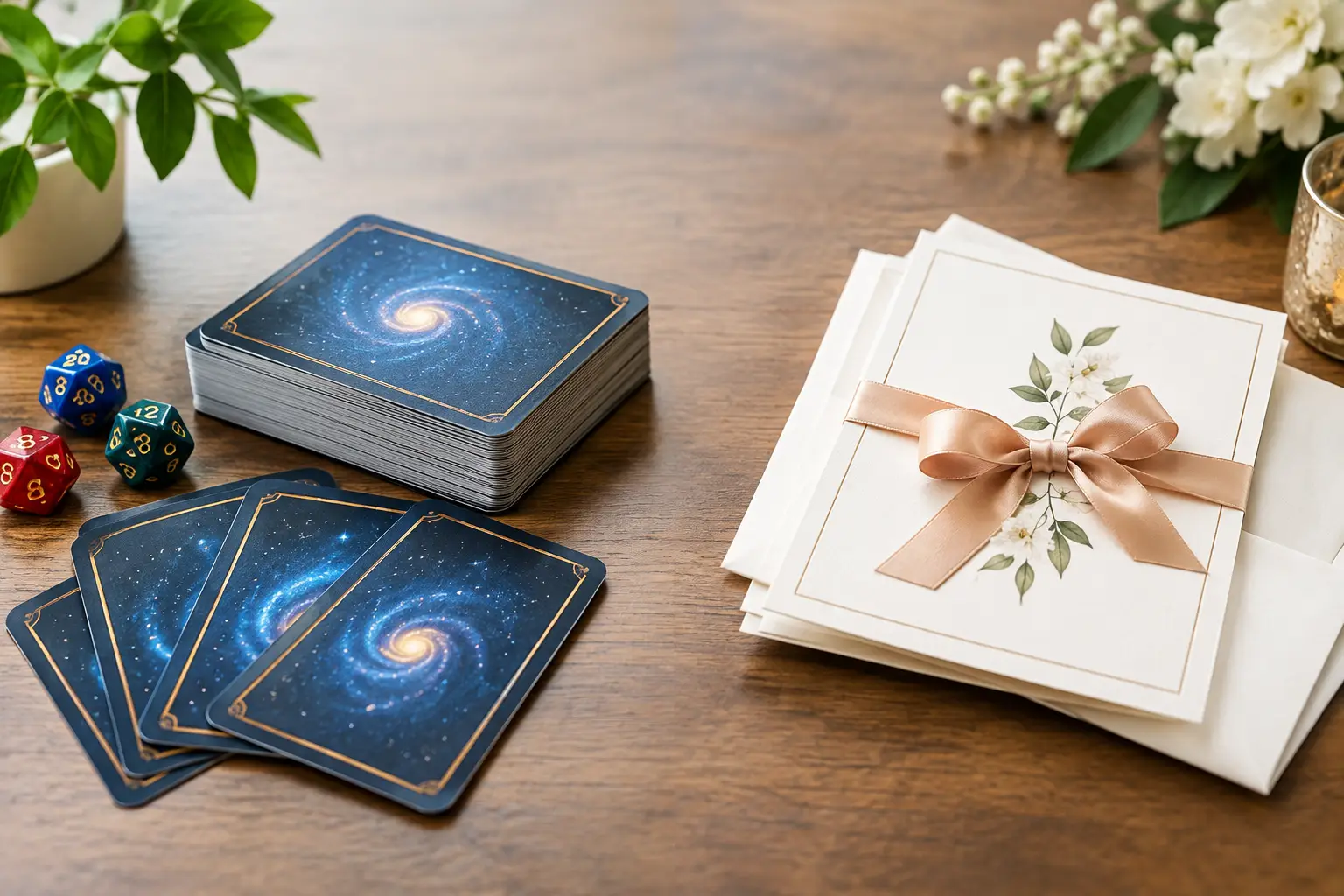
A wedding invitation can set the tone. A custom game deck can put that tone in everyone’s hands. When comparing custom game decks versus invitations, the real question is not which one looks better on a fridge. It is whether you want your event stationery to announce a celebration or become part of it.
For a birthday, reunion, wedding, shower, holiday party, or community fundraiser, a personalized Lotería deck creates a reason for guests to laugh, play, and recognize themselves in the details. It can still carry the essential event information, but it gives that information a life beyond one date on the calendar.
Custom Game Decks Versus Invitations: The Big Difference
Traditional invitations are designed for one clear job: tell people who is celebrating, when to arrive, where to go, and how to respond. They can be beautiful, formal, funny, sentimental, or bold. But once guests have added the event to their calendar, many invitations are tucked into a drawer, recycled, or replaced by a saved phone screenshot.
A custom game deck does something different. It combines the announcement, the décor, the activity, and the favor into one connected piece. Guests can receive it before the event, use it at the event, and bring it home afterward. Instead of simply reading about the couple, birthday honoree, family, or organization, they get to play with the stories, inside jokes, faces, and memories that make the gathering personal.
That does not mean invitations are obsolete. If your event is formal, your guest list is large, or you need a fast way to collect RSVPs and communicate logistics, a traditional invitation may be the right starting point. A game deck asks for more creative input and a little more planning. The payoff is a keepsake with more personality and more than one purpose.
When an Invitation Is the Better Choice
An invitation is often best when clarity and speed matter most. Think of a corporate dinner with strict timing, a ceremony with a formal dress code, or an event where guests need detailed travel, parking, accessibility, or RSVP information. A clean invitation gives every detail a clear home.
It can also be the practical option if your guest count is still changing or you are sending a save-the-date early in the planning process. You may not have photos, final colors, or a settled theme yet. In that case, send the invitation first and reserve the personalized game for the celebration itself.
Invitations also work well when the event does not naturally include time to play. A short ceremony followed by a tightly scheduled reception may leave little room for a full Lotería round. You can still create custom cards as table accents or favors, but a conventional invite may carry the planning load more efficiently.
The key is not to treat an invitation as less meaningful. A thoughtfully designed invitation can feel special. It simply has a narrower role.
When a Custom Lotería Deck Makes the Moment
A custom deck shines when people are the heart of the event. Family reunions, milestone birthdays, engagement parties, baby showers, wedding weekends, graduation celebrations, holiday gatherings, and cultural events all offer material worth turning into cards.
Imagine a reunion deck with La Abuela, El Primo, the family tamale pot, the old house, and the cousin who is always late. At a wedding, cards might feature the couple’s dog, the first date spot, a favorite dance move, or the friend group’s running jokes. For a child’s birthday, a deck can spotlight favorite snacks, hobbies, pets, and family members without requiring you to hire an illustrator or learn complicated design software.
The format is familiar enough to invite people in, especially for guests who grew up with Lotería or know its iconic visual rhythm. At the same time, personal photos and custom text make it feel unmistakably yours. It is cultural play, personal storytelling, and party energy in the same stack of cards.
Modern Lotería Studio makes that process approachable: upload your photos, cartoonify them, customize the card text, and generate print-ready cards and game boards. You do not need to build every layout from scratch to create something polished enough for a big celebration.
It Gives Guests Something to Do Together
A game deck is especially useful when guests do not all know each other. It gives tables a shared activity that does not require a long introduction. Grandparents, cousins, coworkers, neighbors, and new in-laws can all join in at their own pace.
This matters at events with natural downtime, such as cocktail hours, wedding weekends, open-house birthdays, reunion afternoons, and holiday parties. Instead of hoping conversation starts on its own, you place a playful, personal prompt directly on the table.
It Turns Personal Details Into a Keepsake
The best custom decks are not just photo albums cut into rectangles. They choose details that spark recognition. A beloved family recipe, a joke only siblings understand, a neighborhood landmark, a signature hairstyle, or a shared tradition can become a card that gets an immediate reaction.
That is why the deck often lasts longer than the party. Guests may frame a favorite card, bring the deck to the next family gathering, or keep it as a reminder of the people in the room. An invitation documents an occasion. A game deck can preserve its personality.
How to Decide Based on Your Event
Start with the guest experience you want to create. If you want guests to receive information and respond quickly, lead with an invitation. If you want them to interact with the story of the event, a custom game deck may be the stronger choice.
Then consider timing. For an event months away, you might send a simple digital or printed invitation first, then reveal the custom deck closer to the date. This gives you room to gather photos, refine your card names, and decide how many game boards you need. It also avoids trying to cram every logistical detail onto a card design meant for play.
Budget matters, too. A traditional invitation is usually the lower-cost route for a large list, particularly if most communication happens digitally. A custom deck is a more substantial piece, with cards, boards, and print preparation to consider. But it can replace several separate purchases: table entertainment, a personalized favor, and part of your event décor. For the right celebration, that combination can make the investment feel more useful rather than more expensive.
Finally, think about your audience. A deck is ideal for guests who enjoy playful interaction, family storytelling, or a cultural twist on a familiar format. For a highly formal audience, it may work best as a reception activity or takeaway rather than the primary invitation. There is no rule saying one format has to do every job.
A Smart Middle Ground: Use Both
For many events, the strongest answer is not custom game decks versus invitations as an either-or decision. It is a two-part experience.
Use an invitation to handle the essentials: date, time, location, RSVP, dress code, and any information guests need before they arrive. Keep it clear and easy to save. Then use your custom Lotería deck to build excitement, welcome guests at the event, or send everyone home with something they will actually revisit.
You can even carry a few visual details across both pieces. Use the same colors, a shared phrase, or a recognizable photo style so the invitation feels like the opening scene and the deck feels like the celebration unfolding. The result is cohesive without asking one piece of stationery to do too much.
Make the Deck Feel Personal, Not Packed
A deck becomes memorable when it has a point of view. Choose photos with expression and personality. Keep card text short enough to read during play. Mix people with meaningful objects, places, foods, traditions, and jokes so every draw has a little surprise.
Avoid trying to include every guest, every memory, and every detail. A focused deck feels more intentional. If you are making one for a wedding, center the couple and the community around them. If it is for a family reunion, highlight the stories that every generation will recognize. If it is for a brand or fundraiser, build cards around the people, values, and local moments that give the organization its character.
Your celebration does not need another piece of paper that gets forgotten after the date passes. Give guests a card they want to call out, a board they want to mark, and a story they will want to take home.