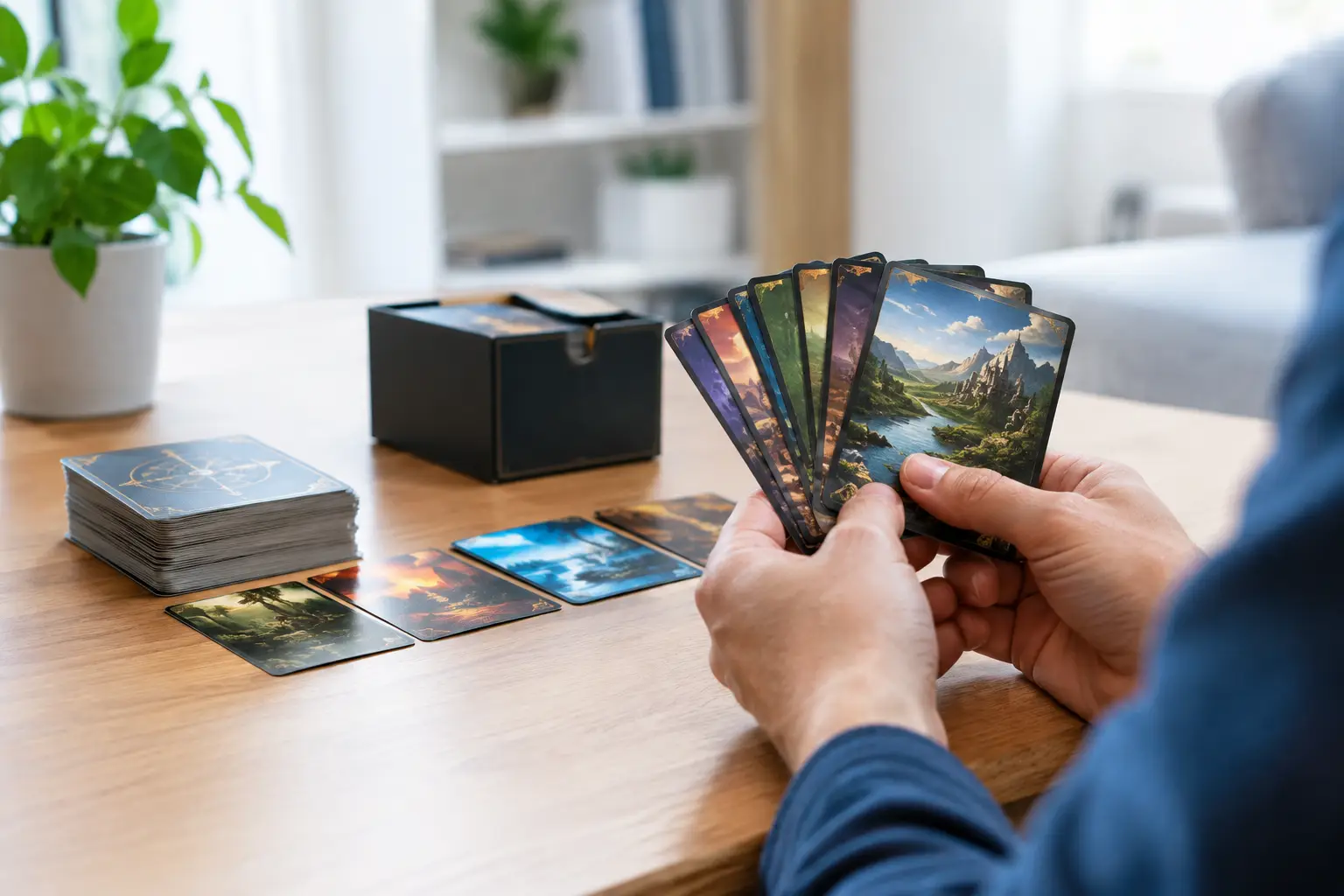
A great custom deck is not just a stack of cards with different pictures. It is your cousin as El Valiente, your wedding party as La Estrella, the family dog as El Diablito, and the inside jokes everyone recognizes before the caller finishes the name. This custom deck builder review looks at what makes that experience feel personal, playable, and polished instead of like a design project that never gets finished.
For celebrations, classrooms, fundraisers, and brand events, the best tool does more than let you place an image in a template. It helps you turn real people, memories, and ideas into a complete game with consistent artwork, editable card names, matching boards, and files prepared for print.
What a Custom Deck Builder Should Actually Do
The most useful deck builders solve the whole workflow, not one small piece of it. Uploading a photo is easy. Turning dozens of photos into a cohesive card set, arranging them into a playable format, and preparing every page correctly for printing is where the real work begins.
For a personalized Lotería deck, start with the people and moments you want to celebrate. A birthday deck might feature the guest of honor, favorite foods, pets, hometown landmarks, and funny phrases. A wedding deck can bring together both families, the venue, the proposal story, and the friends who made it happen. A community deck can spotlight local leaders, traditions, and places that deserve the center of the table.
A focused platform gives those ideas a structure. Rather than beginning with an empty canvas and wondering how to size every card, you can move through a clear sequence: upload your photos, cartoonify them, customize the text, build your deck, and generate game materials. That structure matters when you are creating something joyful on a deadline.
Custom Deck Builder Review: The Features Worth Checking
Not every personalization tool is built for a game. When you compare options, look past the first template preview and consider whether the builder supports the full experience your guests will use.
Photo transformation should create a cohesive deck
A deck assembled from camera-roll photos can look uneven fast. Different lighting, backgrounds, crops, and image quality may make one card feel polished and the next feel out of place. Cartoon-style photo transformation helps create a shared visual language across the deck while preserving the recognizable faces that make everyone laugh, point, and say, “That is so them.”
The result should feel playful without asking you to become an illustrator. This is especially valuable for a large family reunion or a company event, where creating original artwork for every card by hand is not realistic.
Editable text keeps the humor personal
The image gets attention, but the name on the card delivers the punchline. You may want a classic title, a bilingual phrase, a nickname, or a reference only your group understands. A good builder lets you adjust card text without breaking the layout or making the deck look mismatched.
This flexibility is also useful for educators and organizers. A classroom deck might reinforce vocabulary. A neighborhood game might feature local history. A small business deck might highlight products, team members, or the values behind the brand. The format stays recognizable while the content becomes yours.
Complete game materials matter more than single cards
Creating card art is only part of making Lotería playable. Players need boards, and hosts need an organized set of calling cards. If those pieces are designed separately, inconsistencies can creep in: duplicated cards, missing images, mismatched proportions, or boards that are difficult to read across a crowded table.
A purpose-built workflow connects the deck to the game boards. That gives your materials a unified look and helps you move from a creative idea to an actual game night. Modern Lotería Studio is designed around this end-to-end process, so personal photos and custom text can become coordinated cards and print-ready boards without requiring professional layout skills.
Print preparation is where convenience becomes confidence
A beautiful screen preview is not the same as a file that prints well. Home printers, local print shops, and professional production all have practical requirements: page dimensions, margins, resolution, cutting space, and a clear arrangement of multiple cards on a sheet.
Print-ready output saves time because it removes a common last-minute problem. You should not have to rebuild your deck in another program just to make it usable offline. Whether you plan to print a few sets for a birthday party or prepare materials for a larger event, the final files should make that next step straightforward.
Where Generic Design Tools Fall Short
General design software can be a good choice when you need total visual control and already know how to manage print layouts. An experienced designer may prefer it for a highly experimental art project, a nonstandard card size, or a campaign with a detailed visual system.
For most hosts, though, blank-canvas freedom creates extra work. You need to choose dimensions, design every card frame, keep the typography consistent, arrange game boards, check image resolution, and export files correctly. That is a lot to handle when you are also coordinating food, guests, decorations, or a venue.
The trade-off with a specialized deck builder is intentional. You get a guided format rather than unlimited layout freedom. In return, you spend less time solving production problems and more time choosing the photos, names, and stories that make the deck memorable. For a custom Lotería game, that is often the better exchange.
Who Gets the Most Value From a Custom Deck
Personalized decks work best when the people playing have a connection to the images. The more recognizable the references, the more energy the game creates. A board filled with generic clip art may still be functional. A board filled with your aunt’s famous salsa, your college roommates, and the café where your parents met becomes a conversation before anyone calls the first card.
This makes custom decks especially effective for milestone events. At a quinceañera, guests can see family history alongside the guest of honor’s personality. At a wedding, two groups of relatives gain an easy way to laugh together. At a reunion, the deck can preserve stories that younger family members may not know yet.
They also work beyond family events. Teachers can create culturally relevant learning games. Community organizations can make fundraising or outreach materials people want to keep. Creators and small businesses can turn a familiar game structure into a branded experience that feels warm rather than promotional.
How to Make Your Deck Feel Like It Was Made for Your Group
Start by choosing a clear theme before uploading images. You do not need a rigid concept, but a simple point of view helps. Think “Our Family’s Greatest Hits,” “Meet the Wedding Crew,” “Eastside Icons,” or “The Office After Hours.” A theme makes it easier to decide what belongs in the deck and what can stay in the camera roll.
Then select photos with recognition in mind. A close-up, a clear face, and a distinct expression usually work better than a distant group shot. Mix people with meaningful objects, foods, places, and symbols so the deck has visual variety. If every card is a headshot, the game can feel repetitive even when the artwork is great.
Keep the card names readable and direct. The funniest name is not always the longest one. A short nickname or phrase can land faster across a table, especially for guests who are meeting each other for the first time. If your group uses both English and Spanish, let that reflect the way your community naturally speaks.
Finally, leave time for review. Look through the full deck as a set, not just card by card. Check that the images are distinct, names are spelled correctly, and the tone feels welcoming. The goal is not perfection. It is creating a game that makes people feel seen.
A custom deck earns its place at the table when it gives people more than something to play. It gives them a reason to remember, celebrate, and tell the story behind the card they just called.