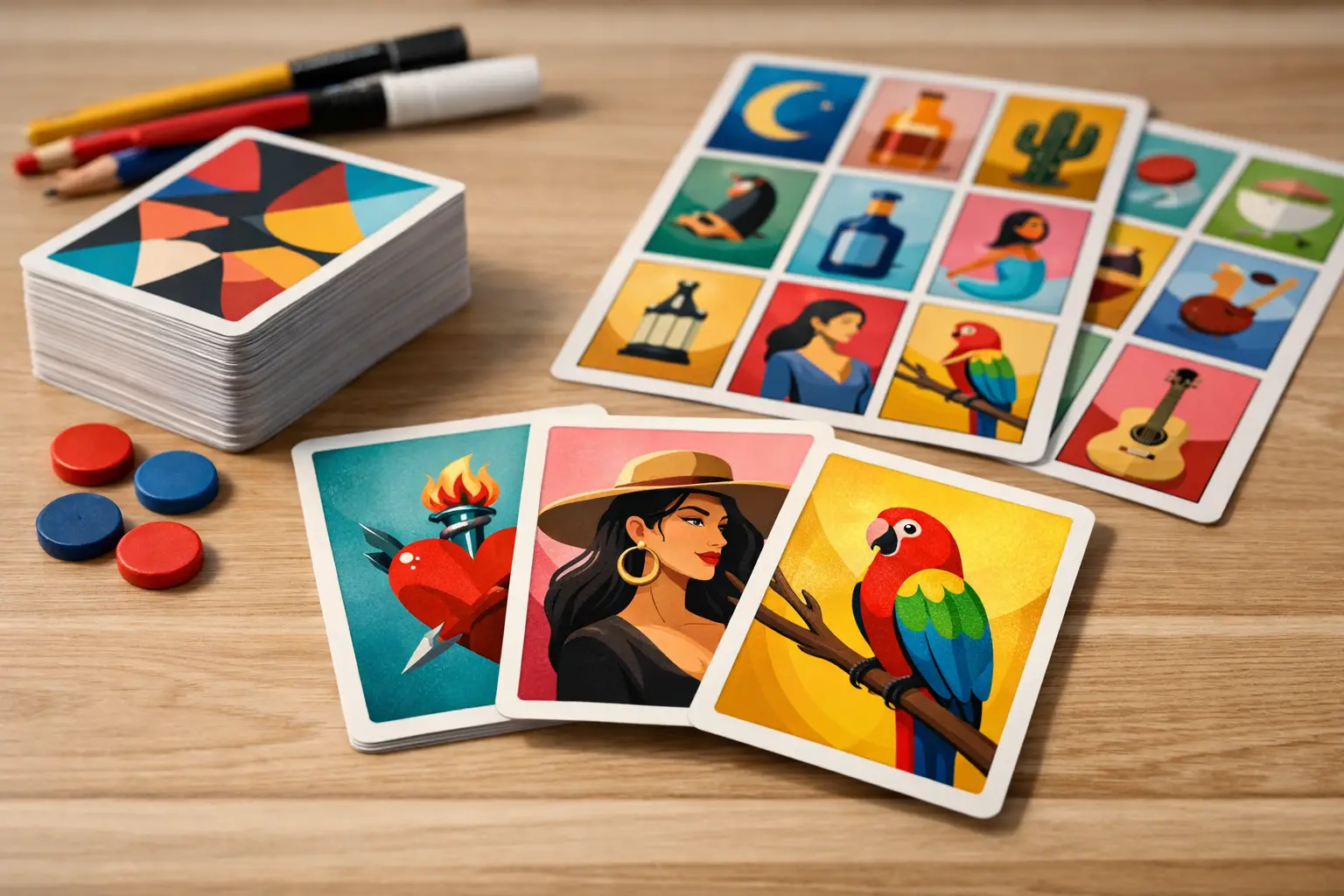
The best custom card deck design starts with a guest list, not a blank canvas. Think about the cousin everyone calls first, the family dog in a tiny sweater, the signature dish that disappears before dinner starts, or the friend whose laugh fills the room. Those are not just photos and jokes. They are the pieces that make a Lotería game feel like it belongs to your people.
A personalized deck can be a wedding activity, a birthday surprise, a reunion keepsake, a classroom icebreaker, or a creative brand giveaway. The goal is simple: turn familiar faces and meaningful moments into cards people want to call out, collect, and remember.
Start Your Custom Card Deck Design With a Story
Traditional Lotería has a visual rhythm that people recognize instantly: bold images, memorable names, and a little drama in every card reveal. A modern deck works best when it keeps that energy while telling one clear story.
Before uploading anything, choose the occasion and the point of view. A wedding deck might spotlight the couple, their pets, favorite places, and shared traditions. A family reunion deck can celebrate grandparents, nicknames, recipes, and stories passed down through generations. For a small business, the deck could feature team members, products, customer favorites, and the quirks that make the brand recognizable.
You do not need every card to be serious or sentimental. In fact, the strongest decks usually mix heartfelt moments with a few playful surprises. The key is consistency. If the deck is built around a retirement party, keep the humor and imagery connected to that person’s life. If it is for a school event, choose references your audience will understand without needing an explanation.
A useful test is to ask: would someone who attends the event know why this card is funny, sweet, or special? If the answer is yes, it belongs in the deck.
Choose Photos That Read Clearly on a Card
Personal photos are the heart of a custom deck, but not every photo becomes a strong card image. A clear, well-lit photo gives your final artwork more personality and makes it easier for players to recognize the subject from across the table.
Choose images where the main person, pet, object, or place is easy to identify. A close-up portrait, a pet looking at the camera, or a favorite item photographed against a simple background usually works better than a dark group shot taken from far away. Group photos can still be meaningful, especially for a card celebrating a whole family or team, but they may need a short title that helps players understand the scene.
Variety also keeps a deck lively. Mix portraits with pets, food, landmarks, hobbies, outfits, and objects that carry a story. If every card is a headshot, the deck can feel repetitive. If every card is an inside joke, new guests may feel left out. Give players different kinds of images to discover.
Modern Lotería Studio makes this process approachable: upload your photos, cartoonify them into a cohesive visual style, then edit the card text to match. You get the polished, illustrated feel of a complete deck without needing to draw every image or build print files by hand.
Give each image one clear subject
A card has limited space, so clarity wins. Let one person, one pet, one object, or one scene take center stage. If a photo has a busy background, crop closer to the subject before using it. If the meaningful part of a picture is a tiny detail, it may be better as inspiration for a new photo than as the card itself.
This does not mean every card needs to look formal. A blurry action shot of someone dancing may be perfect if that energy is the joke. The question is whether the image still communicates its point when transformed into card art.
Write Card Names People Want to Call Out
The image makes players look twice. The title makes them laugh, cheer, or tell a story. Good card names are short enough to call during a game and specific enough to feel personal.
Instead of using a plain label like “Dad,” consider the version your family actually uses: “El Grill Master,” “La Queen of Coupons,” or “The Last Tamale.” Instead of “Dog,” try “El Chismoso” for the pup who watches every conversation from the couch. You can lean into Spanish, English, Spanglish, family sayings, or a mix that sounds natural in your home.
There is no single right way to name a personalized Lotería card. What matters is that your language feels welcoming to the people playing. A bilingual deck can be especially fun for multicultural families and gatherings, but make sure the wording is understandable to your intended group. If some guests do not share a reference, pair the joke with a visual clue or choose a more universal title.
Keep titles readable. Long phrases can lose their punch once printed small. Aim for a few memorable words, then save the longer backstory for the conversation that happens after someone calls the card.
Build a Deck With Enough Range to Stay Playable
A great custom card deck design is not just a gallery of favorite images. It also needs the variety that makes gameplay exciting. Cards should be different enough that players can identify them quickly and avoid mixing them up.
As you organize your ideas, look for a balance among people, places, objects, foods, traditions, and funny moments. A wedding deck might include the couple and wedding party, but it should also make room for the venue, the late-night snack, the first-date coffee shop, and the song that everyone knows. A family deck can include relatives alongside treasured recipes, holiday decorations, backyard games, and hometown landmarks.
Consider the emotional pacing, too. Put a few big crowd-pleasers in the deck, then add quieter cards that reward the people who know the story. “La Abuela” may get instant applause. A card featuring an old green sofa might prompt a different kind of reaction from everyone who remembers it.
If you are making game boards for a larger event, plan them alongside the deck rather than as an afterthought. Each board should offer a different arrangement of cards so multiple players have a fair, unpredictable chance to win. Print-ready game materials help keep the focus on playing, not on last-minute formatting or uneven layouts.
Keep the Look Cohesive, Even When the Memories Are Eclectic
Personal decks often bring together photos from different years, phones, lighting conditions, and locations. That is part of their charm, but it can look scattered if every card uses a different visual treatment. A shared cartoon-style transformation gives the deck a unified look while letting each image keep its own personality.
Choose a theme that supports the occasion rather than competing with it. Bright colors and playful details suit a birthday or family party. A refined palette may fit a wedding or professional event. For a community fundraiser, a bold, highly readable design can make it easier for guests of all ages to play.
Cultural references deserve the same care as visual style. Lotería is beloved because it carries history, humor, and a recognizable way of gathering. Personalizing the format is a chance to honor your own family and community, not a reason to flatten every tradition into generic party decor. Use the references that are genuinely yours: the foods you make, the sayings you repeat, the people who shaped your table.
Make Production Decisions Before the Party Gets Close
The creative part is more fun when the practical details are already handled. Decide early whether your deck is a one-time party activity, a gift, a keepsake, or a product you plan to sell. That choice affects how many decks and boards you need, how much time you should allow for printing, and whether you need permission to use certain photos or brand materials.
For personal events, ask family and friends before featuring sensitive images or jokes. A card can be funny without putting someone on the spot. For commercial projects, use images you have the right to use and be thoughtful about how people, logos, and cultural references appear in the final product.
Review card text carefully before generating print-ready files. Check spelling, accents, names, and any dates that matter to the occasion. Then look at the deck as a whole. Does every card feel like it came from the same celebration? Are there repeats that could be replaced with a stronger memory? Will players recognize the images quickly enough to enjoy the pace of the game?
Those few minutes of review can make the difference between a cute idea and a deck people keep after the party ends.
Let the Deck Start the Conversation
When the caller announces a card and someone across the room immediately says, “That is so you,” the design has done its job. A personalized Lotería deck gives people permission to tell the stories behind the photos, laugh at the details, and see their own world represented in a familiar game.
Start with the images your people already love. The rest of the deck will tell you what it wants to become.