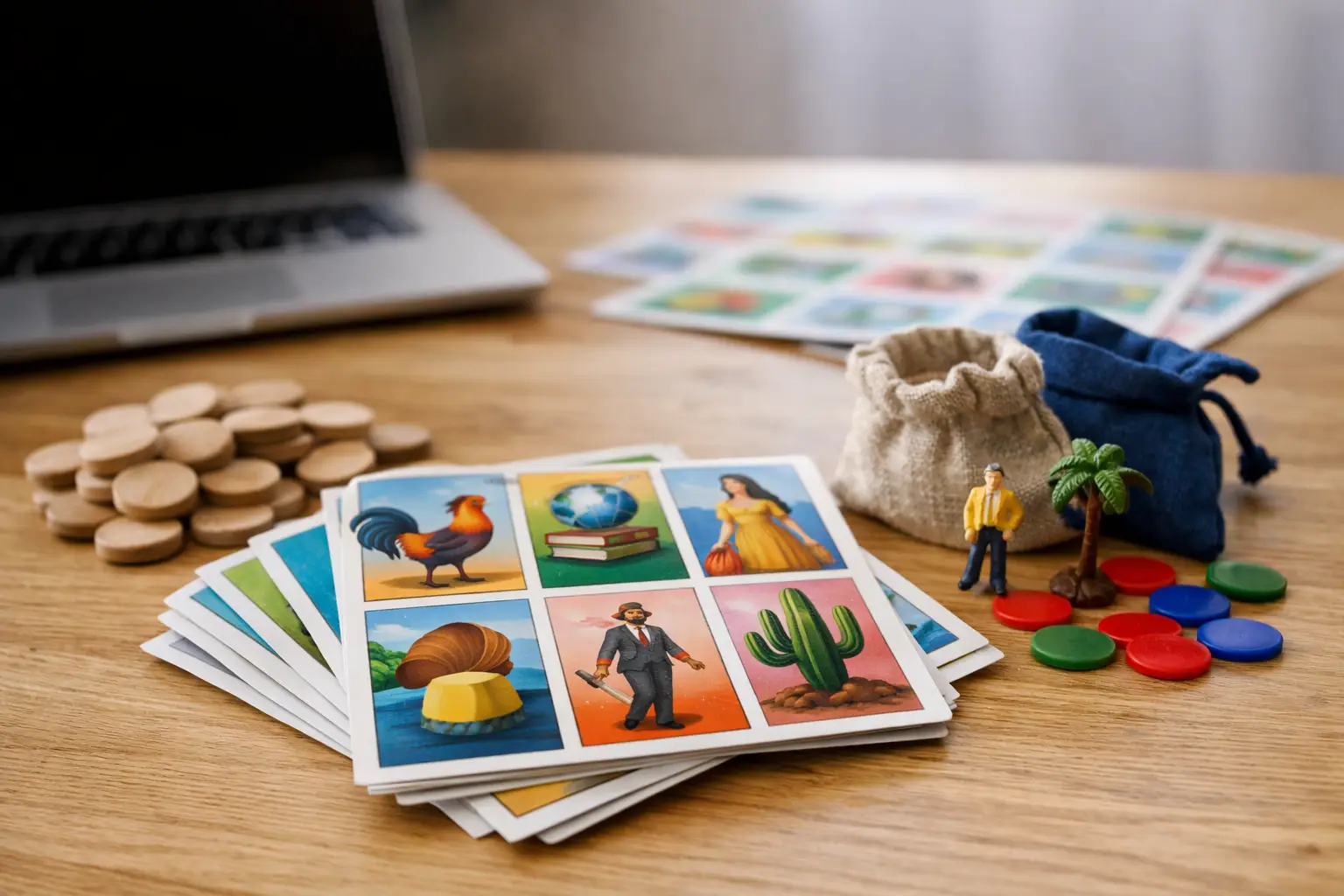
A card called La Abuela / Grandma lands differently when it features your actual abuela smiling back at the table. That is the joy of a custom bilingual loteria game: it brings English and Spanish speakers into the same round while making the deck feel unmistakably yours. For a wedding, family reunion, classroom, or community fundraiser, the right cards can turn introductions, inside jokes, and shared history into a game everyone wants to play again.
The strongest bilingual decks do more than place two words on a card. They make each player feel included, keep the game easy to call, and give your celebration a polished visual centerpiece. With personal photos, editable card text, and print-ready materials, you can build that experience without illustrating an entire deck from scratch.
Start With the People and Moments You Want to Celebrate
Before choosing colors or writing card names, decide what the deck is meant to remember. A family deck might spotlight relatives, favorite foods, hometown landmarks, cherished sayings, and the pets who show up in every group photo. A wedding deck can feature the couple, the wedding party, signature drinks, dance moves, and the people who helped bring the day together.
For a classroom or community event, think beyond individual portraits. Include places, values, traditions, local heroes, and vocabulary your group already knows. A small business deck might blend team members, products, customer favorites, and brand personality into a giveaway that people will actually keep.
Choose a clear concept, then collect images that support it. You do not need studio photography. Well-lit phone photos with visible faces work beautifully, especially when they are transformed into cartoon-style artwork. Try to use a mix of close-ups and expressive moments so cards are easy to recognize from across the table.
A full deck feels more intentional when its cards have variety. Balance people with objects, places, foods, and playful symbols. If every card is a headshot, the game can start to feel like a photo album. A card for El Cafecito / Coffee or La Chancla / The Sandal creates a fun visual break and leaves room for the humor that makes Lotería memorable.
Build a Custom Bilingual Loteria Game That Reads Clearly
Bilingual card names should be quick to understand, say aloud, and spot on a game board. The simplest format is Spanish first, followed by English, such as El Primo / The Cousin or La Fiesta / The Party. This honors the classic rhythm of traditional Lotería while giving every guest an immediate translation.
That order is not a rule. If your event is primarily English-speaking but includes Spanish-speaking grandparents, friends, or students, English first may work better. What matters is staying consistent across every card. Once players learn where to look for each language, gameplay moves naturally.
Use translations that fit your family
Some words do not have one perfect translation because families, regions, and generations use different language. A grandmother may be Abuela, Nana, Mamá Grande, or a name only your family uses. A backyard cookout might be a carne asada, a barbecue, or both. Use the language your guests recognize and love.
You can also make room for familiar Spanglish. Cards like El Weekend / The Weekend, La Selfie / The Selfie, or Los Primos / The Cousins can feel more authentic to a multicultural family than overly formal translations. The goal is not to create a textbook. It is to create a deck that sounds like your people.
Keep names short whenever possible. Long labels can crowd the card and become harder to call during a lively game. If a name needs context, use the card title for the clearest version and let the illustration carry the personality. For example, El Tío Beto / Uncle Beto says more at a glance than a full sentence about his legendary grill skills.
Plan for the caller, too
A great Lotería caller adds energy, storytelling, and a little teasing. Give them room to have fun with the bilingual format. They can call the Spanish name, the English name, or both: “¡La Comadre! Your bestie is here!” The printed title keeps the game accessible even if guests understand one language more comfortably than the other.
If you are making the deck for a school, workplace, or large public event, avoid relying on private jokes alone. Blend recognizable cards with personal ones so first-time players can follow along. A deck can be deeply personal without making newcomers feel left out.
Turn Photos Into a Cohesive Deck
Personal photos are what make custom Lotería feel electric, but visual consistency is what makes it look professionally made. Upload your images, cartoonify them into a coordinated illustration style, and place them into card layouts that share the same overall look. Suddenly, a photo from a beach vacation, a candid kitchen selfie, and a picture of the family dog can belong in one beautiful deck.
Choose a theme that fits the occasion. Bright, festive color can bring instant party energy to a birthday or holiday deck. A softer palette may suit a wedding shower or anniversary. For a business or organization, use colors that complement your identity without letting branding take over the game.
The best designs still make each image easy to identify. Avoid placing important facial details under text or using a background that competes with the artwork. A clean card layout gives every photo room to shine and helps players find their matches quickly.
Modern Lotería Studio keeps this process focused: upload photos, transform them into playful artwork, edit the card names, and generate coordinated cards and game boards designed for printing. That means less time adjusting tiny layout details and more time choosing the memories that belong in your deck.
Make Game Boards Friendly for Every Player
Cards get the spotlight, but game boards determine how smoothly the room plays. Each board should have a clear grid, enough visual space between images, and a selection of cards that feels balanced. When players can scan their boards quickly, the game stays lively instead of turning into a hunt for tiny text.
For bilingual play, make sure both language labels remain readable at print size. This is especially helpful for younger players, older relatives, and guests who are learning Spanish or English. Do not shrink the second language into an afterthought. Equal visibility is part of what makes the game welcoming.
Create enough unique boards for your group size. A small living-room game may need only a handful, while a reunion, shower, or school event needs more variety. Consider how many people will play at once, not just how many people are invited. A few extra boards are useful when cousins pull up chairs late or someone wants a rematch.
Print preparation matters here. Cards need clean cuts, readable type, and a layout that works on the paper or cardstock you plan to use. Print-ready files remove guesswork and make it easier to hand your project to a local printer or prepare it at home with confidence.
Add Details That Make the Game Feel Like an Event
Your deck can carry the personality of the whole celebration. Include the event name, date, or a short phrase on the back of the cards. For a reunion, that might be the family name and year. For a wedding, it could be the couple’s names. For a community event, it may be a message that reflects the group’s mission.
Think about markers, too. Beans are classic, but colorful pom-poms, wrapped candies, mini flowers, coins, or custom tokens can match your theme. If children are playing, choose markers that are easy to handle and age-appropriate. If the game is part of a formal event, small tokens can make the table look more finished in photos.
You can offer simple prizes, but the deck itself is often the keepsake. Guests remember seeing themselves, their loved ones, and their traditions reflected in a game format they already know. If the deck is for a wedding or major milestone, save an extra uncut or unused set as part of the memory box.
Let the Deck Sound Like Home
A bilingual Lotería deck does not need perfect textbook symmetry to be meaningful. It needs clear language, recognizable images, and the small details that make guests laugh, point, and say, “That is so us.” Give every card a purpose, make both languages easy to enjoy, and let the people around your table shape the final design.
When the caller lifts a card and everyone recognizes the face, phrase, or family tradition on it, you have made more than a game. You have made a reason for people to gather close.