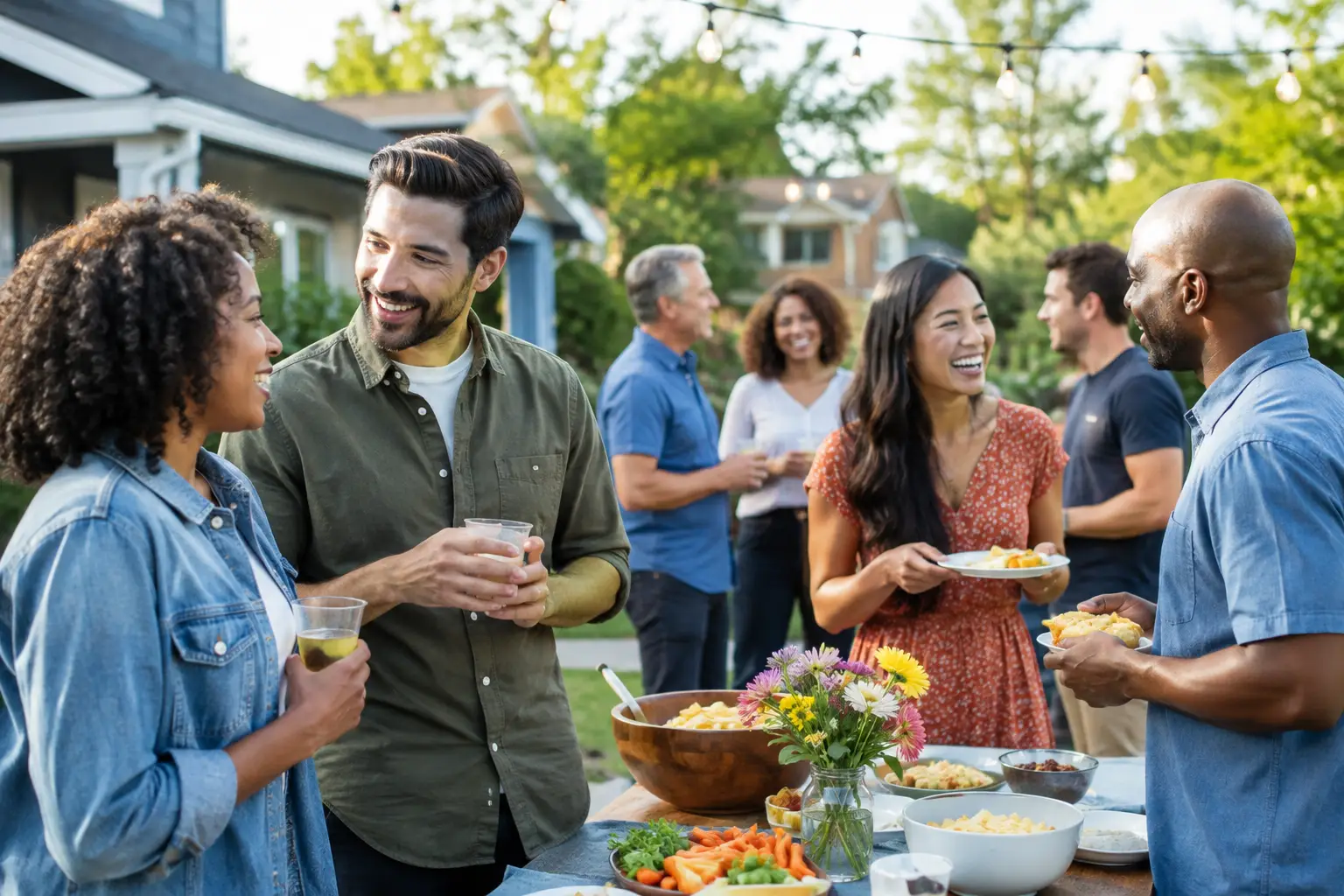
A great neighborhood party gives people a reason to step outside, stay awhile, and learn the names behind the familiar front doors. The best creative neighborhood party activities do more than fill time between snacks: they make room for generations, personalities, and the little moments that turn a block into a community.
You do not need a festival-sized budget or a packed schedule. Start with a few activities that invite people to participate at their own pace. A toddler with sidewalk chalk, a grandparent telling a story, and a new neighbor joining a game should all feel like they belong.
Start With Activities That Make Introductions Easy
The first 30 minutes can feel awkward, especially when longtime residents and new arrivals are meeting for the first time. Choose one or two low-pressure activities near the entrance so guests have something to do while they settle in.
1. Create a neighborhood welcome wall
Set out a large poster board or kraft-paper banner with prompts such as “My favorite local spot is,” “I can help with,” and “One thing I love about this block.” Provide thick markers and let people add a note whenever they arrive. By the end of the party, you will have a useful, funny, and surprisingly heartfelt snapshot of the neighborhood.
Keep the prompts specific enough to spark conversation. “Best place for pan dulce” will get more replies than “Favorite food,” while “Ask me about my garden” can connect neighbors who have something practical to share.
2. Run a name-tag superlative station
Plain name tags work, but name tags with a second line invite better conversations. Let guests complete a prompt like “Ask me about…,” “I make a great…,” or “My secret talent is….” Someone may reveal that they repair bicycles, bake incredible cookies, or know every bird in the park.
This works particularly well for a first annual block party. It gives people an opening line without forcing anyone into an icebreaker circle.
Turn the Block Into the Game Board
A neighborhood already has built-in scenery, stories, and friendly competition. Use them. Activities that reflect the people and places around you will feel more memorable than another generic relay race.
3. Host a custom neighborhood Lotería game
Lotería brings energy to a crowd because players can join quickly, cheer loudly, and recognize the images that appear. For a neighborhood version, use photographs of residents, beloved pets, local landmarks, favorite foods, and block-specific jokes. The familiar format stays intact, while every card feels like it belongs to your community.
Modern Lotería Studio makes this especially approachable: upload photos, cartoonify them, customize the card text, and generate print-ready cards and game boards. Make a few prizes playful rather than expensive, such as first pick from the dessert table, a “best porch” ribbon, or a handmade coupon for help watering plants while someone is away.
Be thoughtful about photos. Ask permission before featuring people, particularly children, and give everyone the option to opt out. A deck that celebrates neighbors should feel welcoming, never exposing.
4. Set up a block scavenger hunt
A scavenger hunt gets kids moving, but it can be designed for adults too. Instead of sending people far from the party, create clues within a few houses or common areas. Look for a red mailbox, a painted rock, a house number with repeating digits, or someone wearing a hat.
For a more community-centered version, add prompts that require conversation: find someone who has lived on the block for more than 10 years, someone with a pet, or someone who knows the name of a native plant. Keep it friendly by asking participants to work in mixed-age teams.
5. Try a porch-and-patio mini Olympics
Mini Olympics are best when the events are silly, short, and accessible. Think beanbag toss, cup stacking, hula hoop time trials, balloon volleyball, or a shoe-free standing long jump. Set up stations so guests can try one event or all of them.
Avoid making every activity about speed or athletic ability. Include a “most dramatic celebration” contest, a guessing game, or a slowest balance walk. The goal is shared laughter, not a serious scoreboard.
Make Space for Creative Contributions
People are more likely to remember what they helped make. A simple art or storytelling area gives quieter guests an easy way to participate without having to perform.
6. Build a community mural, one square at a time
Cut a large piece of cardboard or canvas into equal squares before the party. Invite each household to decorate one square with a drawing, collage, family symbol, or phrase that represents them. Assemble the pieces near the end of the event.
The finished mural can be displayed at future gatherings, donated to a local community space with permission, or photographed as a record of the day. Use washable paints and keep a tablecloth underneath if you are working near food or sidewalks.
7. Make a recipe swap that people can actually use
Ask neighbors to bring one recipe on an index card, whether it is a family classic, a five-minute weeknight meal, or the dessert they brought to the party. Arrange the cards by category and let people take copies or photograph favorites.
This activity feels especially personal in multicultural neighborhoods, where food often carries memory and identity. Label dishes clearly for common allergens, but do not reduce recipes to a theme. Let the collection be as varied as the block itself.
8. Record “two-minute neighborhood stories”
Set up a chair, a simple backdrop, and a phone on a tripod. Invite willing guests to answer one prompt in a short video: “What brought you here?” “What is your favorite neighborhood memory?” or “What do you hope this block feels like in five years?”
Keep participation optional and get clear permission before sharing anything beyond the group. Even if the videos remain private, they can become a meaningful time capsule for an annual gathering.
Give Kids Their Own Wins Without Splitting Up the Party
Family-friendly does not have to mean adults stand around watching children play. The strongest creative neighborhood party activities let kids lead, help, and occasionally teach grown-ups something new.
9. Open a kids’ market or maker table
Invite children to set up small stations with friendship bracelets, painted bookmarks, lemonade, drawings, or handmade stickers. If money changes hands, establish simple rules and adult supervision. You can also use tickets instead of cash so every child gets a chance to “shop.”
For a no-sale version, make it a display table where young creators explain what they made. It builds confidence and gives neighbors a genuine reason to stop and chat.
10. Hold a decorate-your-bike or scooter parade
Crepe paper, ribbons, reusable flags, and paper signs can transform bikes, scooters, wagons, and strollers into party parade floats. Choose a short, safe route that stays within a closed street or designated area, then invite spectators to cheer from the edges.
Make safety part of the fun. Helmets stay on, adults accompany younger riders, and walking participants are welcome. A parade is more inclusive when it welcomes every kind of wheel and every pace.
End With a Reason to Keep Showing Up
The final hour is your chance to turn a successful afternoon into an ongoing neighborhood habit. Choose an activity that leaves people with a next step, not just leftovers.
11. Host a friendly talent pop-up
Skip the pressure of a formal stage show. Set aside a small area where people can share a song, dance, poem, magic trick, joke, or quick demonstration. A five-minute sign-up sheet keeps it organized, but leave room for spontaneous moments.
Frame it as an open invitation, not a competition. The neighbor who plays guitar on their porch and the child telling their first joke deserve the same warm applause.
12. Create a “next good thing” calendar
Put out a calendar for the next few months and ask people to add low-lift ideas: a park cleanup, front-yard movie night, cookie exchange, walking group, plant swap, or another game afternoon. Include a space for volunteers to host or help.
Do not overcommit the group to a full schedule. One realistic follow-up event is better than six ideas that never happen. The point is to show that connection can continue after the folding chairs are put away.
A Few Details That Keep the Fun Comfortable
The right activity mix depends on your space, crowd size, and local rules. A quiet cul-de-sac can handle a bike parade more easily than a busy street, while an apartment courtyard may be ideal for Lotería, a mural table, and a recipe swap. If you are reserving shared space, serving alcohol, using amplified music, or blocking traffic, check the relevant building, neighborhood, or city requirements before you invite guests.
Plan for shade, water, seating, and a clear restroom option. Keep music at a level that supports conversation, and make sure at least a few activities work for people who do not want to run, climb, or be photographed. Those small choices tell guests that they were considered from the start.
The activity people talk about later may not be the loudest one. It might be the custom card that made someone laugh, the recipe a neighbor shared, or the name they finally learned after living two doors apart for years. Build the party around those openings, and your neighborhood will supply the rest.