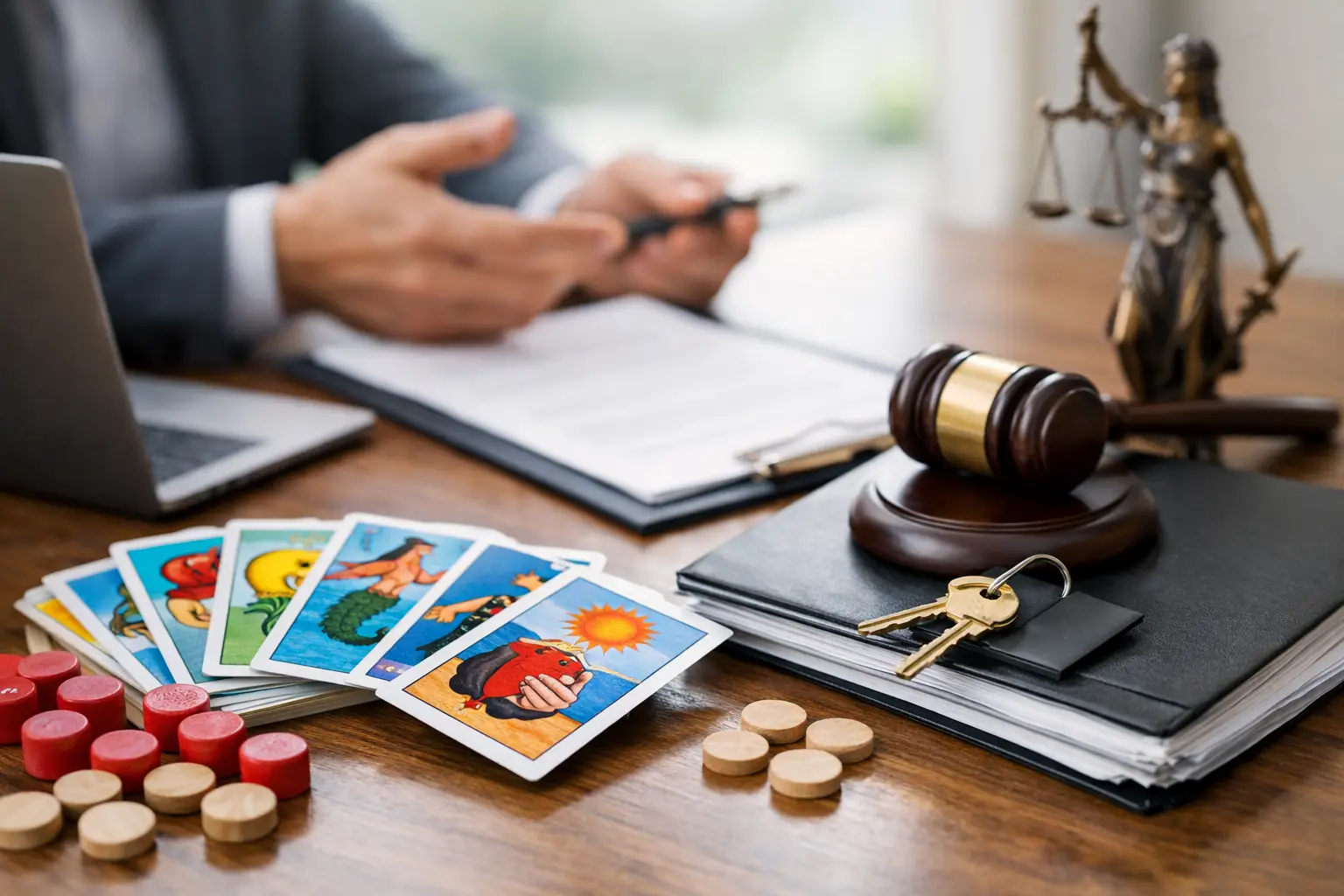
A custom Lotería deck can do more than entertain a room. It can become a memorable wedding favor, a classroom activity, a fundraiser, a branded event piece, or a product in your online shop. Before you print or sell, this commercial lotería licensing guide can help you separate the parts of a project you can confidently use from the parts that may require permission.
The big idea is simple: the familiar game format is not the same thing as a ready-made collection of artwork, names, photos, logos, and designs you can reuse commercially. Build from original material, document your permissions, and make the finished deck feel unmistakably yours.
Commercial Lotería licensing starts with what you created
Lotería has a long, living cultural history. Its play structure - calling cards, player boards, illustrated prompts, and a game of matching chance - can inspire new work. But individual visual assets may be protected. A specific card illustration, a distinct deck layout, a publisher’s branding, or a recognizable character should not be assumed to be free to copy simply because it is familiar.
For a commercial project, the cleanest path is to create your own card art, wording, borders, boards, packaging, and promotional images. You can make a deck that nods to the energy of Lotería while centering a new idea: a couple’s favorite places, a school community, a neighborhood’s inside jokes, or a brand’s products and values.
That distinction matters. “Inspired by” should mean you are carrying forward the spirit of a game format, not reproducing someone else’s finished artwork or presenting your deck as an official version of another company’s product.
What may need permission
Commercial use involves more than the cards themselves. Review every element that will appear in the deck, its packaging, your product listing, and your marketing. Common permission questions include:
- Artwork, illustrations, photos, fonts, textures, and templates made by someone else
- Names, logos, slogans, mascots, and trade dress connected to a business or organization
- Photos of recognizable people, especially when a deck will be sold or used in advertising
- Protected characters, celebrity likenesses, sports teams, and entertainment references
- Music lyrics, poetry, and other written material that is not your original work
A purchased stock image or font is not automatically cleared for every use. Some licenses limit print quantities, prohibit use in merchandise, require attribution, or exclude logos and trademarks. Read the license attached to the specific asset, not just the marketplace’s general description.
Build a permissions file before you design
A quick permissions file can save a costly redesign later. Keep copies of invoices, license terms, creator agreements, and written approvals in one project folder. If a question comes up after your decks are printed, you will know where each element came from and what rights you have.
If you commission an illustrator, photographer, or designer, clarify the commercial rights in writing. Paying someone to create art does not always mean you own every right to reproduce, modify, or resell it. Your agreement should say whether you receive an exclusive license or ownership, where you can sell the work, whether you can use it in marketing, and whether you can make future versions.
For community projects, the same care applies. A local artist may be happy to contribute work for a fundraiser, but “happy to contribute” is not as clear as a written agreement that describes the use, credit, payment, and duration.
Photo releases are part of the creative process
Personal photos make a deck feel immediate and joyful. They also create a practical responsibility when the deck moves from a private celebration to a commercial product.
If a recognizable adult appears in a deck you will sell, advertise, distribute widely, or use to promote a business, get a written model release. Explain where the image will appear and how long it may be used. For children, obtain permission from a parent or legal guardian. Avoid relying on a verbal “sure” from a party guest, especially if the deck may later be sold online or reused in future campaigns.
Be especially thoughtful with sensitive settings. Photos connected to schools, workplaces, medical situations, or community organizations can raise privacy concerns even when everyone involved has good intentions. When in doubt, choose a different photo or ask for clear consent.
A practical commercial Lotería licensing workflow
You do not need to turn a joyful project into a legal maze. Use a simple sequence before you place a print order.
First, define the product. Are you making decks for one client’s private event, selling a limited run at a market, offering downloadable files, or creating a recurring product line? The broader the distribution and the more public the promotion, the more carefully you should confirm your rights.
Next, make an asset list. Include every photo, illustration, phrase, font, logo, and decorative element. Mark each one as original, licensed, public domain, client-provided, or pending permission. If you cannot identify its source, do not use it.
Then, check the commercial terms for your creation platform, print provider, stock library, and any design resources. Their rules may differ. A platform may allow you to create a deck for a client while placing limits on reselling templates, sharing editable files, or using certain generated assets as trademarks.
Finally, prepare your product language carefully. Describe the deck accurately. If it is an original, independently made game inspired by a familiar format, say so without implying an affiliation, endorsement, or official partnership that does not exist.
Keep client work and resale work separate
A deck created for a single wedding or family reunion has different risks than a product you plan to sell to the public. For private client work, you still need permission to use outside assets, but the scope can be narrower. For resale, digital downloads, wholesale orders, and branded promotions, your rights should cover reproduction, marketing, and the expected number of copies.
Ask clients to confirm that they have permission to provide their photos, logos, and text. This is particularly useful when an event planner sends a company logo, a school mascot, or a set of team photos. Their confirmation is helpful, but it does not replace your own judgment when an asset clearly belongs to a third party.
If you offer custom decks as a service, set expectations early. State what clients may submit, what kinds of requests you cannot accept, who approves final spelling and content, and whether the finished design may be added to your portfolio. Clear terms protect both the creator and the client while keeping the project moving.
Respect the culture while making it personal
Lotería is more than a visual trend. For many Mexican American and Latinx families, it carries memories of laughter around a table, beloved sayings, and intergenerational connection. Commercial projects can honor that relationship by creating with specificity rather than treating the game as a costume.
Let the people, place, and purpose guide the deck. A family reunion deck can feature nicknames, recipes, treasured objects, and relatives who make the gathering feel like home. A community deck can celebrate local landmarks and organizers with permission and care. A brand deck can use its own visual world instead of borrowing cultural shorthand it has not earned.
Originality is not a limitation here. It is where the best decks begin. Upload your own photos, cartoonify them into a cohesive visual style, customize the card text, and build boards that belong to your celebration or business. Modern Lotería Studio is designed to help turn that personal material into polished, print-ready game pieces without requiring a full illustration team.
When to ask a licensing professional
Many straightforward projects can be handled with original assets, documented releases, and careful review of license terms. Some projects deserve more specialized advice. Consider speaking with an intellectual property attorney or licensing professional when you plan a large print run, national retail distribution, a co-branded campaign, a deck built around recognizable entertainment or sports properties, or a product with significant revenue potential.
That conversation is also worthwhile if you received a complaint, are unsure whether a name functions as a trademark, or want to register and protect your own brand. This article is a creative planning resource, not legal advice, and the rules can vary by asset, contract, state, and intended use.
A commercial deck earns trust when every card has a clear story: you made it, licensed it, or received permission to use it. That foundation gives you more freedom to make the game bright, personal, and ready for the next table full of players.