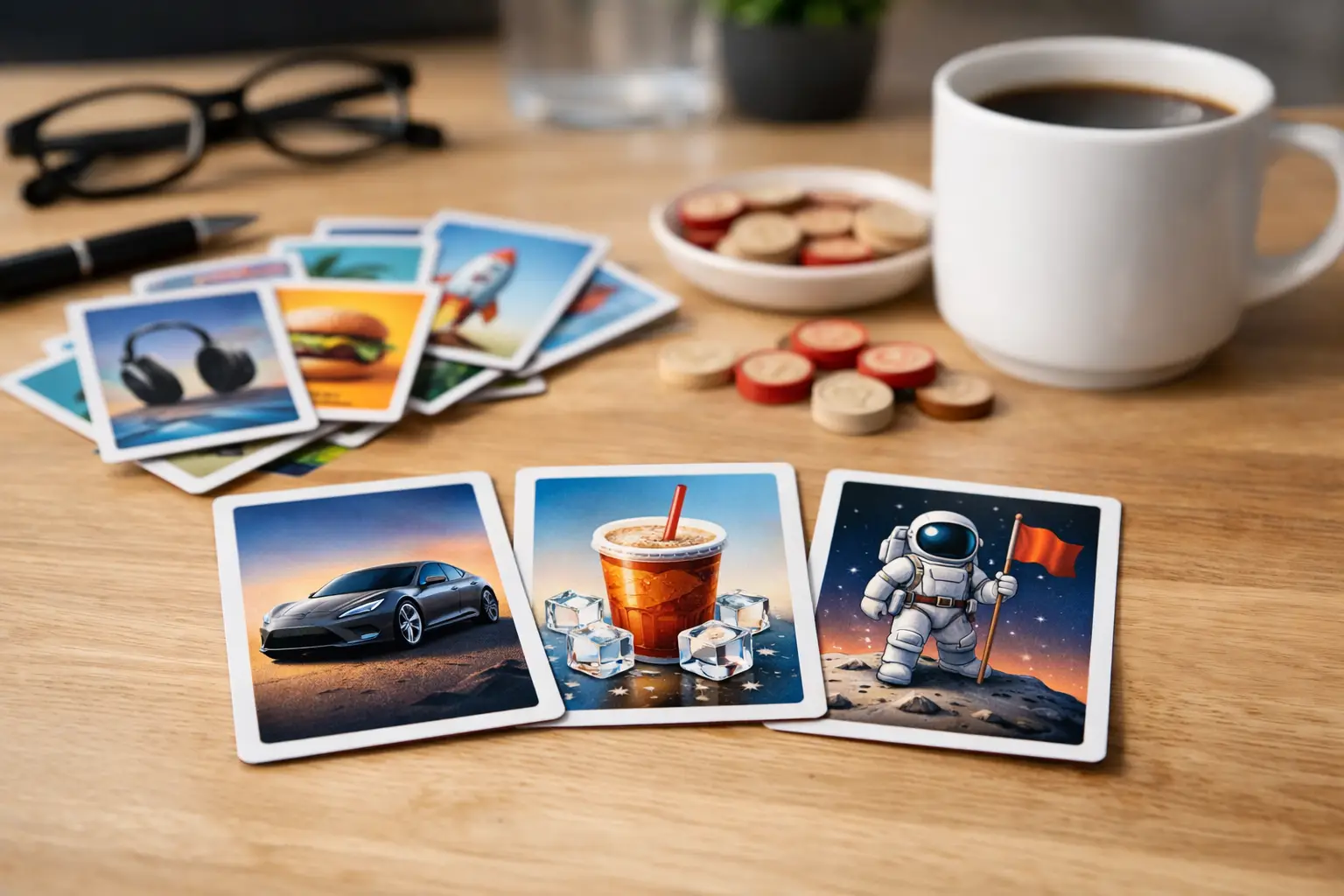
A logo on a giveaway is easy to forget. A game that turns coworkers, favorite products, family jokes, or neighborhood landmarks into characters gets played, passed around, photographed, and saved. That is the real appeal of branded loteria cards: they give your brand a place in a shared moment instead of asking it to compete for attention.
Lotería already has a recognizable rhythm. A caller reveals a card, players scan their tablas, and the room reacts when someone spots the character they needed. When you build a branded version with care, that familiar game structure can carry a launch, celebration, fundraiser, classroom activity, or customer event without feeling like a standard promotional item.
What Makes Branded Loteria Cards Work
The strongest decks do more than swap an icon into a traditional card layout. They create a small, playable world around a real group of people or a clear point of view. A wedding deck might feature the couple’s dog, first-date taco spot, wedding party, and favorite dance move. A small business deck might celebrate its team, regular customers, signature offerings, and local community.
That specificity is what makes people lean in. Players do not just recognize a brand name. They recognize themselves, their memories, and the details that make the gathering feel like theirs.
For businesses, this can be more memorable than a branded tote bag or flyer because the interaction lasts. Each card reveal creates a reason to laugh, tell a story, or point across the table. The deck becomes useful entertainment first and branded material second.
There is a trade-off, though. A deck packed with logos can feel like an ad campaign disguised as a game. Aim for a lighter touch. Your brand can guide the color palette, type style, packaging, card names, and a handful of key characters while the deck remains playful and genuinely fun to play.
Start With the Moment You Want to Create
Before choosing photos or writing card names, decide where the deck will live. A deck made for a family reunion should feel different from one made for a restaurant opening or an employee appreciation event.
For a one-night celebration, inside jokes and highly personal photos are often the point. Guests will understand the references, and the cards become a keepsake afterward. For a public-facing business deck, use references that new customers can understand quickly. Familiar products, team personalities, service moments, and local landmarks can give the deck character without excluding people who are meeting your brand for the first time.
Think about the win condition, too. Is the deck meant to fill tables during a party? Start conversations at a booth? Give customers a reason to return? Support a school or community fundraiser? The answer shapes how many decks you need, how many game boards to print, and how much information belongs on each card.
A great branded deck usually has one clear creative idea. For example: “the people who make our shop run,” “our neighborhood through the eyes of our students,” or “every chapter of the couple’s story.” If you cannot describe the idea in one sentence, the visual direction may need a little tightening.
Build a character list with range
A classic-style deck feels satisfying because each reveal is distinct. Avoid making every card another employee headshot or another product angle. Mix people, objects, places, phrases, and small moments. A bakery could include the early-morning baker, the concha, the regular who always orders cafecito, the delivery bike, the birthday cake, and the last pan dulce in the case.
Choose images with clear subjects and strong expressions. Group photos can work, but they are harder to read at card size. A close-up portrait, a recognizable object, or a simple scene usually creates a cleaner card.
If you are using personal photographs, get permission from the people pictured. For commercial decks, confirm that you have the right to use customer images, partner logos, product packaging, and any location photography. This step protects the project and shows respect for the community you are inviting into the game.
Turn Photos Into a Cohesive Deck
A deck can include dozens of different photos and still look intentional. The key is giving every image the same visual treatment. Cartoon-style artwork helps portraits, pets, product shots, and everyday snapshots feel like they belong in one set.
With Modern Lotería Studio, you can upload photos, cartoonify them, customize the card text, and build matching game boards in one focused workflow. Rather than learning illustration software or arranging print files by hand, you can spend your time choosing the moments that matter.
Keep card names short enough to read at a glance. A name can be literal, playful, or affectionate, depending on the audience. “La Jefa” may fit a team deck. “The Snack Drawer” may earn a laugh at an office party. “El Primer Baile” can become a wedding favorite. The best labels give the caller something fun to announce and the player an immediate visual cue.
Color should support the collection rather than compete with it. Pick a palette that fits the occasion or your business, then use it consistently across card borders, game boards, packaging, and event signage. If your logo colors are very bright, use them as accents and leave enough breathing room around the artwork.
Keep the Cultural Reference Thoughtful
Lotería is more than a decorative card format. It is a beloved Mexican game with deep cultural familiarity for many families and communities. A contemporary custom deck can be personal, funny, and fresh while still respecting the game’s roots.
That means avoiding generic “fiesta” shortcuts when they have nothing to do with your story. Let your own people, traditions, language, food, places, and humor shape the cards. If your event is multicultural, make room for the full group. A thoughtful deck can hold Spanish, English, Spanglish, family nicknames, and community references naturally, as long as the choices feel true to the people playing.
You do not need to copy every traditional character or visual detail for a deck to feel connected to the format. What matters is preserving the pleasure of recognition, chance, and calling cards aloud. Your adaptation should add a real point of view, not flatten a cultural tradition into a theme.
Design for the Table, Not Just the Screen
A card that looks great on a laptop can become hard to read once it is printed, shuffled, and viewed from across a table. Prioritize contrast between text and background, keep important faces away from trim edges, and make sure card labels remain readable at the finished size.
Game boards deserve the same attention. Each board should have a balanced mix of cards so players are not all waiting on the same few characters. Use a clear grid and give every image enough space to be recognized quickly. If children, older relatives, or large groups will play, larger boards and bolder artwork can make the experience easier for everyone.
Print-ready preparation matters because custom projects involve many moving pieces: individual cards, multiple tablas, backs, instructions, and sometimes packaging. Preparing them as a complete system reduces the chance that a beautiful deck turns into mismatched files at print time.
Add a few details that invite play
Your deck does not need a rulebook full of extras. A simple instruction card can explain how to play and suggest what players can use as markers. For a business event, consider a small prize for the first winner or a card-specific prompt that encourages conversation.
If the deck is a giveaway, add a subtle reason to keep it. A limited event date, a meaningful title, or a message on the back can make it feel collectible. If it is for repeat use, consider a theme broad enough to stay relevant after the event ends.
Make the Brand Felt, Not Forced
The best branded loteria cards make people say, “That is so us.” They do not need to shout the company name from every corner. Let the personality come through in the characters, the words, and the details players recognize instantly.
Start with the photos and stories your group already loves. Give them a cohesive look, build boards people can actually play, and leave room for the laughter that happens when the right card is called.