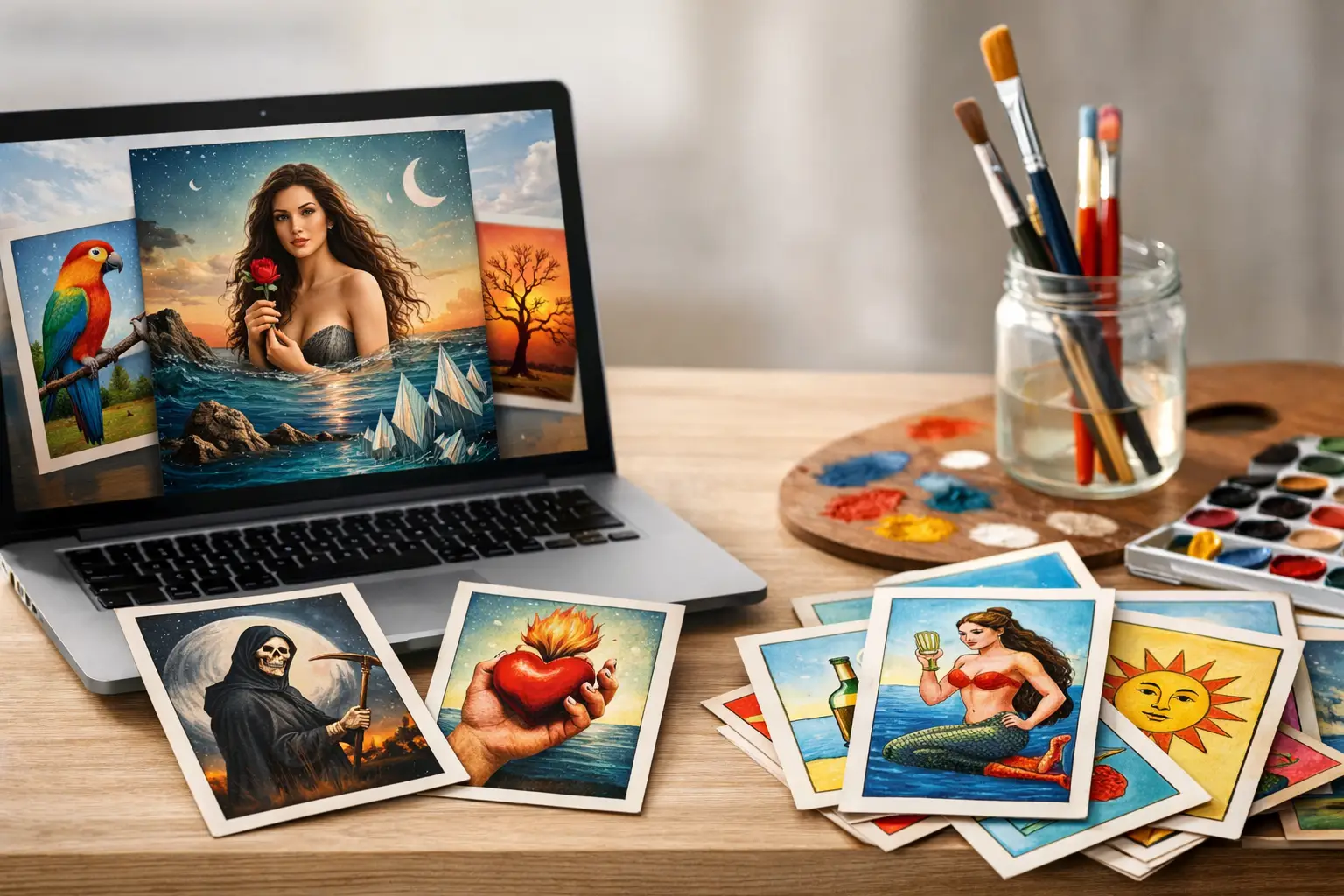
A custom Lotería deck gets its spark from recognition: your cousin’s unmistakable laugh, Abuela’s favorite apron, the dog who always steals the seat at the table. That is why the question of AI photo art versus illustrators is not simply about picking a look. It is about deciding how you want your people, memories, and inside jokes to show up on game night.
Both approaches can create beautiful cards. The right choice depends on your timeline, budget, desired level of artistic control, and whether the heart of the project is personal resemblance, a distinct visual style, or both.
AI photo art versus illustrators for your deck
AI photo art starts with an image you provide. You upload a photo, transform it into a cartoon-style illustration, then personalize the card text and deck design around it. For a birthday, wedding, family reunion, classroom activity, or community fundraiser, this can turn a full camera roll into a playable deck without asking you to become an illustrator or production designer.
Working with an illustrator is a more custom, collaborative process. An artist can create original poses, combine several references, build a visual world from scratch, and make intentional choices about expression, symbolism, texture, and composition. That level of authorship can be especially meaningful for a brand project, a collector-style deck, or an event where a one-of-a-kind art direction is the main attraction.
Neither route is automatically better. They solve different creative problems.
Start with the job your deck needs to do
Before choosing a process, picture the moment the cards will be used. If your goal is getting 54 familiar faces onto cards before your sister’s bridal shower next month, speed and consistency matter. If you are creating a small-batch art deck to sell at a market, a singular visual identity may matter more than fast turnaround.
A personalized Lotería deck also has practical needs beyond the image itself. Cards need clear text, a cohesive style, readable layout, and a game board that feels like it belongs with the deck. A beautiful individual portrait can still feel unfinished if the full set is not organized for play and printing.
This is where a focused workflow makes a difference. Modern Lotería Studio is designed to move from uploaded photos to cartoonified artwork, editable card names, and print-ready game materials in one place. The goal is not to replace an artist’s imagination. It is to make a polished, personal deck possible when you need to create one efficiently.
When AI photo art is the practical choice
AI photo art shines when personal recognition is the point. Your guests do not need a perfectly invented character. They want to see Uncle Ray as El Rey, your best friend as La Estrella, or the family cat as El Gato and immediately laugh because it feels like them.
It is also a strong fit when you have many people to include. Commissioning dozens of individual illustrations can be a major investment in both money and coordination. With photo-based artwork, each person can contribute a favorite image, and you can build a visually consistent set without waiting through a long commission schedule.
The process is especially helpful for celebrations with real deadlines. Weddings, quinceañeras, milestone birthdays, holidays, and reunions do not pause while you refine a creative brief. Starting with photos lets you make progress quickly, then spend your energy on the details your guests will notice: card names, shared jokes, themes, and who gets the honor of being El Corazón.
Photo art can also lower the pressure for people who say, “I’m not creative.” You are still making meaningful creative choices. You choose the photos, decide what each person represents, set the mood, and shape the language of the deck. The tool handles the hard-to-learn illustration and layout work so you can focus on the story.
When an illustrator is worth the investment
An illustrator is often the better choice when your idea cannot be captured in a photo. Maybe you want your family imagined as cosmic luchadores, a historic neighborhood re-created in a hand-painted style, or a deck where every card shares a detailed editorial aesthetic. An artist can translate a loose concept into a visual system with intention behind every line.
Illustrators are also valuable when you need highly specific changes. They can alter a pose, create a scene that never existed, remove distractions, combine people who were never photographed together, or develop a character from written description. They can make sure the same visual decisions carry across every card rather than relying on source photos that vary in lighting, angle, and quality.
For commercial projects, an illustrator may offer a clearer creative partnership and a distinct signature that becomes part of your brand. The trade-off is that custom artwork takes time. You will need to share references, give feedback, approve sketches, and plan for revisions. That effort can be rewarding, but it is not the same as uploading photos and building a deck in an afternoon.
Compare the trade-offs honestly
The fastest choice is not always the most fitting choice, and the most elaborate choice is not always the most meaningful one. Consider these four trade-offs before you begin.
Speed and scale: AI photo art is generally better for a large deck needed soon, especially when every card is based on a real person or place. Illustration works best when you can allow time for concepting and revisions.
Personal resemblance: A photo-based approach gives you a natural starting point for familiar faces. An illustrator can create likeness too, but the result may be more interpretive, depending on the artist and style you choose.
Creative control: An illustrator gives you direct access to human artistic judgment and custom detail. AI photo art offers a quicker route to a coordinated cartoon look, with your creative control centered on photo selection, text, and deck customization.
Budget: A full custom commission can be a meaningful investment, particularly for dozens of cards. Photo transformation is often more accessible for families, classrooms, and event planners who want an original-feeling game without commissioning a complete illustrated collection.
There is another consideration: source material. Great photo art begins with photos that are clear, well-lit, and centered on the subject. A blurry group shot may not produce the same result as a bright portrait where the person’s face is easy to see. If your photos are limited, or if key people cannot be photographed, an illustrator may give you more flexibility.
A hybrid approach can make the deck feel even more personal
You do not have to make this an all-or-nothing decision. Many of the most memorable projects mix approaches with purpose. You might use photo-based art for the people in your family deck, then hire an illustrator for a custom cover card, a logo, or a special centerpiece image. A small business might create staff cards from photos while commissioning original artwork for its signature products or brand mascots.
The key is visual cohesion. Choose a clear theme early: bright contemporary color, retro-inspired flair, garden party, western wedding, classroom heroes, or neighborhood legends. Keep your card names, colors, and overall mood connected. When the deck feels intentional, different creative methods can sit together naturally.
Keep culture and personality at the center
Lotería has a recognizable structure and a deep cultural presence. Personalizing it can be joyful because it makes room for your own family language, humor, and traditions. It also deserves care. Let the familiar format inspire your deck while making space for the stories that are truly yours.
That might mean using bilingual card names that sound like your household, celebrating the people who keep a community connected, or turning a favorite family dish into a card everyone wants to call. The strongest choices are usually specific, affectionate, and easy for your players to recognize.
Choose the process that leaves you more room to celebrate the people in the deck. A polished card is wonderful, but the real win comes when someone picks it up, sees themselves or a loved one, and says, “That is so us.”